Carbon from the cosmos? US scientists find clues in Hawaiian volcanic rocks
Yale and Columbia researchers say most of Earth’s carbon may have come from the outer...
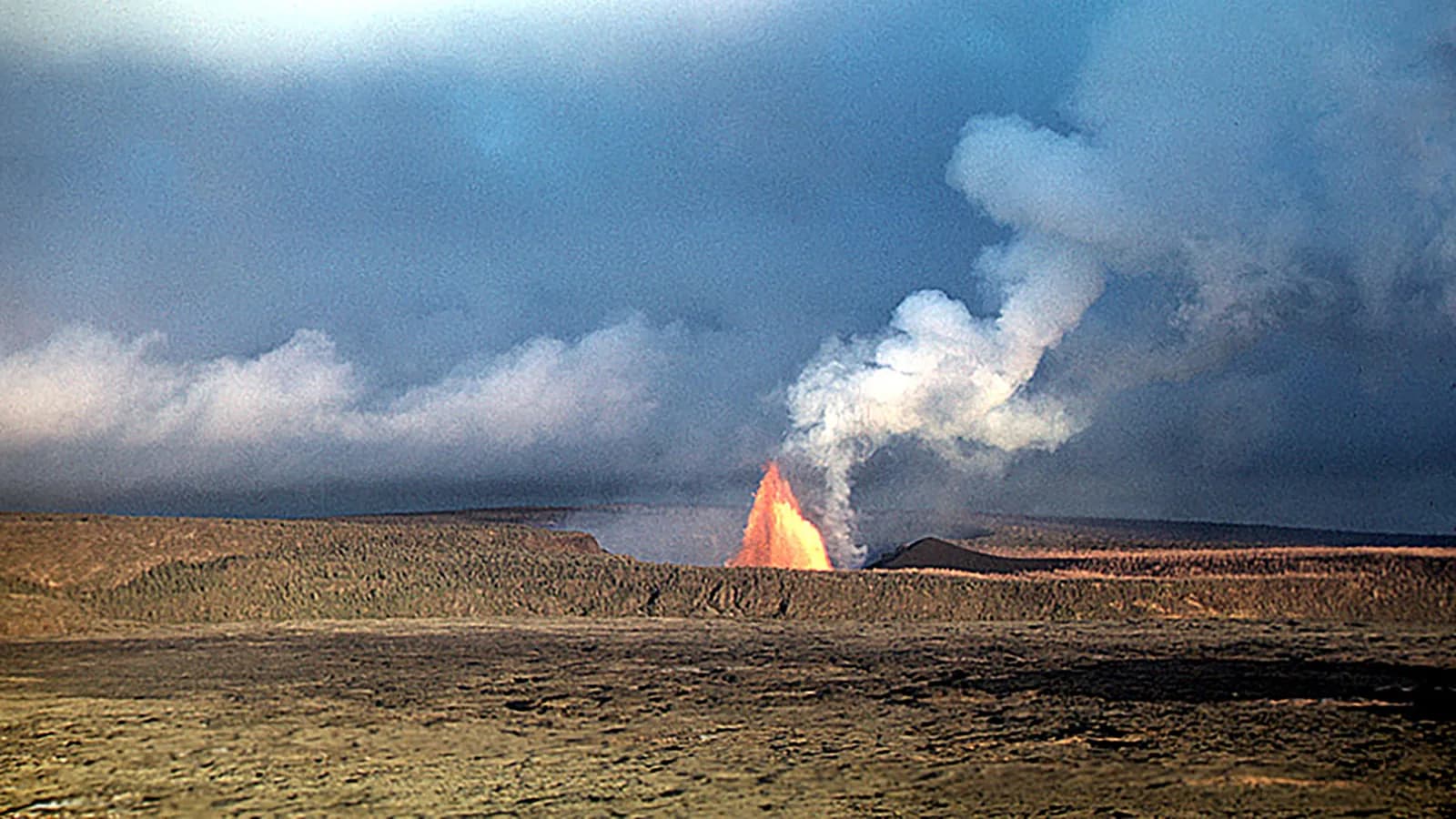
Yale and Columbia researchers say most of Earth’s carbon may have come from the outer solar system and arrived late in the planet’s growth.
The team, led by Yves Moussallam of Columbia’s Lamont-Doherty Earth Observatory, measured carbon in tiny magma droplets from Hawaiian eruptions, including Kīlauea Iki in 1959. These droplets, called melt inclusions, are bits of molten rock trapped inside growing crystals. Each one preserves a snapshot of magma from deep underground, before it loses much of its gas.
Droplets tied to the center of the plume, the column of hot rock rising beneath Hawaii, held unusually heavy carbon. The authors interpret it as carbon that leaked from Earth’s core into the mantle, the rocky layer above. “We interpret this as carbon leaking from the core,” said Damanveer Grewal, a Yale assistant professor of Earth and planetary sciences.
Heavy carbon in Hawaiian magma
The new paper, published Nov. 9 in the Proceedings of the National Academy of Sciences (PNAS), analyzed 48 melt inclusions from three eruptions: Kīlauea Iki, the Keanakākoʻi eruptions from about 1500 to 1840, and an older one on Oʻahu. The first two presumably sampled the plume’s center, Oʻahu’s its edge.
Carbon comes as isotopes, versions of the element with different numbers of neutrons. Carbon-13 is the heavier one. Central-plume inclusions measured about minus 1.2 parts per thousand on the standard carbon-13 scale, while the Oʻahu sample came in near minus 7, typical of ambient mantle. Fewer than 2 percent of more than 4,000 diamond analyses, a common benchmark for mantle carbon, reach minus 1.2 or higher, the authors report.
The deepest inclusion formed about 14 miles (22 kilometers) down, within the upper mantle, the paper said. Earlier ruthenium and tungsten studies also found signs of core leakage in Hawaiian lavas, which fits the idea that the plume taps the base of the mantle.
Meteorites as the likely source
Assuming about 80 percent of Earth’s carbon sits in the core, the authors estimate that Earth overall carries carbon at least as heavy as minus 2.4. Ordinary chondrites, common inner solar system meteorites, run far lighter, near minus 24. Carbonaceous chondrites, carbon-rich meteorites from the outer solar system, do match. Samples from asteroid Bennu, thought to resemble them, also run heavy.
Timing is the narrow part. If that material landed earlier, impacts would have stripped much of it away. If later, the core had already closed. The paper puts the window at the final stage of Earth’s main assembly, shortly before the Moon-forming collision.
The authors flag limits. The core link is an interpretation, not a direct sample. The deepest inclusion, behind the direct measurement, is a single analysis, though the wider trend agrees. The plume value carries an uncertainty of plus or minus 2.0, and the core estimate spans minus 2.5 to plus 49. The Oʻahu inclusions formed about 4 miles (6 kilometers) down, so crustal contamination can’t be ruled out.
The paper tested only Hawaii, so whether other plumes carry the same signal is open. The findings appear in PNAS.
Get the latest news delivered to your inbox.
Related articles