Single coolant drop cools simulated computer chip hotspots by 30.6°F in 15 seconds
University of Waterloo engineers developed a hybrid cooling method that pairs a water bath with...
University of Waterloo engineers developed a hybrid cooling method that pairs a water bath with single drops of boiling coolant to cool computer chip hotspots. In lab tests, one drop lowered the temperature of a simulated hotspot by up to 30.6 degrees Fahrenheit (17 degrees Celsius) in 15 seconds, the university said Nov. 10.
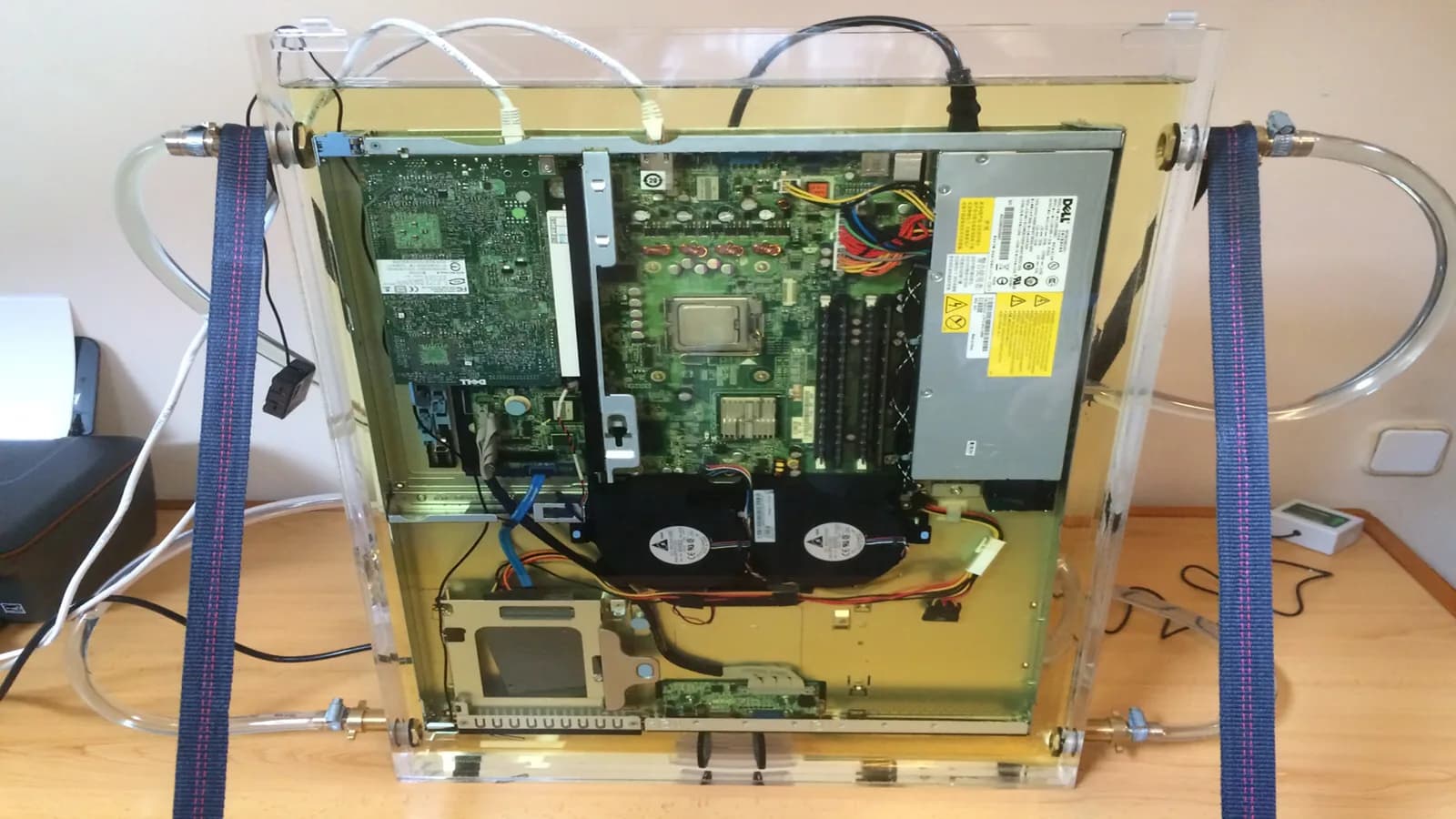
Data centers running artificial intelligence (AI) workloads generate enormous heat, so operators increasingly submerge chips in coolant. Small areas of a chip can still run much hotter within seconds, which can slow it, age it faster and reduce reliability, the university said. Coolant that flows past reacts too slowly.
The Waterloo design splits the work. Inexpensive deionized water, stripped of dissolved minerals, handles steady heat. A drop of costly coolant handles the spikes. The aim is to spend the expensive fluid only where and when a chip needs it, which could make AI data center cooling cheaper.
How one drop cools a hotspot
Sushanta Mitra, a professor of mechanical and mechatronics engineering at Waterloo, worked with postdoctoral researcher Tian-Yu Zhang and Ph.D. student Arnav Banerjee. Their peer-reviewed study covers the tests. The team chose an electronics coolant that boils at a lower temperature than water. It’s also heavier, so it doesn’t mix and stays put on a hotspot, the university said.
Boiling absorbs a lot of heat, and rising bubbles stir the water so it carries heat away faster, Mitra said. “We get the punch of boiling, but only where and when it’s needed,” Mitra added.
The team then wrapped coolant drops in a silicone oil skin. Tiny, heat-conducting ceramic particles help control how fast the drops boil. Per the paper’s abstract, the hotspot center cooled by about 30.6 degrees Fahrenheit within 15 seconds at a heat flux (heat delivered per unit of area) of about 93 watts per square inch (14.4 watts per square centimeter). Microsoft described a two-phase immersion tank, where coolant boils on servers, in 2021.
Two delivery routes and open questions
The researchers envision two routes. Coolant drops could circulate through the water and activate when they reach a hotspot. Or sensors could detect hotspots and deliver drops directly to them. The university lists electric vehicles, batteries, high-powered lasers and light-emitting diode (LED) lighting as possible uses.
Other teams attack the problem inside the chip. Peking University researchers described an embedded cooling design that boils insulating liquid near hotspots, and Korea Advanced Institute of Science and Technology researchers carved water channels into silicon.
The results have limits. The 30.6-degree figure applies to one heat flux on a simulated chip, not a working server. The release doesn’t say how drops would be replaced, how much coolant a data center would need, or what the cooling would cost. Both delivery routes are described only as envisioned.
The system remains under development, and the release gives no timeline for trials on real chips. The findings appear in the Journal of Colloid and Interface Science, volume 725.
Get the latest news delivered to your inbox.
Related articles