US scientists unravel how different iridium faces impact energy reactions
Scientists at the Argonne National Laboratory compared different crystal faces of iridium, a key ingredient...
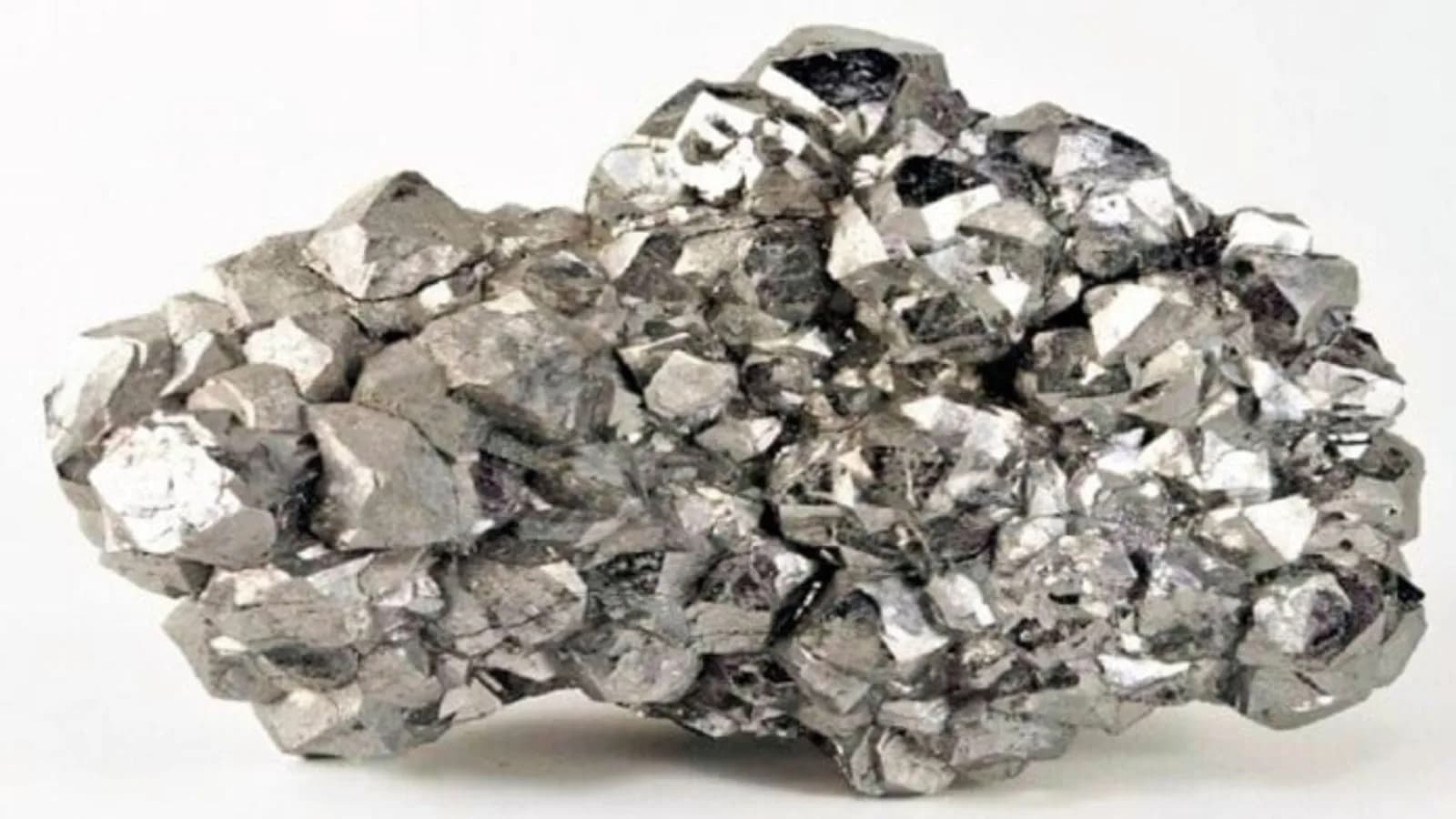
Scientists at the Argonne National Laboratory compared different crystal faces of iridium, a key ingredient in chemistry, to see how each of them drove key energy reactions.
The researchers compared the faces in both acidic and alkaline environments to arrive at benchmark data on the surface behaviors.
A metal crystal has several faces, which expose its atoms to its surroundings in different geometric patterns. If the crystal is cut, atoms can be stacked differently in different pieces, and how these pieces behave in a chemical reaction is dependent on how atoms are arranged on the faces.
Much like the facets of a cut diamond reflect light differently, the faces of a cut metal crystal also react differently in a chemical reaction, even though the atoms involved are the same. Iridium is a silvery-white transition metal that is extensively used as a electrocatalyst, which speeds up reactions at electrode surfaces.
Knowing how the metal behaves in these reactions can help scientists accurately predict how these reactions can be improved. So, researchers at ANL decided to build a database of iridium’s electrocatalytic performance.
Which reactions were tested?
The team exposed three iridium crystal faces to different solutions, either acidic or basic. This was important, since the metal is used in a wide range of chemical reactions that occur on either side of the pH scale.
Acidic liquids are good conductors of electricity but do not offer stable environments for most materials. Basic liquids, on the other hand, are easier to work with and are suitable for a wide variety of materials, but have other limitations.
The focus of these experiments was four reactions that are critical to electrochemical technologies. These are making hydrogen, using hydrogen as fuel, oxygen reduction or adding oxygen atoms to a reaction and handling the unwanted by-product hydrogen peroxide.
Impact of the surface
The researchers found that different iridium faces were better for different applications, and no one size fits all. Similarly, some liquid environments were better suited for certain reactions. For instance, the hydrogen-related reactions work more slowly in alkaline conditions, while the acidic liquid helps the reaction by drawing in more protons.
The oxygen reduction reaction was indifferent to the liquid environment, but the byproduct, hydrogen peroxide, was almost absent when working in an acidic environment, while it was generated in larger amounts under some alkaline environments. This is important to note, since hydrogen peroxide can lower reaction efficiency, while also being a risk to electrochemical devices.
“An important contribution of this research is not just whether iridium is a good or bad material overall,” said Pietro Papa Lopes, an electrochemist at ANL, who was involved in the work in a press release. “It’s that we are providing the community with benchmark reactivity data for well-defined iridium surfaces.”
The research shows that the catalytic performance of a metal is not just dependent on its surface but also on its environment. By controlling the two, researchers can isolate the behavior of specific iridium structures.
The study findings were published in the journal American Chemical Society Catalysis.
Get the latest news delivered to your inbox.
Related articles