China’s 5,000-mile H-6K bomber shows off pods built to disrupt enemy radar systems
China’s H-6K strategic bomber has appeared in images carrying two suspected electronic warfare pods, hinting...
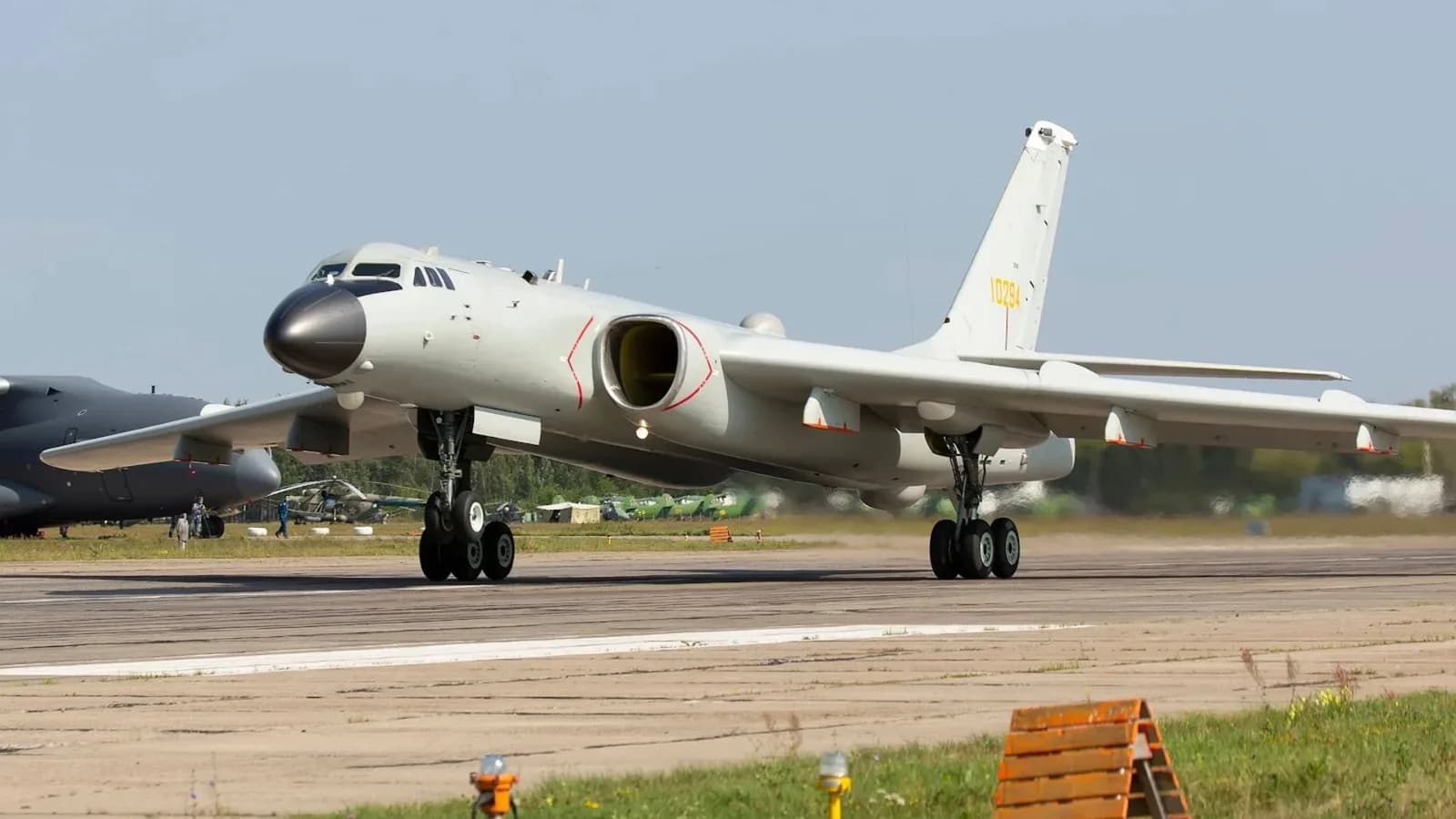
China’s H-6K strategic bomber has appeared in images carrying two suspected electronic warfare pods, hinting at a possible upgrade to its long-range strike capabilities. The equipment could help the aircraft interfere with enemy radar without relying entirely on dedicated electronic warfare escorts.
The photographs surfaced on social media Saturday, but their authenticity remains unverified. They show two pods mounted beneath the bomber’s wings. Their appearance resembles equipment used by China’s J-16D electronic warfare aircraft, although analysts have not confirmed their identity or operational status.
New pods could disrupt radar
Electronic warfare pods can interfere with radar signals, making it harder for opposing forces to detect, track, or engage aircraft. Depending on their design, these systems can support missions by disrupting radar coverage or complicating an adversary’s air defense operations.
Adding such equipment to the H-6K could give Chinese forces more flexibility during long-range strike missions. The bomber could potentially conduct electronic attacks alongside its existing weapons operations, reducing its dependence on specialized escort aircraft in certain scenarios.
However, the available images do not establish whether the pods represent a permanent upgrade, a testing configuration, or an operational capability. Their performance and the radar frequencies they might target also remain unknown.
China has previously equipped other H-6 variants with electronic countermeasures. The H-6C served as a specialized electronic warfare aircraft during the 1980s. The H-6G later carried similar equipment, demonstrating that China has explored this role for decades.
H-6K remains long-range workhorse
The H-6K entered flight testing in 2007 and remains a central part of the People’s Liberation Army Air Force’s long-range strike fleet. China developed the H-6 family from the Soviet-era Tu-16 bomber, adapting the original design for modern weapons and mission requirements.
The H-6K can reportedly travel around 8,000 kilometers (4,970 miles) and carry approximately 12 to 15 metric tons of payload. Its ability to launch weapons from a distance allows it to threaten targets without necessarily entering the immediate engagement range of opposing defenses.
Its weapons portfolio includes stand-off cruise missiles and ballistic missiles, including nuclear-capable systems. Earlier this month, Chinese state media released footage showing an H-6K launching a YJ-21 hypersonic anti-ship missile. The YJ-21 reportedly reaches speeds of Mach 8 to Mach 10 and has an estimated range of around 2,000 kilometers (1,240 miles). Those figures illustrate the bomber’s potential to deliver weapons against distant maritime targets.
J-16D offers important clues
The suspected pods resemble equipment associated with the RKZ930 family, developed for China’s J-16D electronic attack aircraft. Beijing unveiled the J-16D in 2021, positioning it as a dedicated electronic warfare variant of the J-16 fighter.
The aircraft serves a role comparable to the U.S. Navy’s EA-18G Growler, which supports military operations by attacking or disrupting hostile electronic systems. RKZ930 variants feature different shapes and mounting arrangements, including wingtip and underwing installations.
Analysts believe the variants address different radar frequency bands, although detailed specifications remain limited. Similar equipment may also support the Chinese Navy’s carrier-based J-15D electronic warfare aircraft.
If the H-6K eventually adopts these pods for operational missions, China could expand the bomber’s role beyond delivering long-range weapons.
Related articles