Explained: How octopuses squeeze through impossible gaps smaller than their bodies
Octopuses can slip through openings smaller than their own bodies, and new research shows that...
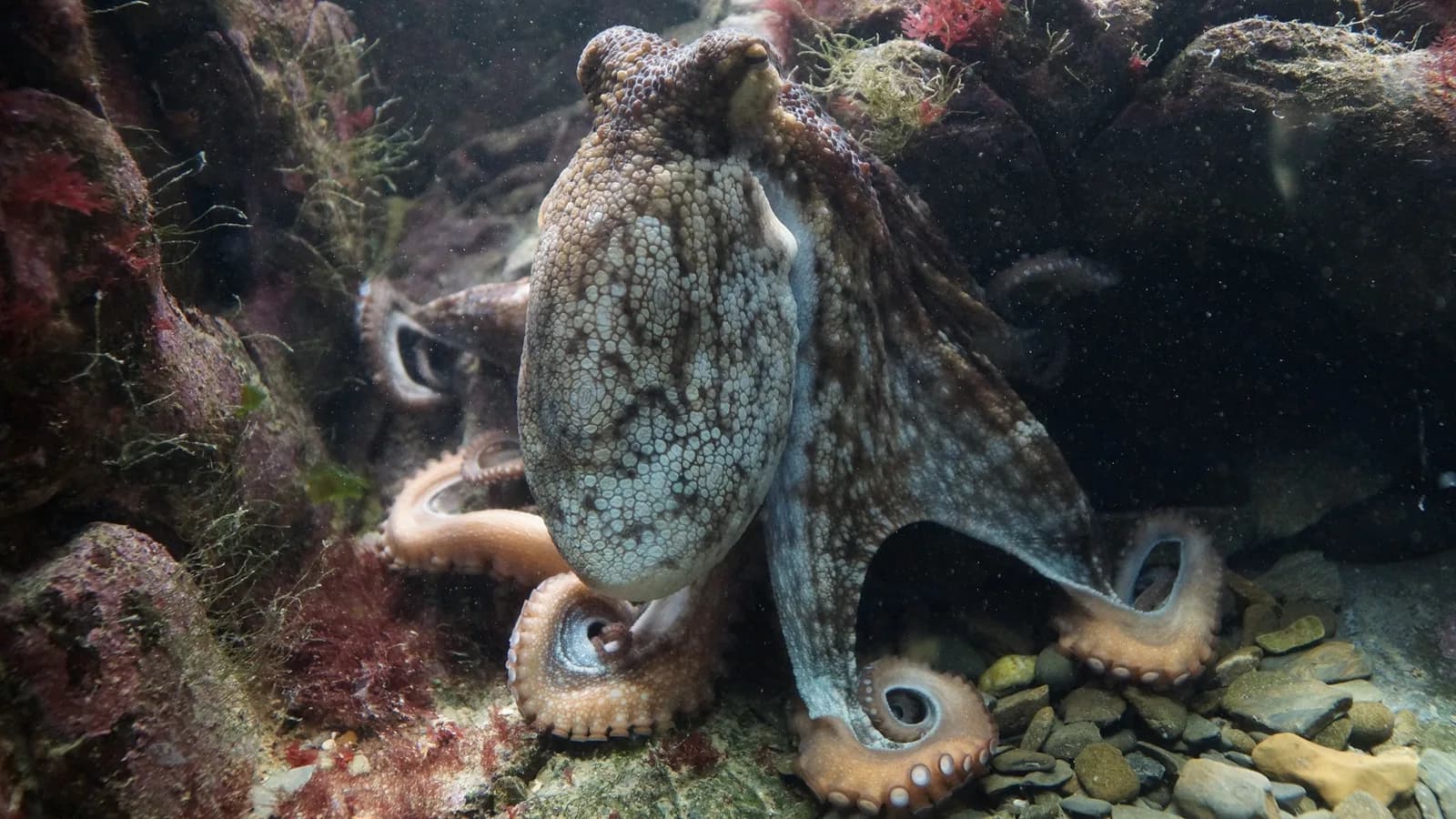
Octopuses can slip through openings smaller than their own bodies, and new research shows that common octopuses change tactics depending on how tight the squeeze is. The finding could help engineers build rescue robots that wriggle through rubble.
The study filmed young common octopuses and Mayan octopuses escaping from clear Perspex boxes through holes of different sizes. Nobody had examined exactly how the animals manage gaps far narrower than their mantles, said Wenci Xin of the National University of Singapore. Michael Kuba of the University of Naples Federico II and Tamar Gunit and Daniel Abed-Navandi of Austria’s Haus des Meeres-Aqua Terra Zoo also took part.
Measuring the squeeze
Kuba measured the distance between each animal’s eyes, which ranged from 15 to 35 millimeters (about 0.6 to 1.4 inches). That span is a good stand-in for the size of the stiff cartilage sheath that encases the octopus’s central nervous system, which could set the smallest hole it can pass. Xin then designed individual boxes: some with a hole slightly wider than the animal’s eye spacing and others that were 5 millimeters (0.2 inches) smaller.
Roomy hole: Arms first, then a pull
With the larger hole, each octopus first explored the opening with its arms, then pushed one through, usually one of the two front left arms, and threaded up to five more behind it. Then it reached back with two of the arms that had already passed, stuck them to the partition with its suckers, stiffened and extended them to push, and hauled the remaining arms, head and mantle through. The whole move took about 20 seconds.
A two-stage squeeze
The smaller hole changed the routine. Common octopuses could thread only so many limbs through at once. At that point, they split the final move into two stages: first pulling the remaining arms through, then slightly compressing the mantle and dragging it after. Xin said he was surprised, since the team had expected the same approach regardless of the size of the gap.
Mayan octopuses behaved differently. They didn’t try the tighter hole at all and simply sat in the corner of the box without exploring it with their arms. When offered both a small and a large hole, they checked the small one first, abandoned it, and left through the larger opening.
Lessons for rescue robots
Xin and Cecilia Laschi, also of the National University of Singapore, want to turn the findings into soft-bodied robots that search ruins in disaster zones and explore the open sea. Today’s search-and-rescue and exploration robots have slender, snake-like bodies to get through narrow gaps, Xin said. That limits how many sensors and manipulators fit inside and restricts how well they adapt on hard missions.
Octopus-inspired designs, he and Laschi say, could open a new era in rescue robotics.
The study used young animals in boxes, so the report doesn’t say how the results hold for adults or in the wild. Xin summed up the animals’ skill this way: octopuses can change shape and flow through a gap “almost like water,” so their size doesn’t always limit where they can go.
The study was published in the Journal of Experimental Biology.
Get the latest news delivered to your inbox.
Related articles