Mitsubishi Electric claims world-first GaN advance to reduce power consumption
Mitsubishi Electric said it identified how crystal defects destabilize high-frequency gallium nitride (GaN) transistors and...
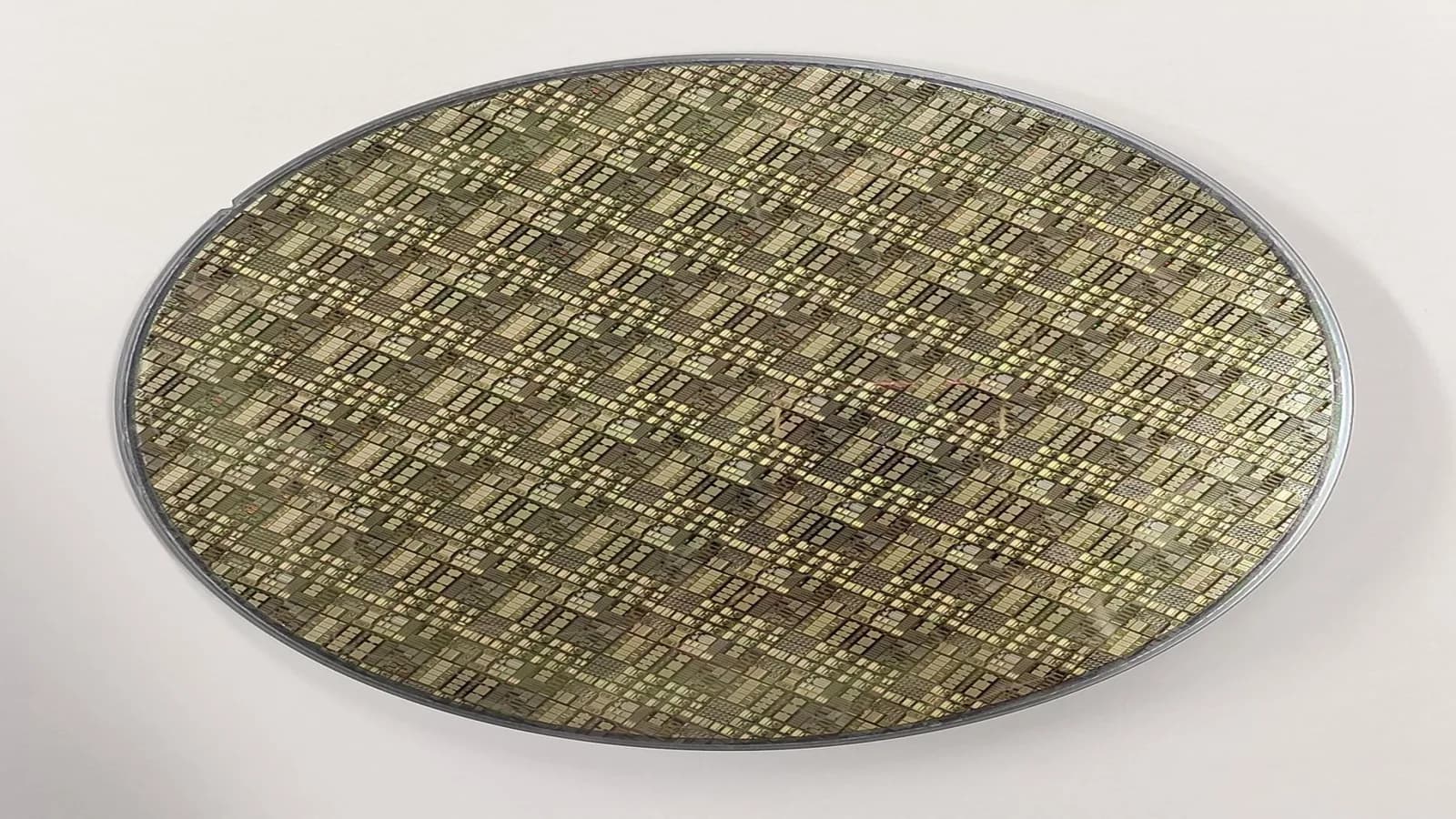
Mitsubishi Electric said it identified how crystal defects destabilize high-frequency gallium nitride (GaN) transistors and showed that GaN substrates can significantly suppress the effect. The company announced the result Nov. 9.
The effect is called frequency dispersion, meaning a device’s current and other characteristics shift with the operating frequency, so a device doesn’t respond the same way at every frequency. That makes its operation unstable. To compensate, equipment has needed complex digital correction circuits, which the company said enlarge systems and add power losses.
The company said most GaN transistors are built by growing a thin single-crystal GaN layer on a silicon carbide (SiC) base, called a substrate. SiC conducts heat well, which is why makers chose it. But the two materials differ, so crystal defects have been unavoidable as the layer forms. Those defects slow electrons at high frequency, according to the company.
Testing transistors on GaN substrates
In a project commissioned by Japan’s Ministry of the Environment, the company characterized transistors built on substrates made entirely of GaN that can be handled on their own, according to Mitsubishi Electric’s release. It paired the measurements with a new circuit analysis method that accounts for how defects respond to outside signals. The company has taken part in the ministry’s project on CO2-cutting components and materials since 2024. It said Japanese companies have particular strengths in GaN substrates.
The company said the tests showed that frequency dispersion can be suppressed on a GaN substrate and that the transistors produced flat frequency characteristics. In plain terms, that means a device behaves the same across frequencies, so it may need less correction. It said that could let manufacturers simplify the digital correction circuits that had been essential, which would help shrink high-frequency equipment and lower its power use. The release gave no figures on how much dispersion fell or how the transistors were measured.
Possible uses and unanswered questions
The company pointed to industrial microwave heating systems used in chemical recycling, which converts waste plastics back into chemical raw materials. It also named 5G and 6G base stations and radar systems. Demand for high-power, high-efficiency GaN transistors has risen quickly in those fields in recent years, it said.
However, several points remain unconfirmed. All claims come from the company, and the release gives no device specifications or comparison data against GaN-on-SiC transistors. It doesn’t say whether the work has been peer reviewed, and it gives no timeline for commercial products. It names no researchers and gives no frequency range for the tests. The claim of a world first rests on the company’s own review of 156 papers found through a Google Scholar search on Oct. 26. The release also doesn’t say how GaN substrates compare with SiC on heat dissipation, the reason SiC became the standard.
Mitsubishi Electric plans to present details at the International Workshop on Nitride Semiconductors 2026, which runs Nov. 8 to 13 at Kumamoto Castle Hall in Kumamoto City, Japan. The company published the news as release No. 3953.
Get the latest news delivered to your inbox.
Related articles