
First-ever: US, UK team up to launch heavyweight torpedo from submarine drone
A British uncrewed submarine has fired a U.S. Mk 48 heavyweight torpedo in a joint...
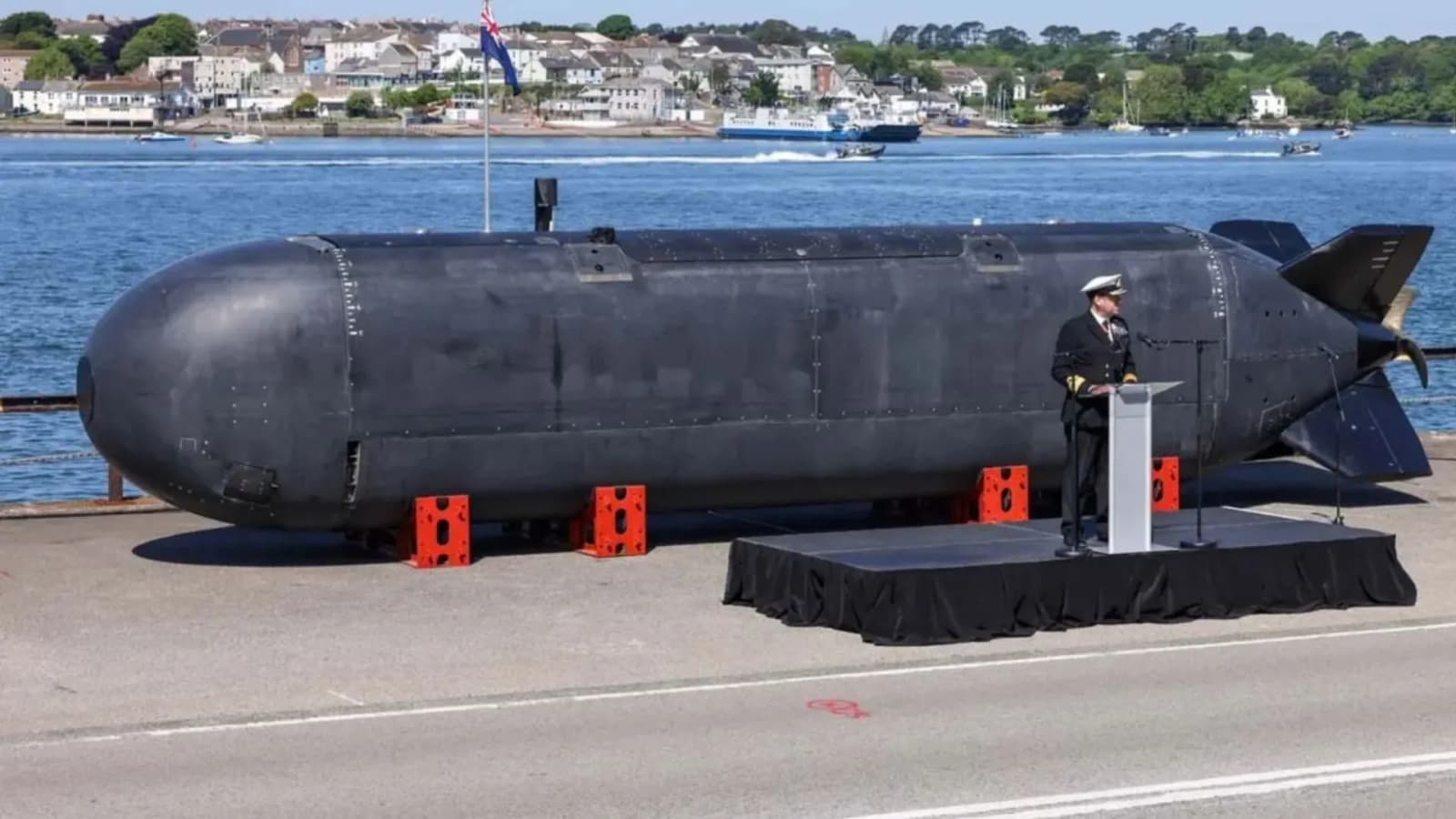
A British uncrewed submarine has fired a U.S. Mk 48 heavyweight torpedo in a joint test that could help both countries develop armed underwater drones. The U.S. Navy and Royal Navy conducted the trial on September 13 at the British Underwater Test and Evaluation Center in Scotland.
It took place under Pillar 2 of the AUKUS partnership, which covers cooperation on advanced technologies, including autonomous systems. The launch was a proof of concept, with neither announcing an operational version of the system.
A torpedo carried beneath Excalibur
The test used Excalibur, a nearly 40-foot-long, 19-metric-ton uncrewed underwater vehicle developed for the Royal Navy under Project Cetus. A Mk 48 torpedo was mounted beneath its hull rather than placed in its internal payload bay. The weapon is about 19 feet long and 21 inches in diameter.
The external launch capability came from two additional efforts, Project Broadsword and Trial Iron. According to the U.S. Navy, the trial validated the mechanical, electrical, and software integration needed to launch an American weapon from a British autonomous vessel.
The project was approved in February 2026 and carried out in less than seven months. The navies have not disclosed how Excalibur was controlled during the trial or whether the torpedo was fired at a target.
A first step toward armed underwater drones
“This successful test marks a historic first for allied undersea warfare,” said Adm. Daryl Caudle, the U.S. chief of naval operations.
He said launching an American heavyweight torpedo from a Royal Navy autonomous vehicle demonstrated the allies’ goal of weapon interchangeability.
For the Royal Navy, the trial also points toward a fleet in which crewed submarines operate alongside uncrewed vessels.
Larger underwater drones could give navies more ways to maintain a presence across wide areas or monitor critical sea routes, though the September test alone does not establish how Excalibur would perform on such missions.
“This is a really important moment in our journey towards building a hybrid navy, which is where the Royal Navy will sail with crewed ships and submarines alongside uncrewed and autonomous vessels,” said Luke Pollard, the U.K.’s minister of state for defense readiness and industry.
More trials are planned
The launch leaves operational questions open. Navies would still need to determine how to deploy and recover armed underwater drones, control them during missions, and integrate them with other forces. Footage of the Scottish test showed Excalibur being lowered into the water by a truck-mounted crane.
The U.S. Navy said it is working with international partners on another demonstration involving Anduril’s Dive-XL underwater vehicle. Called Project Cutlass, that effort will examine payload integration, command-and-control systems, and tactical employment.
For now, Excalibur’s Mk 48 launch shows that a British uncrewed platform can fire a standard U.S. Navy torpedo. Turning that demonstration into a deployable capability will require further development and testing.
Related articles

Discord will now automatically estimate your age
Discord is rolling out a new global age assurance system, seven months after pausing its previous verification measures following backlash from users.

YouTube is building AI creator tools that do almost everything for them
Part of the job of a content creator is to figure out how to get their work in front of the most people.

This $199 GPS sports watch is repairable, modular, and open-source
The Una Watch costs less than most Garmin watches now that its price has been lowered from the Kickstarter offer of $350 to $199, but its modular, repairable design grabbed my attention first.

One of the best Metroid games for the Switch is 30 percent off
Nintendo’s “Customer Appreciation” sale continues through September 26th.


Nobody does it like Remedy
Video games have given us plenty of ways to traverse huge open worlds, but none have felt quite as oddly exhilarating as manipulating gravity in Control Resonant's twisted version of New York City.