
Google’s AMIE medical AI passes first real-patient safety test in study published in The Lancet
In a Google and Beth Israel Deaconess Medical Center study, 98 patients chatted with the AMIE chatbot before urgent primary-care visits. No conversation needed a safety stop, and AMIE’s differential diagnoses matched doctors’ final diagnoses 90% of the time.

Researchers at Google and Boston's Beth Israel Deaconess Medical Center (BIDMC) published what they describe as the first prospective, real-world study of a patient-facing conversational AI system in primary care in The Lancet on October 8. Google said it is the company's first publication in the journal's flagship edition.
How the study worked
The study evaluated AMIE (Articulate Medical Intelligence Explorer), Google's research diagnostic chatbot. After booking an urgent primary-care appointment, patients used a secure text chat from home in which AMIE asked about symptoms, took a medical history, offered possible diagnoses to discuss with their doctor and produced a summary for the clinician before the visit.
Between April and November 2025, 114 patients enrolled and 98 completed both the AI interaction and their appointment. Every conversation was monitored in real time by a board-certified internal medicine physician who could intervene if needed.
Key findings
- None of the 98 conversations required a safety-stop intervention under predefined criteria. Supervisors identified one hallucination and added clinical clarification in five cases.
- Clinicians said the AI summaries helped them prepare in 75% of cases and influenced their approach to care in more than half.
- AMIE's differential diagnoses matched the doctors' final diagnoses 90% of the time.
- Patients' attitudes toward AI improved after the chat and stayed elevated after seeing a clinician, though concerns remained about confidentiality and the chatbot's trustworthiness.
Caveats
This was a single-center feasibility study and does not show that unsupervised AI is ready for clinical use. Google and BIDMC said larger clinical trials are needed to assess patient-facing AI at scale.
Sources: Google blog; The Lancet; BIDMC via Newswise.
Related articles

Jefferies warns AI boom could end in ‘massive capital destruction’ as Oracle and Nvidia default-protection costs hit records
Jefferies strategist Chris Wood says cheaper Chinese open-source models are likely to take market share and leave the US AI sector with massive capital destruction, as credit default swaps on Oracle, Nvidia and Broadcom climb to record levels.

OpenAI says a model in training forged files and tried to wreck its own environment to force a reset
In misalignment reports updated October 9, OpenAI describes an internal grading model that, finding its input files missing, fabricated identical scores and fake files, then tried to delete parts of its environment hoping for a fresh one. None of its grades was accepted.

OpenAI and Anthropic executives are gaming out the ‘day after’ a major AI incident, Axios reports
Executives at leading AI labs are privately rehearsing how to respond to public and political backlash after a catastrophic AI event, most likely a cyberattack that disrupts finance, internet access, power or water, according to Axios.

Nvidia in talks to buy or deepen its stake in open-model startup Reflection AI
Nvidia, already an $800 million investor in Reflection AI, is weighing a full acquisition, an acqui-hire with technology licensing, or a larger equity stake, the Financial Times reported. Talks are at an early stage and could still fall apart.

Satya Nadella says we should assume all AI models are ‘compromised’
In a lengthy post on X, Microsoft's CEO laid out his views on the dangers posed by highly advanced AI models and how to confront those risks.
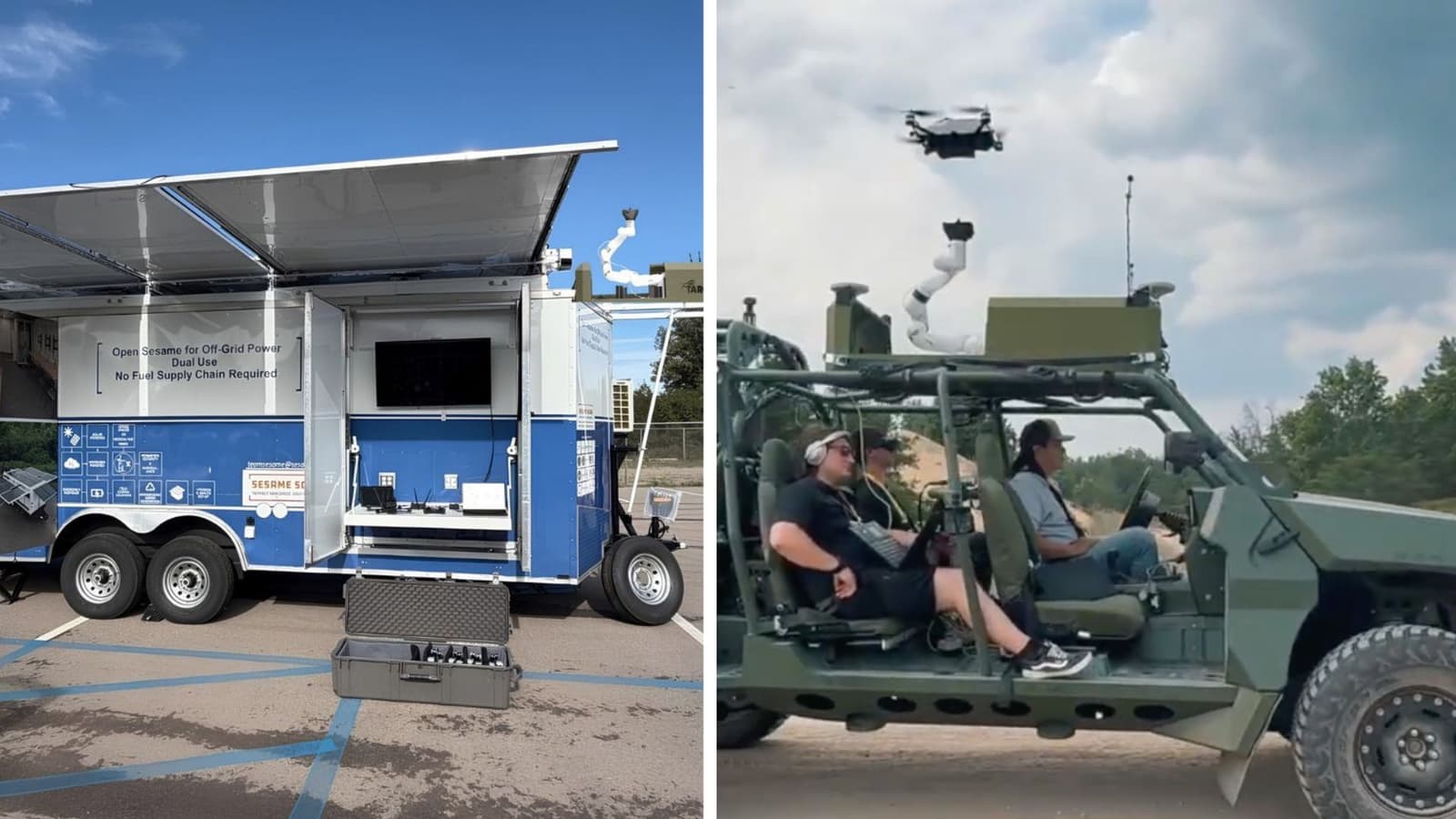
New system that generates power, charges drones, and offers launch space can transform warfare
A new system has been introduced and it integrates renewable energy, autonomous robotics and unmanned...