MIT uses optimized emissions scenarios to improve climate prediction accuracy
MIT researchers have developed a way to train AI climate emulators on a few computer-generated...
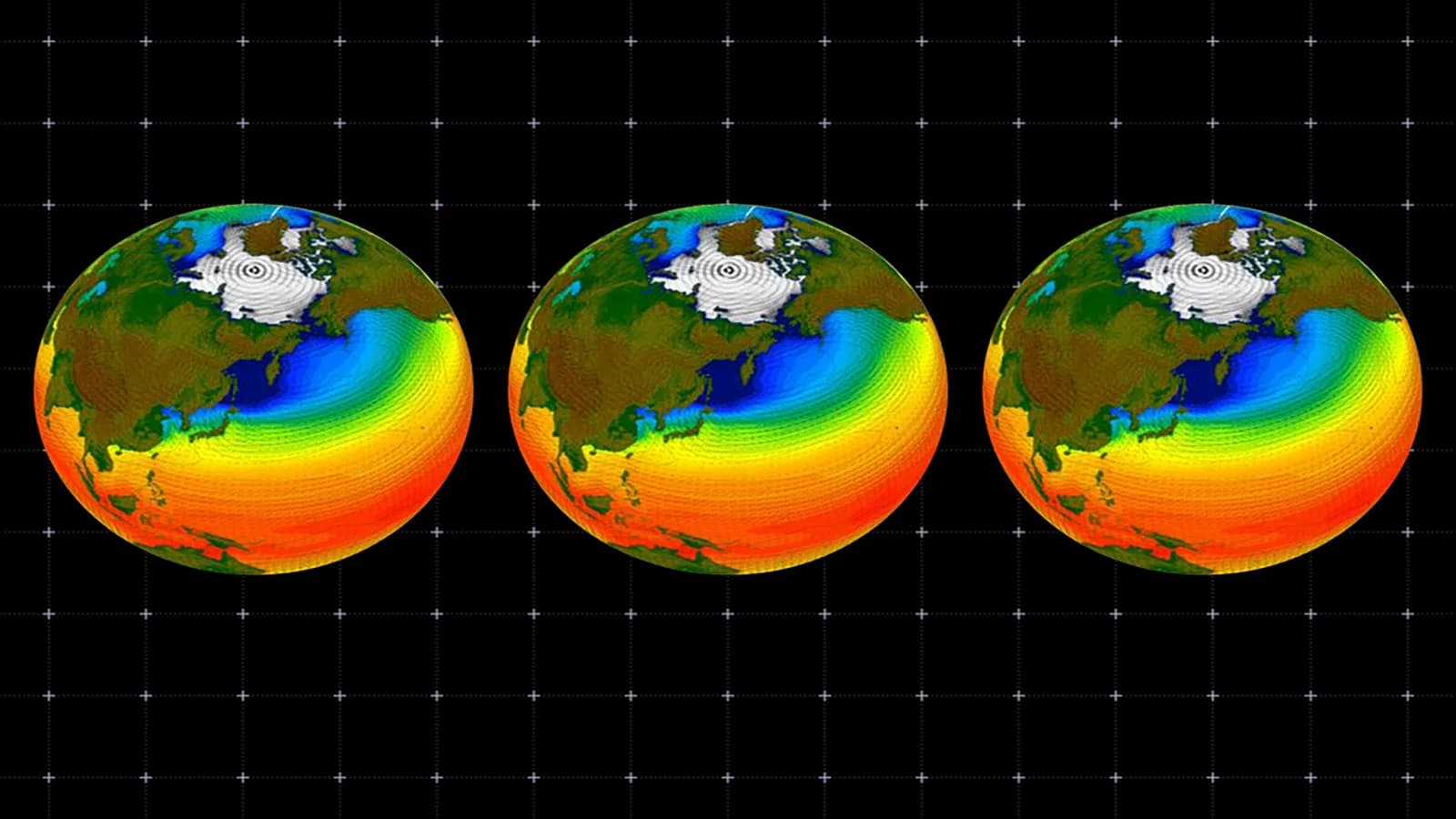
MIT researchers have developed a way to train AI climate emulators on a few computer-generated emissions scenarios, and tests on simplified climate models suggest it can beat standard training data, according to a paper in the Proceedings of the National Academy of Sciences (PNAS) and an MIT release.
Climate emulators are fast AI models that imitate Earth system models (ESMs), the physics-based simulations behind long-range climate projections. MIT said an ESM can take months on a cluster of supercomputers to project one scenario, while an emulator runs in seconds, so scientists can test thousands of scenarios.
Emulators are usually trained on six to eight realistic emissions pathways, and each pathway needs its own ESM run. The MIT team instead used a simple climate model, built so software can calculate how small changes to the emissions input shift the emulator’s error. It then adjusted a starting emissions trajectory, step by step, to lower that error.
Training on odd scenarios
The optimized scenarios can look nothing like a realistic future, the release said. Christopher Womack, the lead author and a postdoctoral researcher at ETH Zurich, said the team doesn’t “care so much if the training scenarios are realistic.” The emissions curves swing rapidly instead of following smooth trajectories, and Womack said those swings give the emulator more information about the whole system.
In the preprint, an emulator trained on one optimized scenario beat one trained on six standard pathways when tested against the simple climate model. The baseline was scored on its own training data, its theoretical best case. A second test used the MIT Earth System Model, a simpler stand-in for a full ESM, with carbon dioxide-only scenarios. Emulators trained on one or two optimized scenarios matched or beat the six-scenario baseline on other policy and idealized scenarios. The baseline stayed best on its own training scenarios.
Two scenarios together improved average skill on alternate policy scenarios by 32.6 percent. MIT said an emulator trained this way also captured local pollution rules that cut one pollutant while others rose, a test traditional emulators failed.
Limits of the simple-model tests
The tests used simpler models, not a full ESM. The release said a user would run an ESM only once, but the preprint lists full-ESM simulation of the optimized scenarios as future work, so that saving is unproven. It assumes scenarios optimized on a simple model carry over to a full one. The preprint found the simple model diverged from the intermediate-complexity model by up to 4.5 degrees Fahrenheit (2.5 degrees Celsius) in high-warming scenarios where temperatures level off or fall. Combining two optimized scenarios occasionally weakened gains on one pathway, and the emulators were basic neural networks.
NASA’s Discover supercomputer is mainly used for climate predictions. AI forecasters exist in weather work: Google’s GraphCast produced 10-day forecasts in under a minute, its developers reported.
The team wants to test the technique on a scenario generated by a full ESM and to try it on other climate models and in machine learning. Schmidt Sciences supported the work through MIT Grand Challenges. The study appears in PNAS.
Get the latest news delivered to your inbox.
Related articles