NASA tests 12 next-gen heat shields aboard trash-filled spacecraft for Mars missions
NASA is preparing to test 12 experimental heat shield capsules during the fiery destruction of...
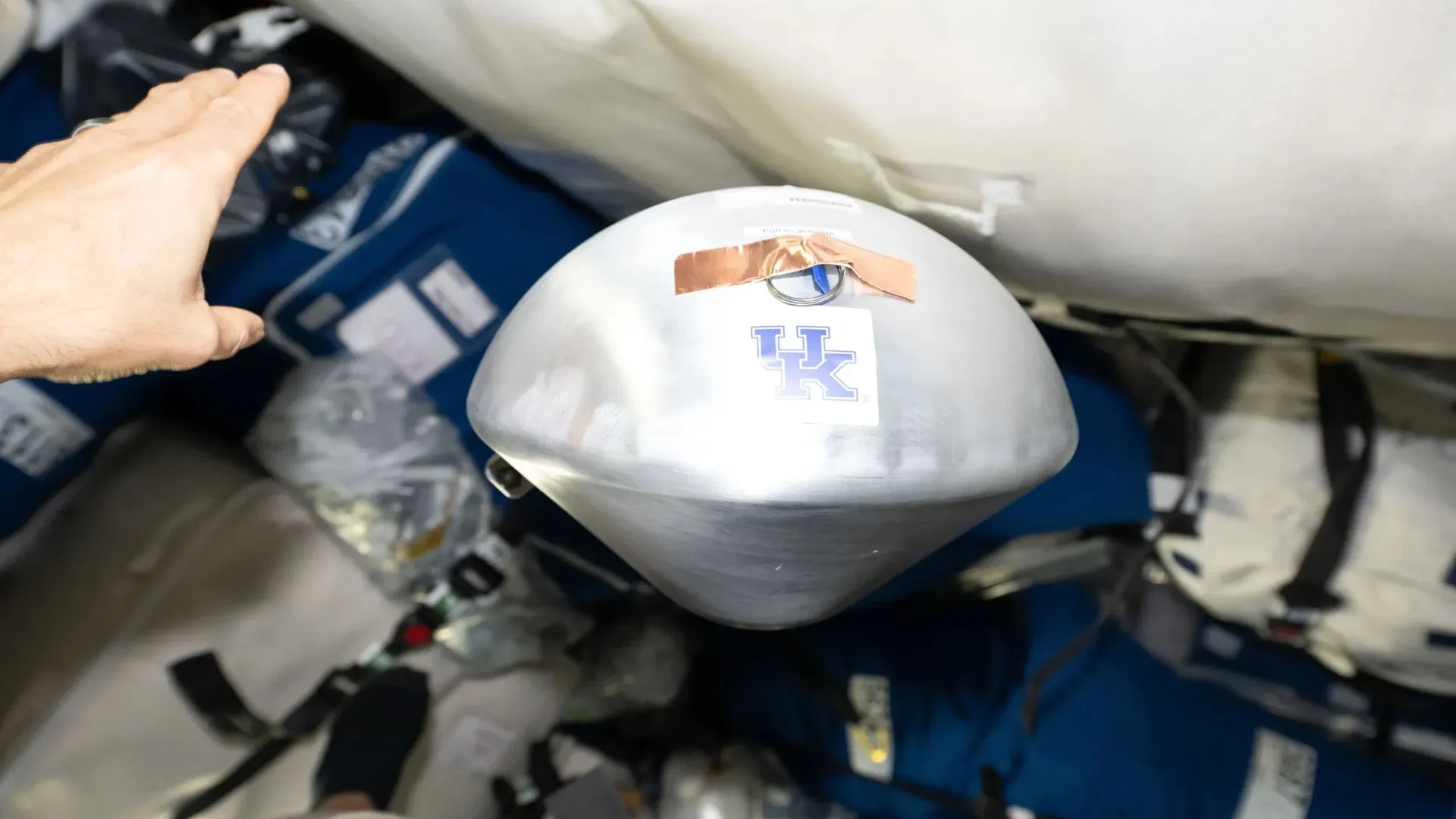
NASA is preparing to test 12 experimental heat shield capsules during the fiery destruction of a cargo spacecraft that departed the International Space Station on Friday, October 9. The tests could help develop thermal protection systems for future missions to the Moon, Mars and beyond.
Northrop Grumman’s Cygnus XL spacecraft was released from the station’s Canadarm2 robotic arm at 12:44 p.m. EDT, carrying thousands of pounds of discarded equipment and waste alongside the experimental capsules.
NASA plans to send the spacecraft into Earth’s atmosphere on October 12, where it will break apart during a controlled re-entry. The capsules will separate from the vehicle and collect data on how different heat shield materials withstand extreme conditions.
The experiment, known as Kentucky Reentry Probe Experiment-3 (KREPE-3), is a collaboration involving NASA, the University of Kentucky and other research partners. It uses spacecraft already scheduled for disposal to conduct relatively inexpensive tests of advanced thermal protection technologies.
Turning trash into research
The 12 capsules, designed by University of Kentucky students, contain sensors to measure temperature, pressure, movement, magnetic fields and light during atmospheric re-entry.
The capsules will transmit their measurements through satellite signals, allowing researchers to study how the materials perform under actual flight conditions.
“It’s a smart way to get flight data on materials that are still in development,” said Keith Peterson, a materials engineer at NASA’s Ames Research Center. “We’re essentially hitching a ride on a vehicle that’s already coming back to Earth.”
Among the technologies being tested is a 3D-printed heat shield developed through a project involving NASA’s Johnson Space Center and Oak Ridge National Laboratory. Other capsules will carry established materials, including ceramic tiles similar to those used on the space shuttle.
NASA Ames is also testing a new family of thermal protection materials called Materials Engineered for Re-entry using Innovative Needling Operations, or MERINO.
These materials consist of carbon and phenolic fibers stitched together into flexible layers. NASA says they could be manufactured faster and at lower cost than conventional heat shields, potentially making them useful for future Mars missions.
Testing next-generation shield designs
One capsule will test a dual-cone configuration with a tungsten tip, carbon-based materials and MERINO protection. The experiment will help researchers compare computer predictions with actual re-entry performance.
Another will examine the stability of a design resembling the protective aeroshell planned for NASA’s Dragonfly mission to Saturn’s moon Titan. It uses Phenolic Impregnated Carbon Ablator, a material previously flown on NASA’s Mars missions.
Researchers will also test an umbrella-shaped deployable heat shield designed to expand its surface area and slow descent through an atmosphere. Larger versions could eventually protect payloads that would otherwise be too wide to fit inside launch vehicles.
Other experiments include thermal protection materials and a heat flux sensor developed by researchers at the University of Stuttgart in Germany.
The project is the third in the KREPE series, which uses the disposal of cargo spacecraft to test technologies without requiring dedicated launches.
“We’re pushing the boundaries of what heat shields can do,” said Peterson. “And we’re testing them in a way that’s fast, affordable, and incredibly effective.”
Source: https://interestingengineering.com/space/nasa-12-heat-shield-experiments-cygnus-xl
Related articles
Light-driven method uses hydrogen atoms to transform chemicals without metals
Researchers have developed a light-driven method to generate highly reactive hydrogen atoms for chemical synthesis....
Astronaut Pikachu logs 1,040 orbits in 67 days aboard the ISS, ESA reveals
A stuffed Pikachu in a custom white space suit spent 67 days aboard the International...
New protein-based membranes aim to separate lithium from sodium for battery production
UK researchers are developing a new method to extract lithium for batteries using engineered proteins...

SpaceX announces plan to become a ‘major mobile carrier’
SpaceX has acquired a portfolio of low-band spectrum licenses - a move the company says "will pave the way" for its Starlink Mobile service to become a "major" US carrier.

Bamboo waste makes plastic 173% tougher, blocks unwanted signals in smartphones
Chinese researchers have recently come up with a new bamboo-reinforced plastic that is 81 percent...