Scientists crack 60-year efficiency challenge in organic solar tech with new design
For more than six decades, scientists have been developing organic solar cells as a lightweight,...
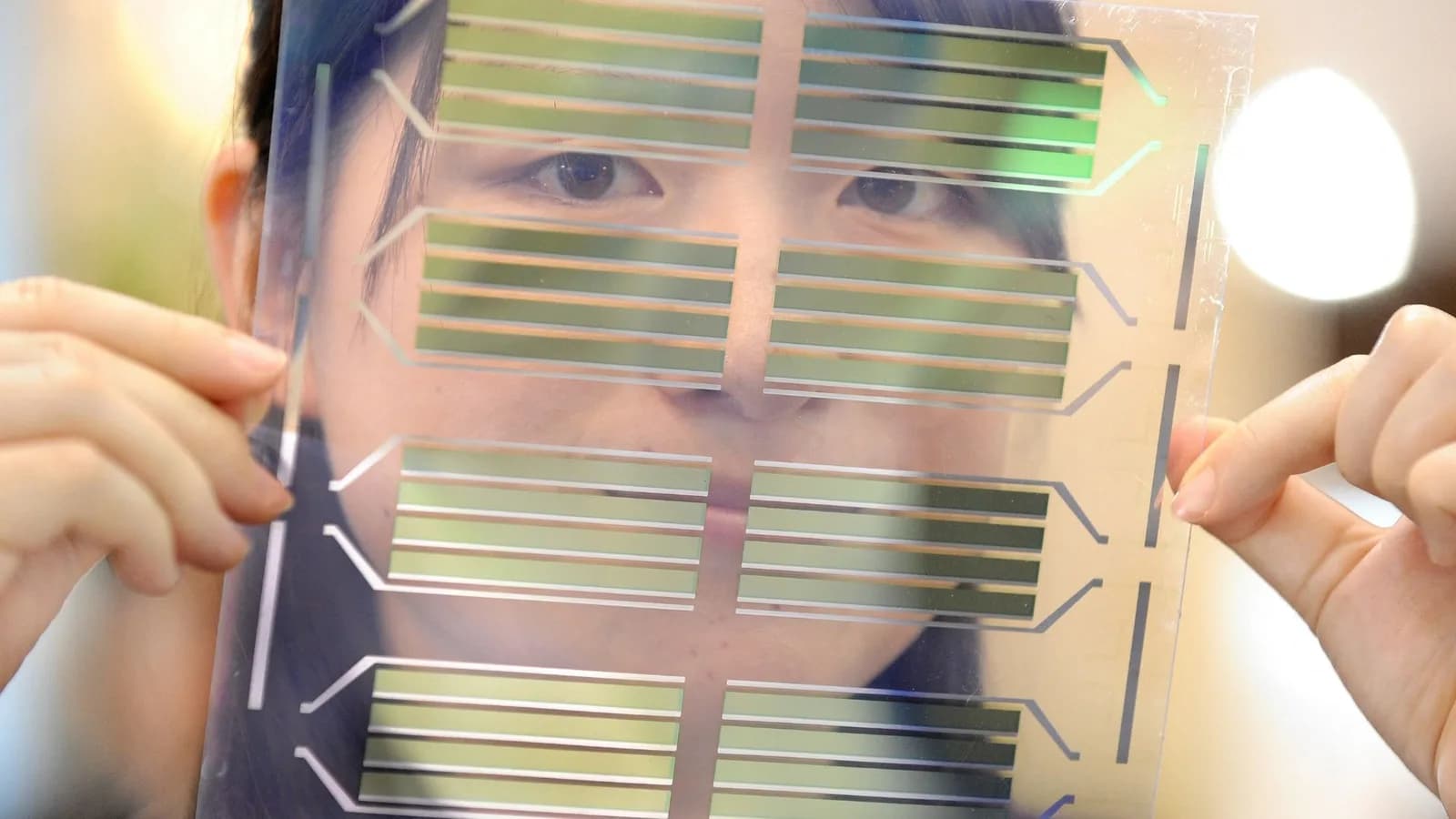
For more than six decades, scientists have been developing organic solar cells as a lightweight, flexible alternative to conventional silicon panels.
These carbon-based devices could power wearable electronics, curved surfaces, and solar windows. However, they have long struggled to match silicon’s efficiency because they lose too much energy while converting sunlight into electricity.
Researchers at Chiba University in Japan have now identified a way to reduce one of those losses without sacrificing the electric current generated by the cells.
Thermodynamic limit to reduce voltage losses
The team discovered a thermodynamic boundary for photocurrent generation and found that using more rigid donor molecules could reduce radiative voltage losses. In several devices, these molecules lowered the effective charge-transfer (CT) binding energy to 0.1 electron volts (eV) or less, bringing the CT state close in energy to fully separated charges and making charge separation more efficient.
The researchers also found that photocurrent could be maintained when the donor’s optical energy gap closely matched the free-carrier energy, the energy needed to create fully separated charges. In other words, the donor material absorbed just enough energy from sunlight to free electrical charges without wasting excess energy as heat. Solar cells operating near this thermodynamic limit also tended to achieve higher power conversion efficiencies.
“In the longer term, such devices could make solar energy harvesting more practical in lightweight, flexible, and space-limited applications that are difficult for conventional silicon modules,” said Hirohiko Fukagawa, professor at the Center for Frontier Science, Chiba University, and lead author of the study.
Rigid donor unlocks potential new designs
Although laboratory organic solar cells have now surpassed 20% power conversion efficiency, researchers have continued searching for ways to reduce voltage losses while maintaining photocurrent.
To uncover this relationship, the researchers built simplified organic solar cells with separate donor and acceptor layers. The donor layer absorbed visible light, while the transparent acceptor layer allowed sunlight to pass through. They paired five donor materials, each with different molecular structures and degrees of rigidity, with 15 acceptor materials whose electron affinities ranged from 2.0 to 3.1 eV.
Using ultraviolet photoelectron spectroscopy and low-energy inverse photoelectron spectroscopy, the team measured the donors’ ionization energies and the acceptors’ electron affinities in the solid state. These methods allowed them to determine the materials’ energy levels under conditions that more closely resemble those inside a working solar cell.
The researchers cautioned that CT binding energy alone does not determine performance. It is also affected by factors such as how far charges spread across molecules, how the donor and acceptor molecules are packed, and the electrostatic environment at their interface. They said their findings provide a new design guideline to develop more efficient organic solar cells.
The findings were published recently in the journal Advanced Materials.
Get the latest news delivered to your inbox.
Related articles