
Toyota’s $50M US battery center targets EVs, hybrids and longer-lasting batteries
Toyota has opened a nearly $50 million battery research center in Michigan that will test...
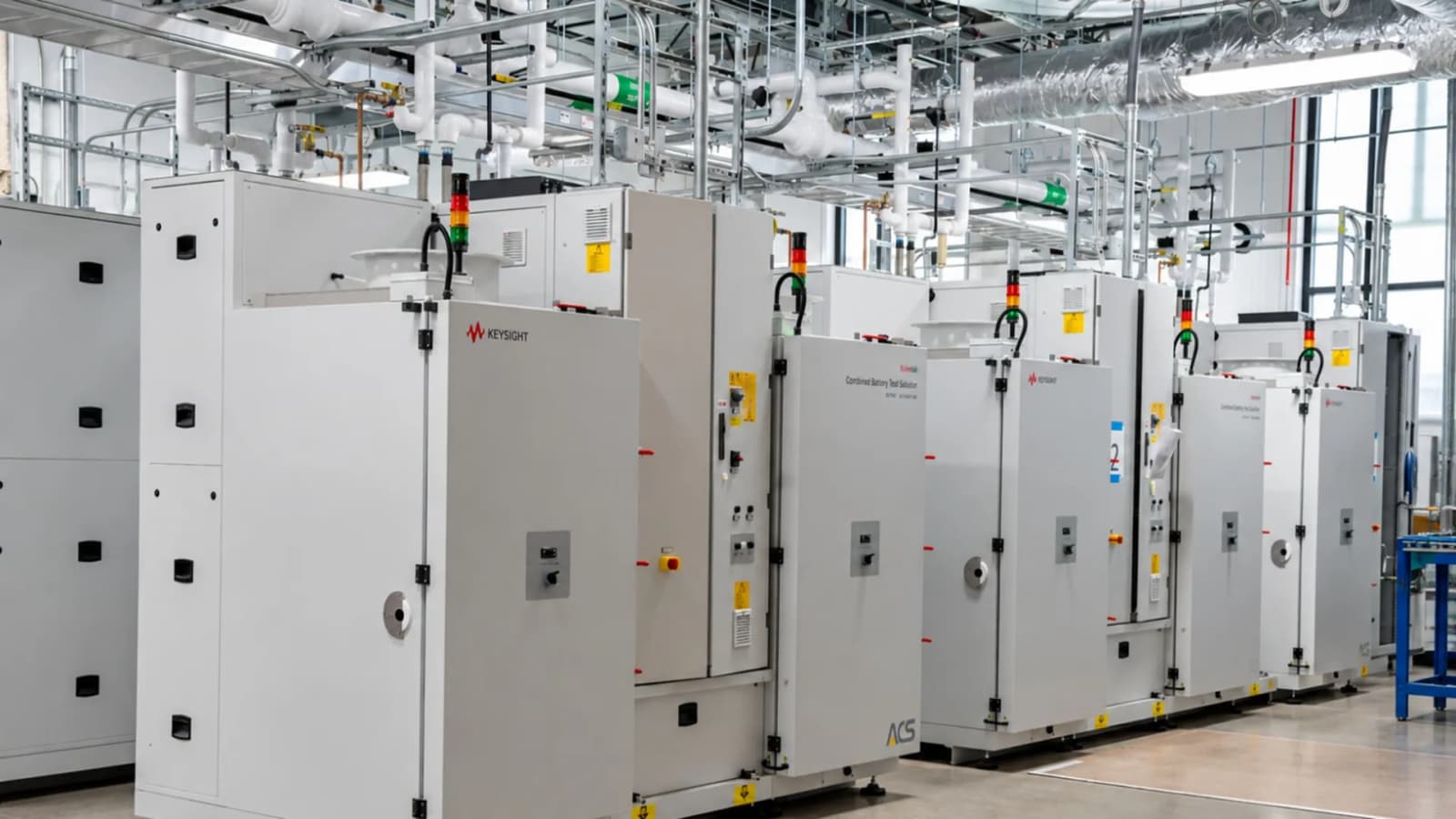
Toyota has opened a nearly $50 million battery research center in Michigan that will test and develop batteries for electric, hybrid, plug-in hybrid and hydrogen-powered vehicles.
The 30,000-square-foot Toyota Battery Center of North America in Saline will serve as the automaker’s central North American hub for battery development and evaluation. The facility will work across the battery life cycle, from raw materials and vehicle applications to recycling.
Toyota first announced the investment in 2023, when it said the laboratory would strengthen its ability to evaluate batteries for vehicles built and sold in North America. The company said at the time that the facility would test battery performance, quality and durability under requirements specific to the region.
The center will also support Toyota’s North American manufacturing network. It will evaluate batteries for Toyota Battery Manufacturing North Carolina and work with vehicle manufacturing plants across the continent.
Battery testing moves closer
Toyota said engineers and technicians at the Michigan facility will assess battery performance while developing technologies for several types of electrified vehicles. Unlike an EV-only battery laboratory, the center will support the company’s broader strategy spanning hybrids, plug-in hybrids, hydrogen vehicles and fully electric models.
Bringing more battery testing to North America could also shorten the distance between vehicle production, field data and engineering teams. Toyota said the facility will allow engineers to identify and address battery issues closer to where vehicles are being manufactured and used.
“For Toyota customers, this facility means Toyota engineers can detect and resolve field concerns faster and closer to the source,” said Jordan Choby, group vice president of Powertrain. “It also means we can develop longer-lasting batteries designed to perform in the conditions American drivers face every day.”
The facility builds on Toyota’s growing battery operations in the United States. When Toyota announced the Michigan project in 2023, it said the laboratory would support locally produced battery components and materials and give engineers room to explore battery configurations for future vehicles.
Research extends beyond Toyota
The new center will also have an academic research role. Toyota plans to provide research access through the University of Michigan Electric Vehicle Center, allowing other research partners to use its battery testing and evaluation capabilities.
Toyota is a founding member of the university’s Electric Vehicle Center. The company said the collaboration is also intended to help train battery engineers and technicians in Michigan.
The opening comes more than three years after Toyota announced plans to invest nearly $50 million in the facility at its Michigan research and development operations. At the time, the automaker said expanding local batteryevaluation capabilities would support increasing electrified vehicle production in North America.
The center now gives Toyota a dedicated US facility where batteries can be examined across more of their development cycle rather than focusing only on finished packs or vehicles.
Toyota has not announced a specific new battery chemistry, range improvement or performance breakthrough from the center. Instead, the facility provides the testing and development infrastructure the automaker says it will use to improve battery durability, evaluate new technologies and support its expanding North American electrified-vehicle operations.
Related articles

Rivian’s sales pop as the company’s big R2 bet starts to pay off
Rivian had high hopes for its more affordable R2 vehicle - and so far, those hopes appear to be paying off.
General Motors brings 33% denser lithium manganese-rich EV battery tech to Tennessee
The race to build cheaper, longer-range electric cars has taken a leap forward in central...

Tesla will now let you drive off mid-charge if there’s an emergency
Tesla introduced a new feature to enable drivers to escape quickly while charging their vehicles in response to a mass shooting at a Supercharger location in Idaho in August that left seven people…

Tesla’s recovery hits a speed bump
Tesla sold fewer vehicles in the third quarter than it did a year ago, when consumers rushed to cash in on expiring federal tax credits for electric vehicle purchases.
New student-built electric car concept captures pollution even while driving
A group of students has built an electric car that tackles a rising source of...

BMW’s revamped i3 boasts up to 468 miles of range
When BMW first announced it was reimagining the i3 as an all-electric four-door sedan built on its Neue Klasse platform, it left out a lot of important details, like battery capacity, range, and…