
Your brain has 86 billion neurons: Here are 10 facts worth knowing
Your brain makes it possible to recognize voices, recall holidays, or learn new skills. Yet...
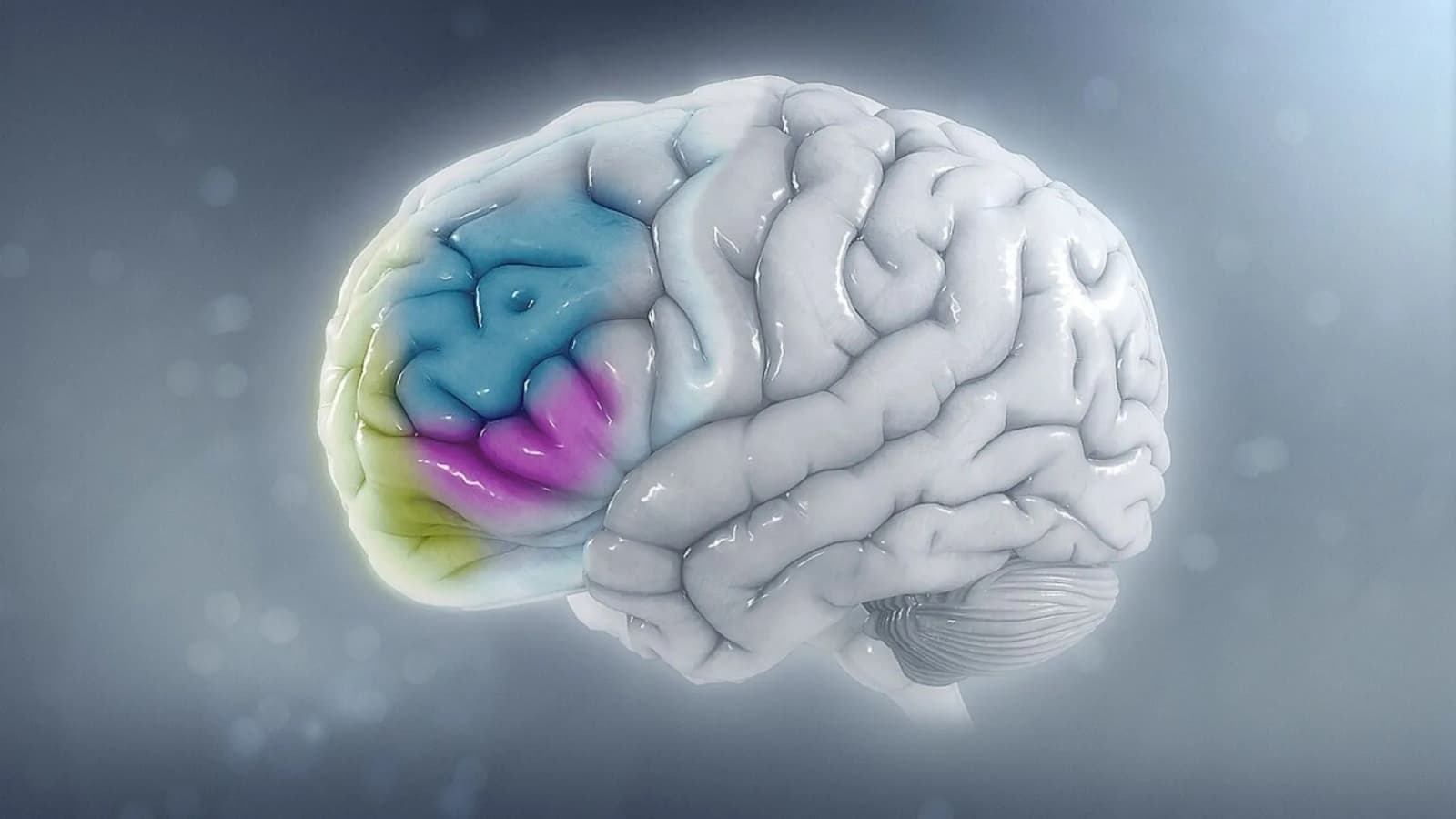
Your brain makes it possible to recognize voices, recall holidays, or learn new skills. Yet the organ behind those everyday experiences has some surprising features.
Some of the most interesting facts about the brain concern what it cannot feel, how selectively it processes information, and what happens while you rest. These findings reveal the machinery behind thought, sensation, memory, and learning.
1. Brain tissue cannot feel pain
The brain processes pain signals from your body, but its own tissue lacks pain receptors. As this medical reference explains, this allows surgeons to work on brain tissue while patients are awake during certain procedures.
The scalp and surrounding structures can hurt, so operations require anesthesia and pain control. Being awake lets patients respond while surgeons check important functions, including speech and movement.
2. Your brain has roughly 86 billion neurons
A 2009 study estimated an average of approximately 86 billion neurons in the adult male brains examined. These specialized cells communicate through electrical and chemical signals, supporting everything from sensation to complex thought.
That figure counts neurons, not every brain cell. Other cells provide support, and neuron counts vary between people.
3. Most neurons occupy the cerebellum
The cerebellum sits toward the lower back of the brain and contains most of its neurons despite its comparatively small size. Researchers describing its circuitry in published research describe an extraordinary concentration of nerve cells.
This region helps coordinate movement and supports motor learning, including skills refined through practice. Its dense population shows why a brain region’s size alone cannot reveal how many neurons it contains.
4. Your brain has a hefty energy bill
The adult brain accounts for roughly 2% of body weight but consumes about 20% of the body’s resting metabolic energy. A report highlights how this substantial demand continues even when the mind is resting.
Maintaining neural activity requires energy, whether you are solving problems or sitting quietly. That energy use should not be confused with generating usable electricity capable of powering an external lightbulb.
5. Your own touch feels less ticklish
Tickling yourself usually produces a weaker response than being tickled by someone else. Researchers at Monash University explored this difference using a body-swap illusion.
The nervous system dampens sensations associated with self-generated movement, helping distinguish your actions from outside contact. Predicting touch is one explanation, although experiments continue to investigate exactly how this suppression works.
6. Looking does not guarantee noticing
An object can fall within your visual field without entering your awareness when attention is occupied elsewhere. This phenomenon, called inattentional blindness, demonstrates how selectively the brain processes the information available to it.
In a UCL study, 18 participants completed visual tasks while researchers measured changes in brain metabolism. Harder tasks increased energy use for attended information while reducing it in regions processing irrelevant distractions.
7. Memories are reconstructed during recall
Remembering an event does not work like playing an unchanged video recording. As the University of Plymouth explains, recollection is reconstructed and can be influenced by information and circumstances encountered afterward.
That helps explain why confident people can recall the same occasion differently. Memory can preserve meaningful experiences while getting details wrong or incorporating later information.
8. Sleep helps strengthen memories
Sleep gives the brain an opportunity to strengthen and organize information acquired while awake. According to the NIH, sleeping after learning helps stabilize new memories and connect them with knowledge.
This process, called memory consolidation, involves skills and facts. Practicing a melody, for example, may lead to better performance after sleep as the brain continues processing what was learned.
9. Short breaks contain rapid neural replays
The brain can revisit a newly practiced skill during brief periods of wakeful rest. In a typing experiment described by the NIH, researchers detected replay of activity patterns associated with the practiced sequence.
Those patterns replayed about 20 times faster than activity during typing. The finding concerns compressed neural replay during that experiment, rather than a promise that taking breaks makes everyone learn 20 times faster.
10. Learning can reshape the adult brain
The adult brain can undergo structural changes as people acquire demanding skills. A longitudinal study followed London taxi-driver trainees as they learned the city’s complicated layout.
Those who qualified showed increased gray matter in the posterior hippocampus, a region involved in memory and navigation. The findings illustrate neuroplasticity, showing that intensive learning can change brain structures in adulthood.
Conclusion
These brain facts reveal an organ that is powerful, selective, and capable of adapting through experience. Its abilities emerge from networks rather than a single measure of size, speed, or storage.
These distinctions make the science more interesting than comparisons with computers or lightbulbs. The surprises lie in how the brain actually works, including while we rest.
Related articles

Ultra-high-power lasers open new pathways for non-destructive material inspection
Superman’s X-ray vision isn’t actually that super. X-rays work well for seeing through thin objects...
CERN researchers report first observation of differences in nucleons within the atom
Researchers at the ATLAS Collaboration at the CERN have found the origins of an observation...
US scientists find 7-volt switch can strain sapphire thousands of times its depth
Researchers in the US have recently discovered that a 7-volt pulse applied to an ultra-thin...

US scientists turn 95% calcium-rich eggshell waste into stronger magnesium alloys
U.S. researchers have demonstrated a way to turn powdered eggshells into stronger, harder magnesium alloys,...