US’ advanced 4D neutron technique could help unlock better solid-state batteries
Researchers at the U.S. Department of Energy’s Argonne National Laboratory have created a method to...
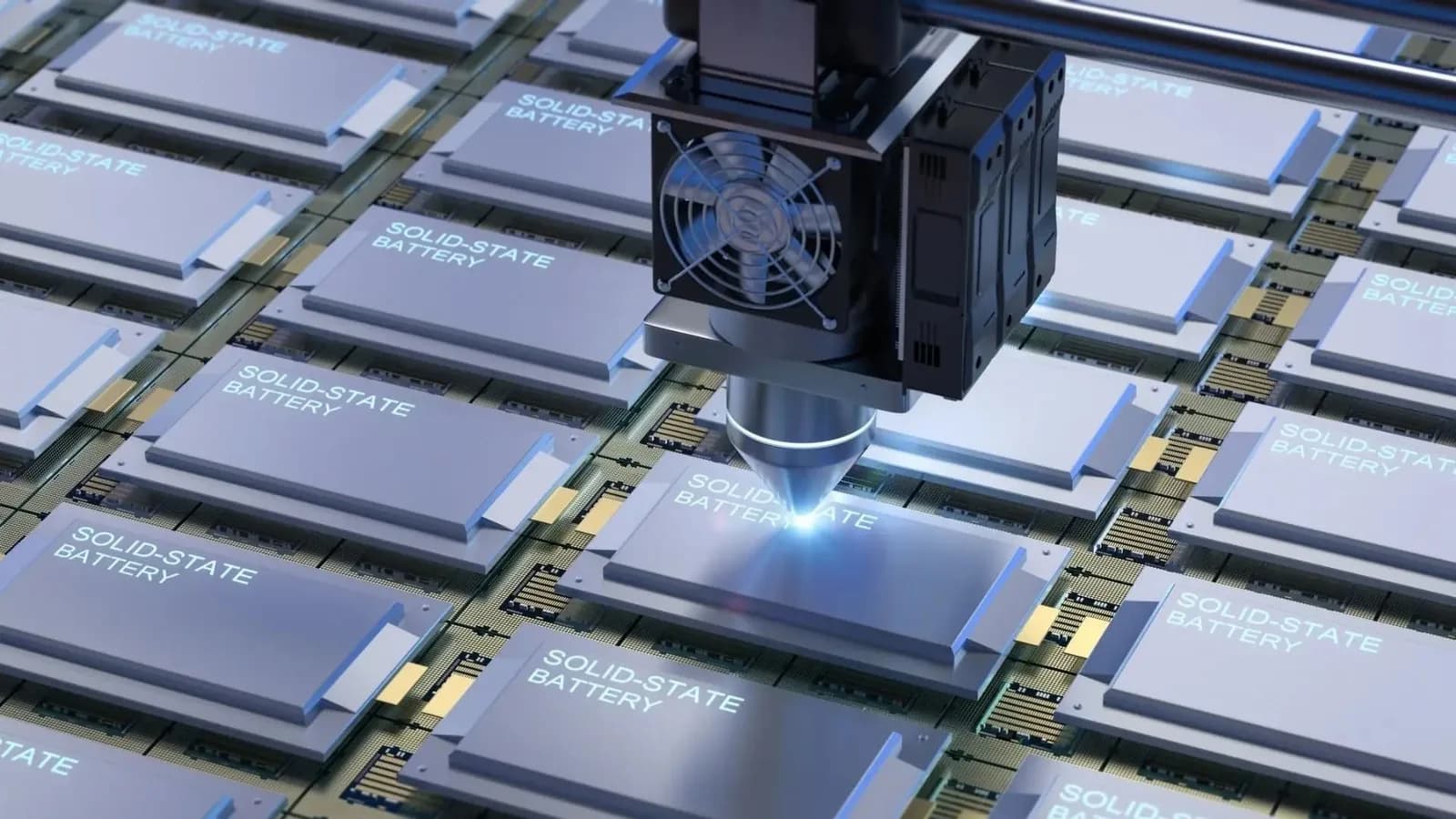
Researchers at the U.S. Department of Energy’s Argonne National Laboratory have created a method to better understand ionic transport in solids. This knowledge might help us build sensors, fuel cells and even solid‑state batteries. The method, called 4D Quasielastic Neutron Scattering or 4D‑QENS was tried out at the Spallation Neutron Source at Oak Ridge National Laboratory in Tennessee. Solid‑state batteries are built from materials that let ions move quickly through the solid. Solid‑state batteries promise to be safer and to hold energy than ordinary batteries that use liquid electrolytes.
Crystal turning discloses ionic relationships
Quasielastic Neutron Scattering (QENS) is a technique that helps study how ions move in materials. It works by sending neutrons through a material and then measuring how the neutrons change direction and energy after they bounce off atoms and molecules in the material. In 4D-QENS single-crystal samples are slowly rotated while they are exposed to a stream of neutrons at pulsed neutron sources. This rotation allows scientists to collect amounts of data on how ions move and interact with one another as they travel through the material.
“The idea of doing these sample rotations has been around at pulsed neutron sources for about 15 years, but it has not been applied to QENS before,” said Raymond Osborn, senior physicist at Argonne and lead author of a study unveiling this new method. “With 4D-QENS, we show new effects that we would never have seen without such large, contiguous volumes of data.”
The team at Argonne tested this technique using crystals of strontium chloride (SrCl2) a material that becomes a fast-ion conductor when heated above 1,200°F. Even though SrCl2 is not suitable for use in batteries it has been studied a lot, which makes it a good model to test this new measurement method. The research gives a picture of how ions jump from one site to another in a crystal. It also shows how ions can move in correlated ways – sometimes helping each move and sometimes blocking each other. This kind of motion plays a role in how efficient a battery can be. Understanding how ions move inside materials is very important for creating better solid-state electrolytes. These are components in many energy technologies.
Neutrons have a mass to that of ions and atoms but they carry no electric charge. Because they are neutral they don’t disturb the ions they pass near. Small changes in the neutron’s path and speed reveal how the ions are moving.
Expanded data demands enhanced calculation capabilities
The team is using tools at the Spallation Neutron Source at Oak Ridge National Laboratory (ORNL) as well as computing resources from the Department of Energy. These include the high-performance computing systems at the Argonne Leadership Computing Facility (ALCF).
“The questions that we were able to ask about ion conductivity even a few years ago were much more limited in scope. Now we’re measuring 3D volumes plus energy transfer, making it 4D,” said Stephan Rosenkranz, Argonne Distinguished Fellow and group leader in the Materials Science division. “These comprehensive data sets are allowing new modes of data analysis. Those modes demand computing resources that can match the quality of the data.”
The data sets are very large and analyzing them requires creative approaches. These methods need computational power to handle the quality and scale of the data. The scientists believe this new method could be used to study complex materials. This could lead to solid-state electrolytes and other materials that are important, for energy storage and conversion.
Source: https://interestingengineering.com/energy/argonnes-ion-fuel-cells
Get the latest news delivered to your inbox.
Related articles