US Air Force funds Natilus to build blended-wing cargo aircraft that consumes 30% less fuel
The US Air Force has awarded aerospace manufacturer Natilus $3.5 million to advance its KONA...
This story was prepared automatically by software.
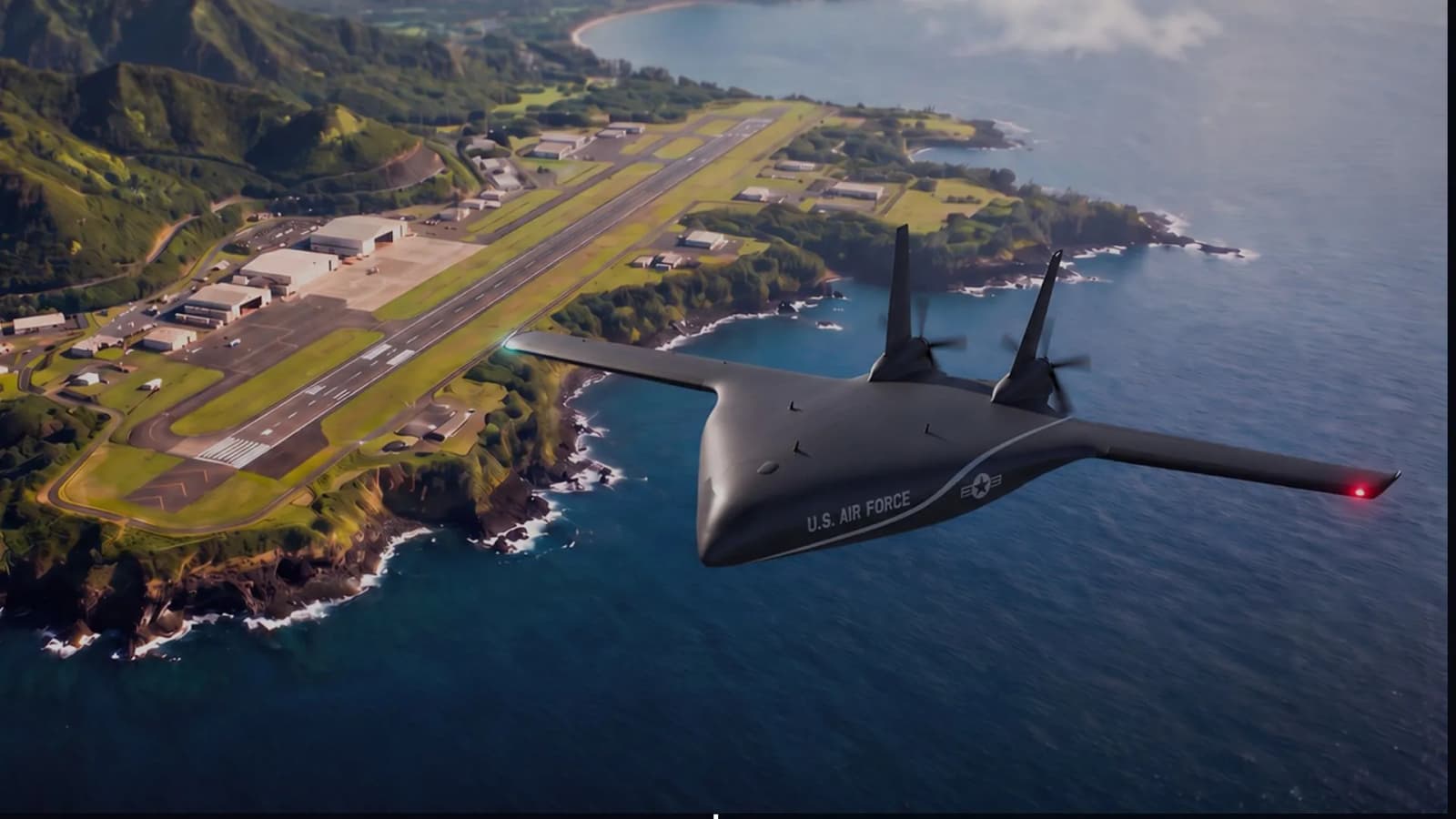
The US Air Force has awarded aerospace manufacturer Natilus $3.5 million to advance its KONA regional cargo aircraft toward full-scale flight testing and a military logistics demonstration. The optionally piloted aircraft is designed to carry 3.8 tons of cargo while using less fuel than comparable conventional aircraft.
The funding comes from Operational Energy – Innovation and the Department of the Air Force through the Assistant Secretary of the Air Force for Energy, Installations, and Environment. It will support development of KONA as a potential option for moving supplies across dispersed military operating locations, including in fuel-constrained environments.
Natilus is developing KONA around a blended-wing-body configuration, in which the aircraft’s body and wings form a more integrated shape than those of a conventional tube-and-wing aircraft. The company said the design consumes approximately 30 percent less fuel than comparable conventional aircraft.
Support regional military airlift
KONA is intended to occupy a space between light utility aircraft, such as the Cessna C-208, and larger tactical transports such as the C-130. With a stated payload capacity of 3.8 tons and a range of 800 nautical miles, the aircraft is designed for regional cargo distribution rather than long-haul strategic transport.
Its short-field capability could let it operate from a wider range of locations, while compatibility with existing cargo infrastructure is intended to simplify integration into logistics networks. These features could be relevant to the US military’s efforts to distribute supplies across dispersed locations without relying entirely on larger transport aircraft.
The need is especially pronounced in the Indo-Pacific, where long distances and geographically separated operating sites can complicate fuel supply and resupply. An aircraft that requires less fuel for a given transport task could reduce demand on the logistics network that delivers fuel to forward locations.
According to the Air Force’s Associate Deputy Assistant Secretary for Operational Energy, Safety and Occupational Health, Jim Hartle, the funding will help evaluate how a commercially developed aircraft could support distributed logistics while generating data to inform future military requirements.
Commercial, defense-ready
Natilus is developing KONA for the commercial regional freight market while pursuing potential military applications. The company is advancing the aircraft toward FAA Part 23 certification and full-scale flight testing, with the Air Force funding intended to accelerate its progress toward an operationally relevant demonstration.
The project will also let the military assess practical performance, including payload, range, fuel efficiency, reliability, and utilization. These measurements will help establish how the aircraft might perform in real logistics operations, rather than relying solely on design projections.
Natilus CEO Aleksey Matyushev said the investment would accelerate the aircraft’s demonstration timeline as the company continues developing it for commercial freight customers.
Beyond cargo transport, KONA’s modular architecture and optionally piloted design could eventually support other configurations, including communications relay, intelligence, surveillance and reconnaissance (ISR), and payload delivery. However, the initial defense focus is regional airlift and contested logistics. The $3.5 million award is a development investment, not confirmation that KONA is ready for military service.
Related articles