5,000Wh home battery delivers 48-hour emergency runtime, reaches 96% peak conversion
Home backup power is shifting toward longer lifespans, higher efficiency, and entirely new battery chemistries....
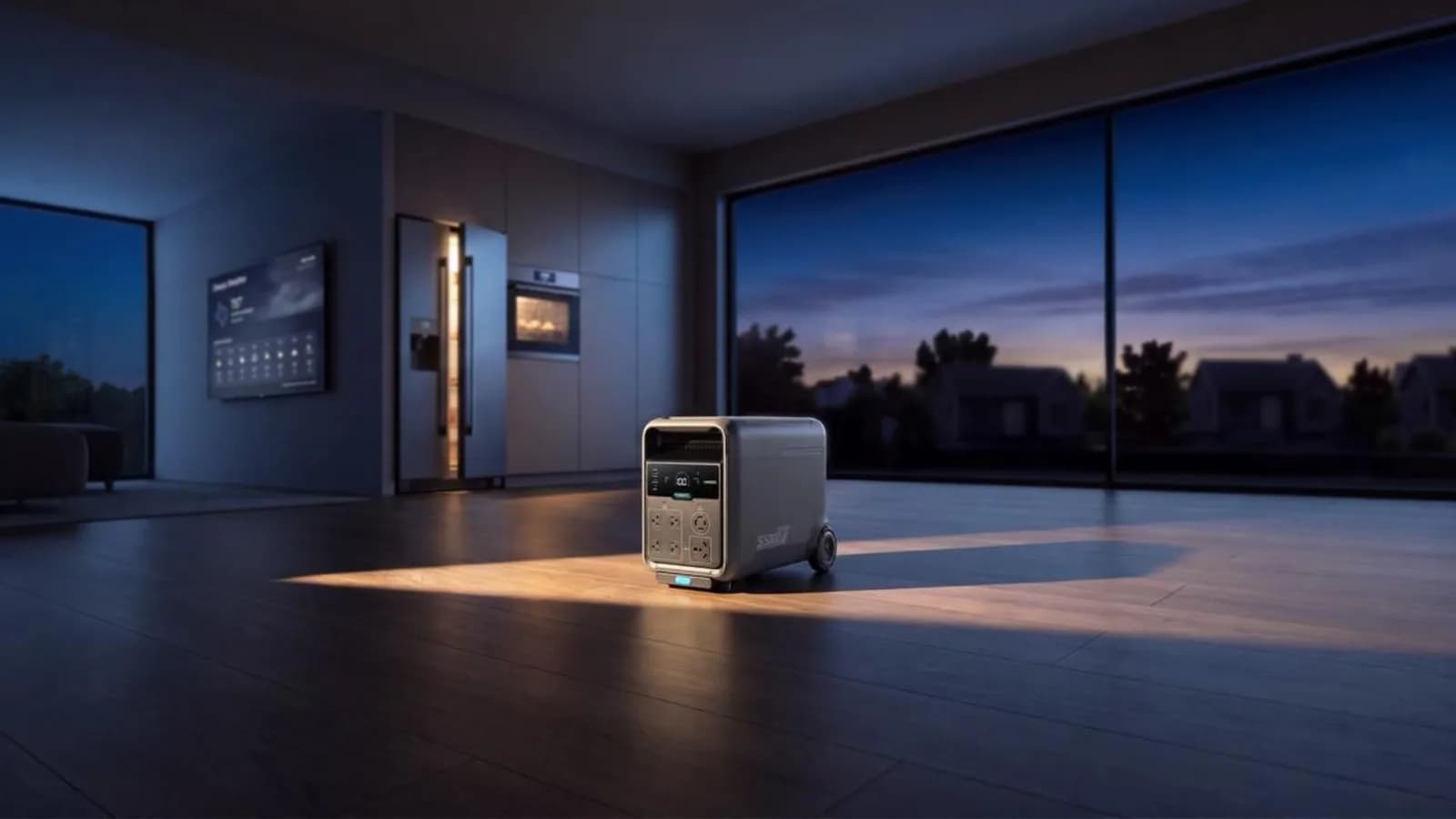
Home backup power is shifting toward longer lifespans, higher efficiency, and entirely new battery chemistries. China-based Anker has introduced the SOLIX S5000, a 5,024-watt-hour portable power station built to address the energy losses that often plague home batteries.
The launch coincides with a broader shift in domestic energy storage, where manufacturers are rethinking both inverter electronics and core cell science.
Most portable batteries lose a noticeable share of their energy as waste heat when converting stored direct current into alternating current. The S5000 tackles this problem with an architecture called OptiSave 2.0, which reaches 96 percent conversion efficiency under a standard 1,000-watt load.
Increases usable runtime
The internal electronics also draw just 8.8 watts while idle. This low baseline consumption extends standby readiness to 21 days and increases usable runtime by roughly 20 percent during typical household outages. Testing agency TÜV SÜD awarded the system an A+ Runtime rating, marking the first time a 5-kilowatt-hour portable station has achieved this benchmark.
Beyond internal efficiency, the unit changes how heavy home loads receive power during an emergency. The onboard inverter supplies 4,500 watts continuously, with an 8,000-watt surge limit across both 120-volt and 240-volt circuits.
As a result, it can run heavy-duty hardware such as well pumps, heating systems, and water heaters alongside domestic electronics. In grid failures, an internal switch transfers power in less than 10 milliseconds to stop sensitive devices from resetting. It can also supply 240-volt power while actively charging from a standard 120-volt outlet.
Using industrial-grade components
The internal battery uses 314-amp-hour lithium iron phosphate cells. These cells are claimed to last 10,000 cycles, with an estimated operational life of 15 years. Safety testing conforms to UL 9540 standards and UL 9540A fire propagation protocols, which are typically reserved for fixed utility installations.
Despite these industrial-grade components, the station weighs 97 pounds and takes up 58 liters of space, making it significantly smaller than rival 5-kilowatt-hour units.
Users can recharge it to full capacity in 99 minutes using a 240-volt connection, hook it up to 3,000 watts of solar panels, or expand total capacity up to 30 kilowatt-hours.
Moving beyond lithium batteries
At the same time, the search for safer and more abundant battery materials is moving beyond lithium altogether. Standard lithium cells face persistent raw-material bottlenecks and thermal safety concerns. In a separate development last month, Bulgarian company AuroraCell introduced a 48-volt residential storage system based on sodium-ion chromium oxide cathode technology.
Conventional sodium batteries frequently struggle to balance energy density with performance in extreme weather. AuroraCell’s cathode design aims to solve this trade-off directly. Its 9.7-kilowatt-hour residential battery is rated for 20,000 cycles at a full 100 percent depth of discharge, supported by a 20-year warranty that far exceeds typical lithium-ion guarantees.
These two developments highlight a clear path forward for domestic power resilience. As portable systems maximize inverter efficiency and shrink hardware footprints, stationary systems are beginning to prove that sodium-based alternatives can deliver decades of stable, fire-safe residential backup.
Get the latest news delivered to your inbox.
Related articles