Armored, first known fully marine amphibian found in 237-million-year-old ocean rocks
Scientists have found fossils of what they say is the first fully marine amphibian: an...
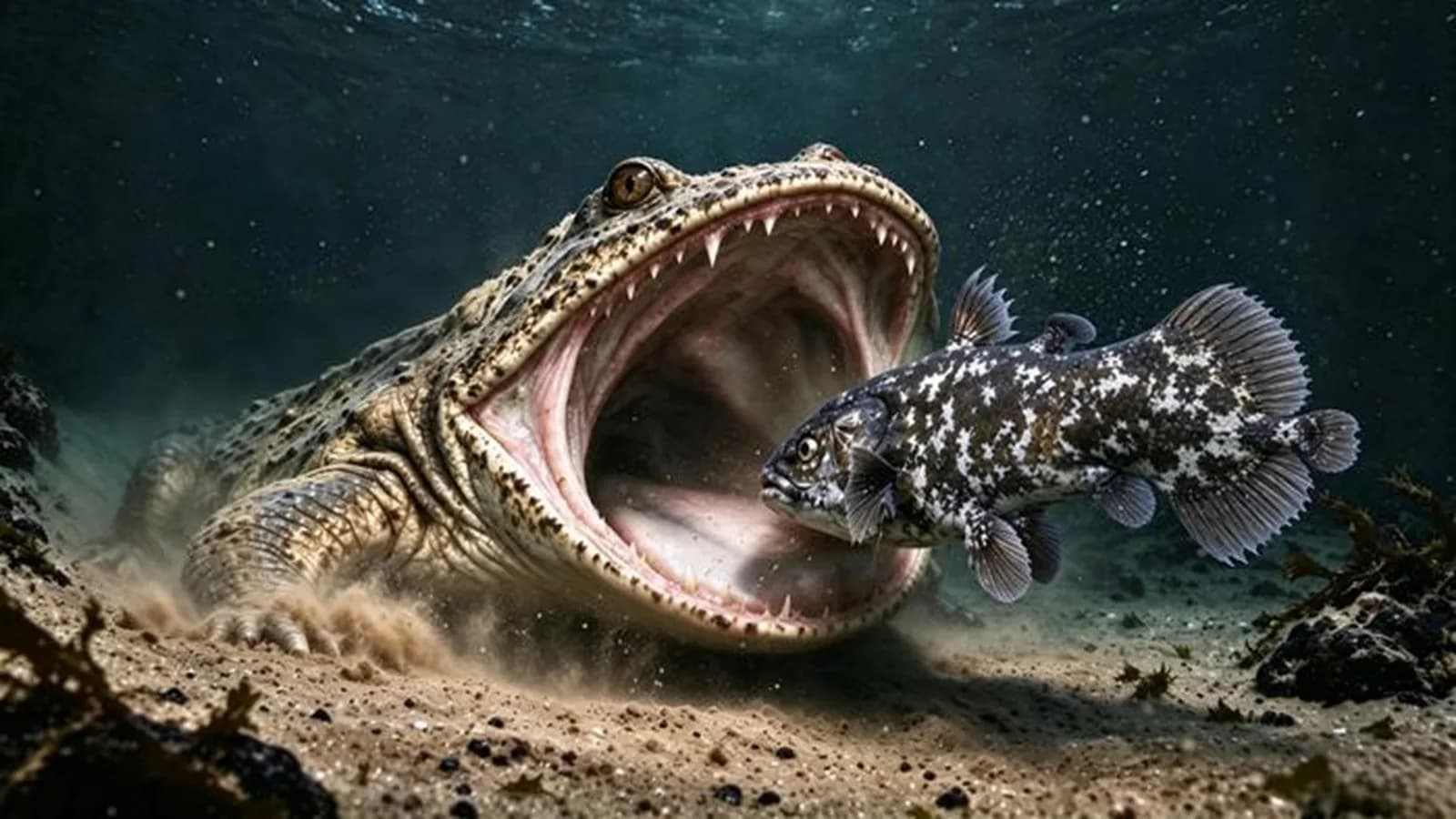
Scientists have found fossils of what they say is the first fully marine amphibian: an armored, flat-bodied creature roughly the size of a giant salamander that lived on the ocean floor nearly 237 million years ago.
The team from the University of California, Davis, Peking University and the Geological Museum of Guizhou named the animal Gerrothorax maritimus. It is described from two nearly complete skeletons from the Late Triassic period, found in China’s Guizhou Province in an area that was once ocean, hundreds of miles from large land masses.
Why it is a surprise
Modern amphibians number more than 8,000 species, yet none are known to live in fully marine environments, and fewer than 2% show any salt tolerance. That is odd, the researchers note, because other four-limbed animals, including mammals, reptiles and birds, all have species that can survive without food or water from land. Until now, the fossil record had no evidence of a fully marine amphibian either.
A chunky, armored bottom-dweller
Because the skeletons are so well preserved, the team could reconstruct the animal’s body. It was flat and disc-shaped, almost 3 feet (0.9 meters) long and covered in bony armor, possibly a defense against predators such as ichthyosaurs.
Ryosuke Motani, the study’s corresponding author and a professor of Earth and planetary sciences at UC Davis, said it was big for an amphibian. Its body mass was similar to a giant salamander’s, he said, but it was far chunkier, since giant salamanders are elongated.
From the armor and the shape of the skull, the researchers think it was a bottom-dwelling suction feeder, waiting on the seafloor and sucking in prey that wandered past. Motani compared it to the wobbegong, a modern bottom-dwelling carpet shark.
How it may have beaten the salt problem
Today’s amphibians can’t live in the sea because their skin is permeable. They use it to breathe and take in water, which ties them to freshwater. Some, such as the crab-eating frog, tolerate some salt but lose weight in brackish water and must recover in fresh water.
The researchers propose that Gerrothorax maritimus got around that limit with its bony armor and more fish-like biology. The armor would have stopped water from soaking in through the skin, so the animal would have needed to drink seawater through its mouth and absorb it through its digestive tract. Gills, which are present in the Gerrothorax genus, could have filtered out the salt.
Evidence it lived in the ocean
The fossils were found in deep-sea sediments. The near-complete skeletons also point to a marine life, Motani said. Carcasses floating at sea usually dry out and lose limbs before sinking, but these animals still had their fingers, so they probably died near where they lived.
Chemical tests added support. The strontium isotope ratios in the fossils closely match those of Late Triassic oceans.
Motani said the finding is an unusual addition to an ecosystem his team has been reconstructing, which has so far mostly yielded marine reptiles and fish.
The discovery was published in the journal Nature Ecology & Evolution.
Source: https://interestingengineering.com/culture/gerrothorax-maritimus-first-fully-marine-amphibian-fossil
Related articles