
Google sends TPU chips into orbit to test hardware for future space data centers
In a move that could scale AI compute in space, Google is preparing to send...
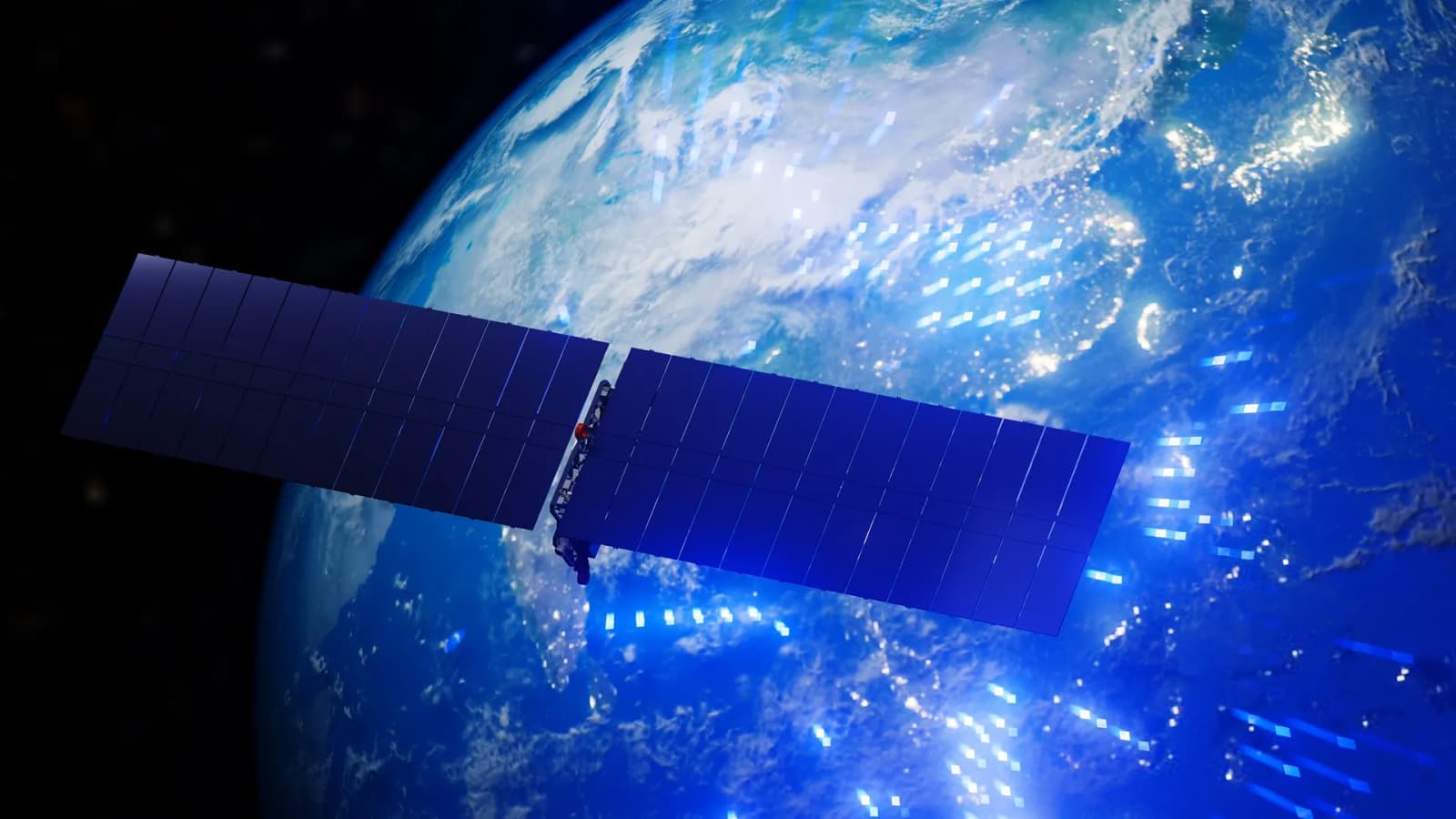
In a move that could scale AI compute in space, Google is preparing to send its Tensor Processing Units (TPUs) into orbit for the first time to determine whether powerful computing hardware could eventually operate beyond Earth.
The prototype satellite will fly aboard SpaceX’s upcoming Transporter-18 rideshare mission and test how Google’s chips withstand launch forces, radiation, and extreme temperature conditions in low Earth orbit. The mission was developed with satellite company Planet.
The flight is the first orbital hardware test under Project Suncatcher, Google’s research effort exploring whether clusters of satellites could one day host large-scale machine learning infrastructure. Satellites in low Earth orbit can access near-continuous sunlight and potentially generate up to eight times more solar power than comparable systems on Earth, according to Google.
The immediate goal is more basic: find out whether hardware designed for terrestrial data centers can reliably survive launch and continue operating in the harsh environment of space.
Chips face orbital extremes
A trip to low Earth orbit subjects a spacecraft to intense vibration and sustained acceleration reaching about 10 times Earth’s gravity. Individual components, including TPU chips, can experience forces of 50 to 100 g.
Google subjected its satellite hardware to vibration tests along all three axes to reproduce frequencies encountered during a rocket launch. The company said the hardware survived those tests.
Radiation poses another problem. Cosmic rays and solar activity can interfere with electronics and cause errors such as bit flips. Google tested its Trillium TPUs using a proton beam at UC Davis’ Crocker Nuclear Laboratory while the processors ran machine learning workloads.
The company said initial results showed the chips could withstand a total ionizing radiation dose greater than what they would be expected to receive during a five-year space mission.
Cooling could prove equally challenging. TPUs concentrate considerable heat into a small area, while the vacuum of space eliminates the airflow used by conventional cooling systems.
Google is testing combinations of heat pipes and radiators to move heat away from the processors. The cooling hardware has already undergone testing inside a thermal vacuum chamber designed to reproduce conditions in space. The upcoming mission will provide the first opportunity to see how the system performs in orbit.
Lasers link future clusters
Project Suncatcher ultimately envisions satellites carrying dozens of TPU chips and operating together in tightly coordinated clusters. Such a system would require extremely fast communication between spacecraft to distribute computing workloads.
Google plans to use laser links for those connections. Unlike existing optical satellite links designed primarily to communicate across long distances, the proposed system would need very high bandwidth between satellites flying relatively close together.
Keeping those links aligned will require precise knowledge of each satellite’s position relative to its neighbors. Google compares the challenge to hitting a coin-sized target from miles away while both points are moving.
That part of the project will receive its own orbital test in 2027, when Google plans to launch two satellites and evaluate the inter-satellite communication system.
For now, the Transporter-18 mission will focus on the fundamentals: determining how TPUs behave during launch and in the radiation, vacuum, and thermal conditions of orbit. The results will help Google refine the hardware before attempting more complex satellite-based computing systems.
Source: https://interestingengineering.com/ai-robotics/google-project-suncatcher-tpu-chips-space-test
Related articles

Muse sure looks a lot like OpenClaw
We seem to be entering into an AI agent renaissance.

Muse will apparently let you download its entire filesystem
A pair of developers say that with very little prompting, Meta's Muse will share its entire filesystem with you. Peter James and Jonny L.

Meta is going to let you build games with AI right on your phone
Meta has a new plan to get people to make games for its Horizon social platform.

Jensen Huang talks about AI and climate change like a supervillain
As Jensen Huang puts it, AI can help fight climate change - but only if it inflicts "an enormous amount of pain and suffering" first.

These smart glasses have been recalled for overheating temples causing burns
A company called Inmo that makes several different variations of smart glasses has issued a recall for its Air3 because the left temple "can overheat during extended use, posing a risk of serious…

It’s sinister that Meta’s Muse AI mascot is so cute
This is Optimizer, a weekly newsletter sent from Verge senior reviewer Victoria Song that dissects and discusses the latest gizmos and potions that swear they're going to change your life.