
Magenta solar panels give broccoli 4.5-fold boost in sunlight efficiency, study finds
Broccoli grown under magenta solar panels used sunlight far more efficiently than plants grown in...
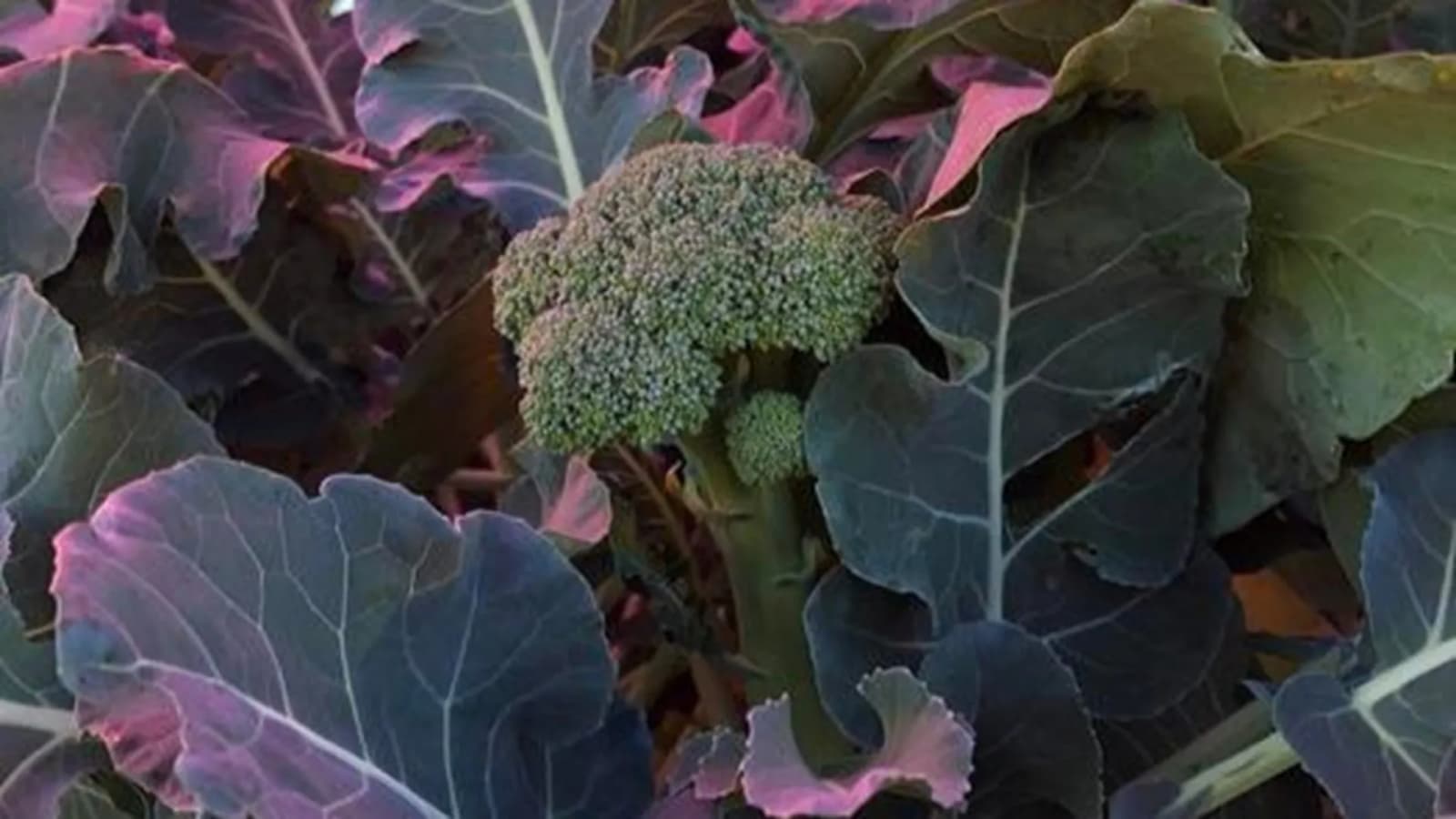
Broccoli grown under magenta solar panels used sunlight far more efficiently than plants grown in the open, according to a new study from Sweden. The semi-transparent panels generated electricity while boosting the blue and red wavelengths that reached the crop.
The study found a 4.5-fold increase in how efficiently the crop used sunlight. The broccoli ultimately grew as large as traditionally grown plants, although it took 25 days longer to mature. The panels offer farmers a potential way to harvest renewable energy while sustaining crop yields.
Blending power and crops
Author Silvia Ma Lu of Mälardalen University in Sweden said the panels turn part of the sunlight into electricity and let the rest reach the crops below. The broader goal is to test whether sunlight can be used more efficiently by assigning different parts of its spectrum to either plant growth or power generation.
Conventional panels already let farmers generate power on land with ample room, and they can shelter crops from harsh sun, hail and heavy rain. The drawback is that standard dark-blue panels are typically opaque, so they can cast too much shade and cut the yields of some crops. Semi-transparent and colored panels can help ease that problem.
To test the concept, the team chose broccoli, a nutritious crop popular worldwide and well suited to the climate at its Swedish test farm. The team built two systems of semi-transparent magenta panels, each about 66 by 66 feet (20 by 20 meters), with different levels of transparency. A third plot left the broccoli fully exposed to the sun.
Researchers compared the broccoli in all three plots throughout the 2024 growing season. They tracked air temperature, relative humidity and soil moisture, along with crop yield, nutrient composition and how well the plants performed photosynthesis.
Similar results under both
Ma Lu said the broccoli performed similarly under both systems despite their different transparency levels. Panels with a greater density of photovoltaic cells can produce more electricity, she noted. She cautioned that the results are specific to the experimental conditions and should be validated across additional growing seasons and system configurations.
Ma Lu stressed that agrivoltaic design is not one size fits all. “There is no single agrivoltaic design that will work optimally everywhere,” she said. More research is needed on how different crops respond to different configurations and climates, she added, and on designing systems that balance farm output with renewable electricity.
Prototype stage, small scale
The systems tested are research prototypes, Ma Lu said, and they need testing at larger scales over multiple growing seasons. If scaled up for commercial use, the electricity could in principle run irrigation, machinery or cooling and storage systems, or be supplied to the grid. That could lower farmers’ electricity bills and even give them an additional source of income.
Her team has begun testing magenta, red and blue panels in controlled lab settings, free from light that has not passed through the panels. Designs similar to the prototype may suit smaller applications such as community gardens or greenhouse roofs better than large agricultural areas for now, Ma Lu said.
The study was published Oct. 2 in the Cell Press journal Cell Reports Physical Science.
Source: https://interestingengineering.com/science/magenta-solar-panels-broccoli-sunlight-efficiency
Related articles
Roads made with steel slag could last 15 years, cut pollution and prevent early deaths
Researchers at Southeast University in Nanjing and partners modeled what could happen if China replaced...
Scientists catch a type-I superconductor breaking time-reversal symmetry
The creation of a superconducting material is one of the most sought-after and complicated processes....
3D light field lets scientists unlock electron states that were once impossible to reach
Some quantum states of electrons have remained out of reach not because they do not...
Scientists find rare-earth compound with liquid crystal-like magnetic state
A strange magnetic state inside a compound called YbMnBi₂ could help explain one of its...

Your brain has 86 billion neurons: Here are 10 facts worth knowing
Your brain makes it possible to recognize voices, recall holidays, or learn new skills. Yet...

Ultra-high-power lasers open new pathways for non-destructive material inspection
Superman’s X-ray vision isn’t actually that super. X-rays work well for seeing through thin objects...