
Major milestone reached as IonQ cracks quantum error correction with a single CPU
IonQ, a leading provider of quantum computing solutions globally, reached a major milestone after successfully...
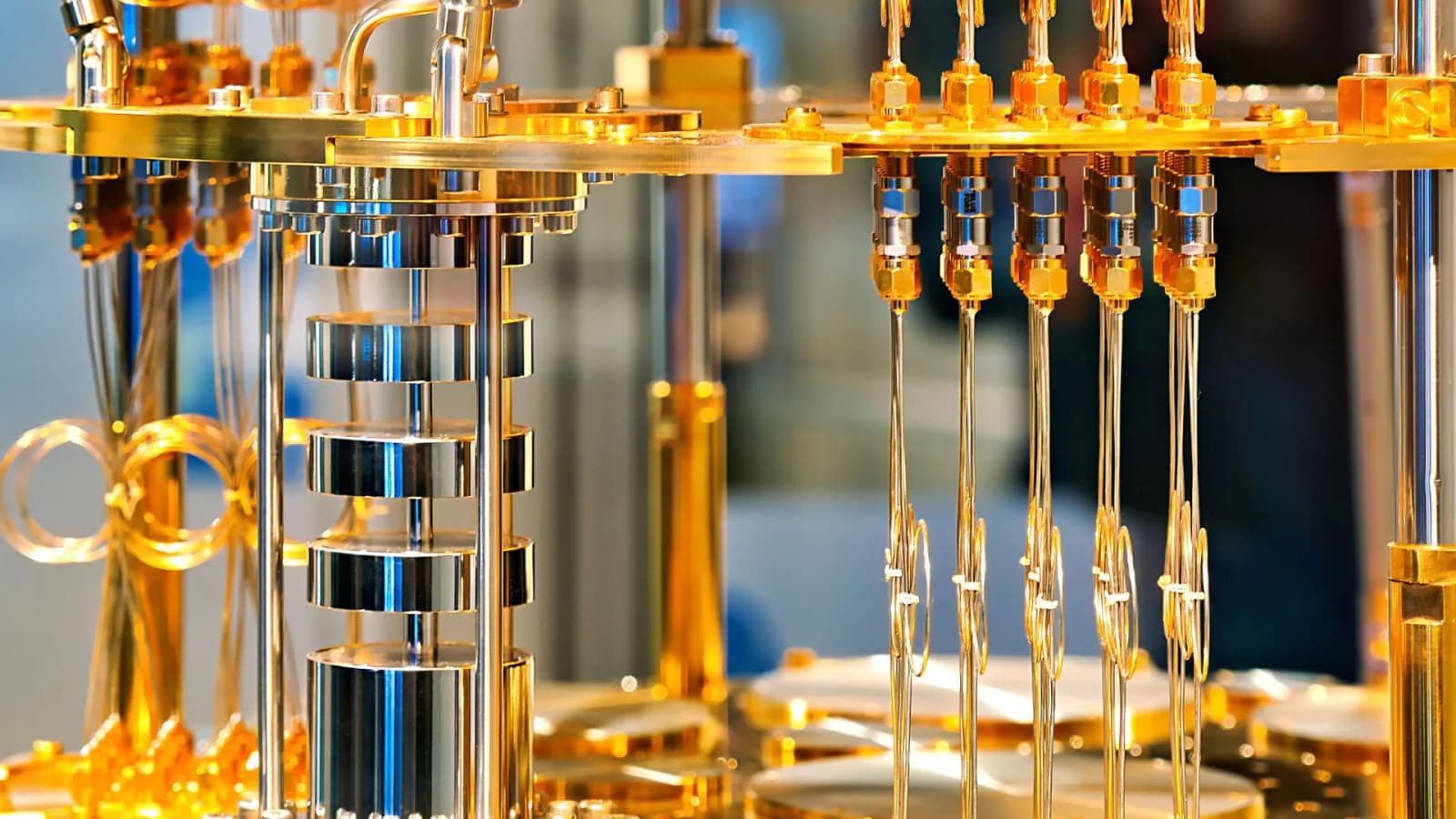
IonQ, a leading provider of quantum computing solutions globally, reached a major milestone after successfully demonstrating quantum error correction using a real-time decoder that can run on a single central processing unit (CPU). The achievement allows quantum computing to be scaled without having to scale classical hardware with it.
Quantum error correction is a major bottleneck that is significantly delaying the rollout of quantum computing in the real world. While quantum computers are capable of carrying out calculations at exponential scales when compared to classical computers, they also acquire errors in these computations quite easily, making the entire exercise futile, if the errors cannot be rectified.
Multiple approaches have been attempted to reduce these errors, such as the development of logical qubits, which combine multiple physical qubits into a large virtual one, or flipping the errors themselves to arrive at the correct answers. While these approaches have been found to be helpful, they also increase the cost of deploying quantum computers, which makes it unfeasible for commercial rollout.
Maryland-headquartered IonQ, which has been offering quantum computing services to cloud providers since 2021, has now demonstrated a new and unique error correction approach that works using an off-the-shelf CPU.
How IonQ cracked error correction
Since making measurements of a qubit destroys its quantum state, researchers can only gather information about their syndromes to know if the qubit has accumulated an error or not. Using this information, which even a classical computer can process, researchers can apply quantum error correction.
Researchers typically devise decoding algorithms that run either on CPU’s, Graphics Processing Units (GPUs), or a field-programmable gate array to analyze these syndromes and then apply a correction to the computation.
In the conventional approach, classical computers tasked with such error correction are often overwhelmed and create a bottleneck where quantum computation has to pause and wait before it can resume again. IonQ’s real-time decoder overcomes this hurdle by managing this workload efficiently, allowing quantum computing to run without pauses.
Dual decoder architecture
In a demonstration where IonQ deployed its error-correction approach, 408 logical qubits across 88 memory blocks executed more than 31.5 million individual quantum operations. However, the company executed error correction using a single CPU.
IonQ attributes this feat to its dual decoder architecture, where the first decoder extracts the initial syndrome measurements while the second decoder corrects the residual errors after refining the intermediate representation.
During the evaluation, the researchers found that the decoder added only 0.02 percent to the total computation, meaning it did not delay the task.
“Successfully validating real-time decoding across hundreds of logical qubits and over millions of logical operations is an important milestone,” said Nicolas Delfosse, quantum research lead at IonQ in a press release. “Moreover, the fact that our decoder runs on a single CPU provides a practical path to commercial-scale fault-tolerant quantum computing.”
“IonQ is enabling cost-effective quantum system scaling through direct verification of each component,” added John Gamble, Vice President at IonQ Architecture. “Empirical evidence like this supports our vision for fault tolerance where time-to-solution, cost-to-solution, and energy-to-solution are always our North Star.”
The company is working to build a quantum computer with 256 physical qubits while aiming for one with thousands of qubits for industrial-scale usage in the future.
The research findings were published in arXiV.
Related articles

Discord will now automatically estimate your age
Discord is rolling out a new global age assurance system, seven months after pausing its previous verification measures following backlash from users.

YouTube is building AI creator tools that do almost everything for them
Part of the job of a content creator is to figure out how to get their work in front of the most people.

This $199 GPS sports watch is repairable, modular, and open-source
The Una Watch costs less than most Garmin watches now that its price has been lowered from the Kickstarter offer of $350 to $199, but its modular, repairable design grabbed my attention first.

One of the best Metroid games for the Switch is 30 percent off
Nintendo’s “Customer Appreciation” sale continues through September 26th.


McDonald’s is testing ads on its drive-thru menus
McDonald's is putting ads on its drive-thru menu as part of a "limited" pilot at company-owned restaurants, according to a report from Bloomberg.