
Recycled plastic asphalt could build longer-lasting roads with less particle release
With increasing demands for longer-lasting roads and less construction waste, researchers at Pennsylvania State University...
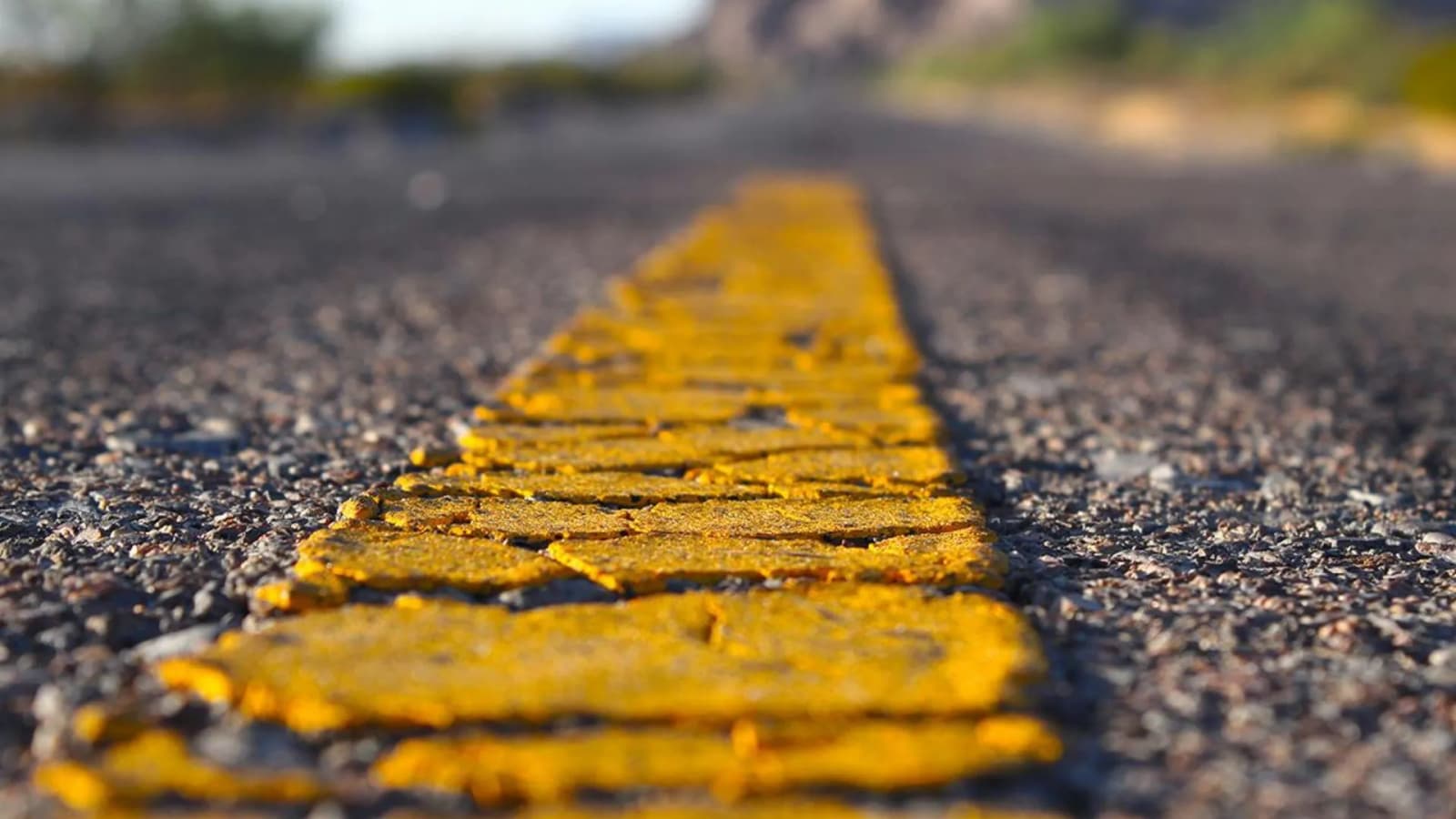
With increasing demands for longer-lasting roads and less construction waste, researchers at Pennsylvania State University found that asphalt made with recycled plastic outperformed regular asphalt in lab tests and released fewer plastic-like particles under simulated road conditions.
The study looked at asphalt mixed with recycled low-density polyethylene (LDPE), which is often used in packaging. The results suggest that stronger pavement could help reduce particle release as roads deteriorate. However, researchers cautioned that real-world testing is needed to confirm these results.
Testing plastic-modified asphalt
Microplastics are tiny particles less than 0.2 inches (5 millimeters) found in water, soil, and air. Roads can contribute to environmental pollution through tire wear and pavement breaking down. Construction materials with plastic might also release particles as they get older.
“Our goal was to understand whether asphalt pavement containing recycled plastic could release microplastic particles as it is damaged over time,” said Shihui Shen, distinguished professor of rail transportation engineering at Penn State Altoona and corresponding author on the paper.
“That environmental question has received much less attention than the engineering performance of the pavement.”
To make the recycled-plastic asphalt, the researchers mixed shredded LDPE with crushed stone and old asphalt pavement, then added the binder. They compared this mix to regular asphalt to see how each performed under simulated road conditions.
Simulating traffic and moisture damage
The team put asphalt samples through two lab tests that mimic the stresses roads face. In the Hamburg Wheel Tracking Test, steel wheels rolled over samples in hot water again and again, simulating traffic, heat, and moisture.
In the second test, called the Moisture-Induced Stress Tester, samples were exposed to high temperatures, moisture, and repeated water pressure. The researchers then collected any particles that were released for further study.
“Together, these tests reproduce important aspects of roadway damage under controlled laboratory conditions,” mentioned Zhen Liu, the study’s lead author and a research assistant professor at the Chinese University of Hong Kong who completed a postdoctoral fellowship at Penn State’s Larson Transportation Institute within the Department of Civil and Environmental Engineering.
“We then collected the released particles and analyzed them for possible plastic content.”
The team worked with Penn State’s Environmental Contaminants Analytical Laboratory and used infrared imaging to study each particle. They compared the chemical makeup of the particles to reference materials and measured how much of the sample’s weight came from particles that looked like LDPE.
Improved performance, lower particle levels
The recycled-plastic asphalt usually held up better against damage than regular asphalt. It also released fewer particles with chemical signatures similar to LDPE after the traffic and moisture tests.
However, it was hard to identify the particles because asphalt binder and LDPE have some similar infrared features.
“Asphalt binder and LDPE share some infrared features, which can complicate both identifying particles as plastic and determining their source,” Shen noted. “The findings do not rule out the possibility that either plastic-modified or unmodified asphalt mixtures can release microplastics.”
Field studies needed to confirm results
The researchers pointed out that they only tested one type of asphalt, using a specific kind and amount of recycled plastic. The results therefore cannot establish how other mixtures would behave on actual roads.
The team took steps to avoid lab contamination, such as cleaning equipment, using filtered water, and covering samples while preparing them. These measures helped lower the chance that outside particles would affect the results.
Future field studies will need to examine how traffic, rainfall, sunlight, temperature changes and pavement aging affect particle release over time.
“Field studies, reliable sampling and long-term monitoring will give transportation agencies stronger evidence for weighing pavement-performance benefits against potential environmental impacts,” Shen added. “Ultimately, more reliable environmental data can help agencies make more informed decisions about recycled-plastic pavement technologies.”
The study was published in the Journal of Cleaner Production.
Source: https://interestingengineering.com/innovation/recycled-plastic-asphalt-build-stronger-roads
Related articles

Some great games to play before GTA VI and Zelda launch
You could say we're in the eye of the storm right now. The storm, of course, being the fall and winter release calendar for new video games.

Benn Jordan on Flock, privacy, and the new surveillance backlash
Today, I’m talking with Benn Jordan, musician, YouTuber, researcher, and investigative journalist.

Nobody is safe from celebrity AI deepfakes
In hindsight, the post on Instagram should have raised more red flags.

Prep your cart before iPhone Duo preorders open tomorrow
Apple's iPhone Duo foldable phone opens for preorder tomorrow, October 16th, at 8am ET / 5am PT, but you don't have to wait until then to get your order mostly sorted.

An Israeli firm is sending spyware through online ads, researchers say
An Israeli ad tech firm worked with spyware companies to infect devices, including at Al Jazeera, by simply showing users an online ad, according to a joint investigation by security researchers at…

How Windows is being optimized for Nvidia’s RTX Spark laptops
Microsoft and Nvidia held a launch party for the first wave of RTX Spark laptops last week in San Francisco, where a new wave of AI PCs took center stage amid a packed crowd and a lively hands-on…