
Roads made with steel slag could last 15 years, cut pollution and prevent early deaths
Researchers at Southeast University in Nanjing and partners modeled what could happen if China replaced...
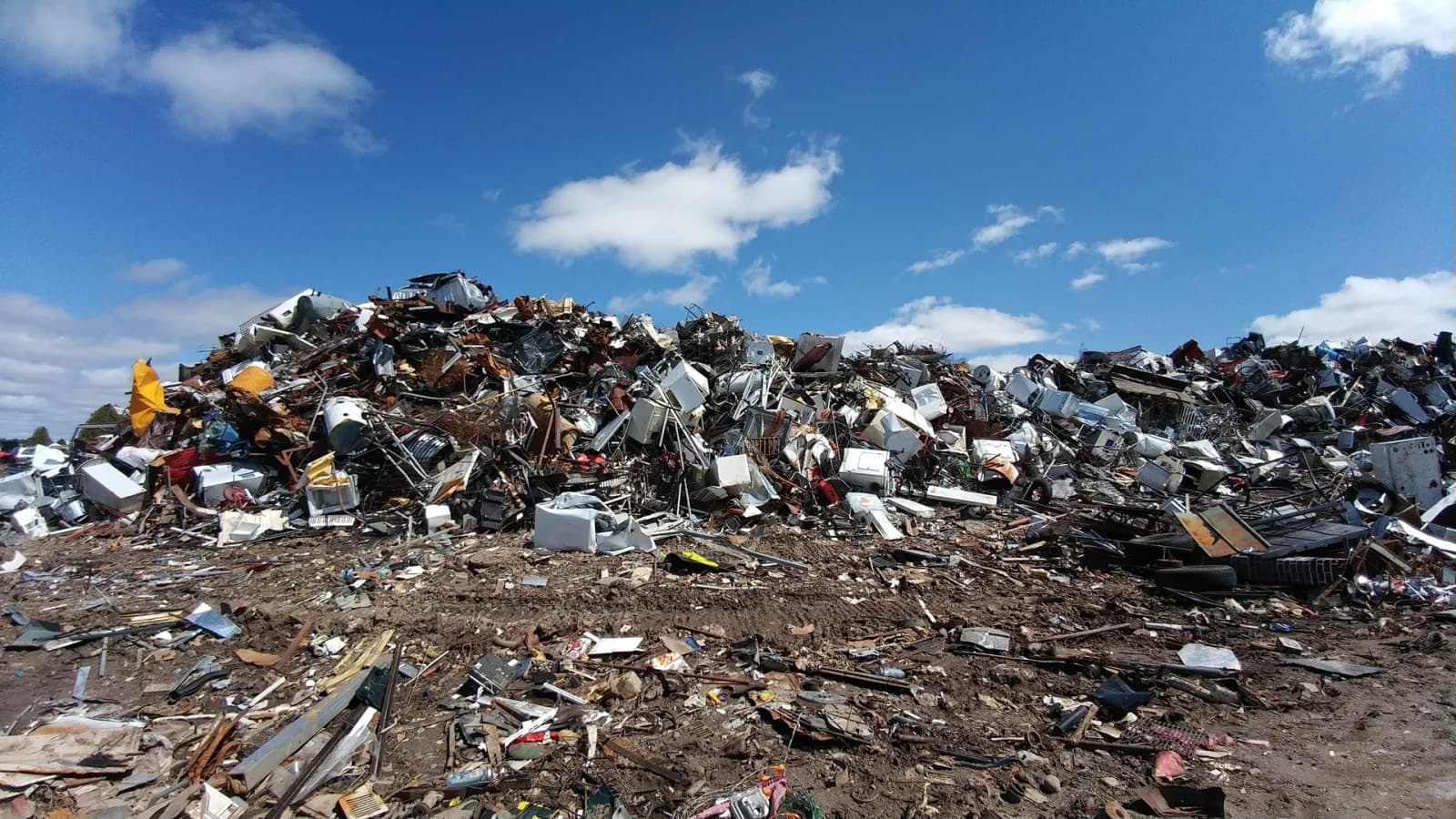
Researchers at Southeast University in Nanjing and partners modeled what could happen if China replaced some or all of its urban asphalt with durable steel slag pavement. Steel slag is the byproduct left behind when furnaces turn iron ore or scrap metal into steel.
The study estimates the switch could cut emissions, reduce fine particle pollution and avert tens of thousands of early deaths. Across scenarios, it projects between 31,802 and 128,980 fewer premature deaths over 30 years, based on reduced exposure to fine particles.
Waste becomes pavement
The material, called steel slag epoxy asphalt mixture, or SEAM, replaces all natural coarse aggregate in asphalt with slag and adds an epoxy-modified binder. By comparison, the slag asphalt used in current practice substitutes only about 60% of that aggregate.
The team tested versions containing 20%, 35% and 50% epoxy, with assumed service lives of 6, 15 and 20 years against 6 years for conventional pavement.
Costs now, savings later
SEAM costs more and carries a bigger footprint up front. Within a single service life, its carbon intensity runs 215% to 261% higher than conventional pavement, and its cost runs 189% to 365% higher. Epoxy asphalt binder costs about four to five times as much as conventional binder, and SEAM needs seven days to cure versus one day for standard asphalt.
The payoff comes from durability. Because longer-lived versions need resurfacing less often, they spread construction impacts over more years and cut the extra fuel vehicles burn on rougher roads. In the baseline scenarios, the use phase, mainly vehicle fuel burn and pavement condition, accounted for 95.45% of emissions and 60.07% of costs.
The 35% epoxy version struck the best balance of durability, emissions cuts and affordability, keeping total costs below those of conventional pavement.
Scaling up nationwide
The researchers then scaled the model to China’s urban road network, testing scenarios where 25%, 50%, 75% or 100% of existing asphalt was replaced. At the high end, the model projected cutting 1.9 billion tons (1.74 billion metric tons) of carbon dioxide equivalent over the assessment period.
It also projected cutting fine particle emissions by 2.7 billion pounds (1.23 billion kilograms), while net economic benefits across scenarios ranged from 3.48 trillion to 15.01 trillion yuan, or about $519 billion to $2.24 trillion.
Benefits grew with the replacement share but tapered beyond 75%, as the burden of distributing material offset part of the advantage. Steel slag is not produced evenly across China, so the team modeled shipping it between provinces. Provinces without local production, including Beijing, Tibet and Hainan, could still benefit through shipping. Shipping cut some deployment timelines from 10 to 15 years down to 1 to 5, and its added emissions were far outweighed by net savings.
Caveats and limits
The authors describe the health figures as system-level estimates, not precise epidemiological predictions, and they rest on a model linking fine particle exposure to mortality. The analysis also does not model material production capacity, regional supply networks or competing industrial uses, so it cannot show that today’s market could meet national demand.
Even so, the authors say the framework is transferable to other fast-urbanizing economies with large steel industries, including India and nations in Southeast Asia and Africa.
The study was published on Sept. 24 in Communications Earth & Environment.
Source: https://interestingengineering.com/science/recycled-steel-slag-pavement
Related articles

Magenta solar panels give broccoli 4.5-fold boost in sunlight efficiency, study finds
Broccoli grown under magenta solar panels used sunlight far more efficiently than plants grown in...

Scientists catch a type-I superconductor breaking time-reversal symmetry
The creation of a superconducting material is one of the most sought-after and complicated processes....

3D light field lets scientists unlock electron states that were once impossible to reach
Some quantum states of electrons have remained out of reach not because they do not...
Scientists find rare-earth compound with liquid crystal-like magnetic state
A strange magnetic state inside a compound called YbMnBi₂ could help explain one of its...

Your brain has 86 billion neurons: Here are 10 facts worth knowing
Your brain makes it possible to recognize voices, recall holidays, or learn new skills. Yet...
Ultra-high-power lasers open new pathways for non-destructive material inspection
Superman’s X-ray vision isn’t actually that super. X-rays work well for seeing through thin objects...