
Super-sticky ‘living cement’ could turn Martian dirt into 3D-printed shelters, study finds
Chinese scientists have developed a new kind of “living cement” that could, in theory, be...
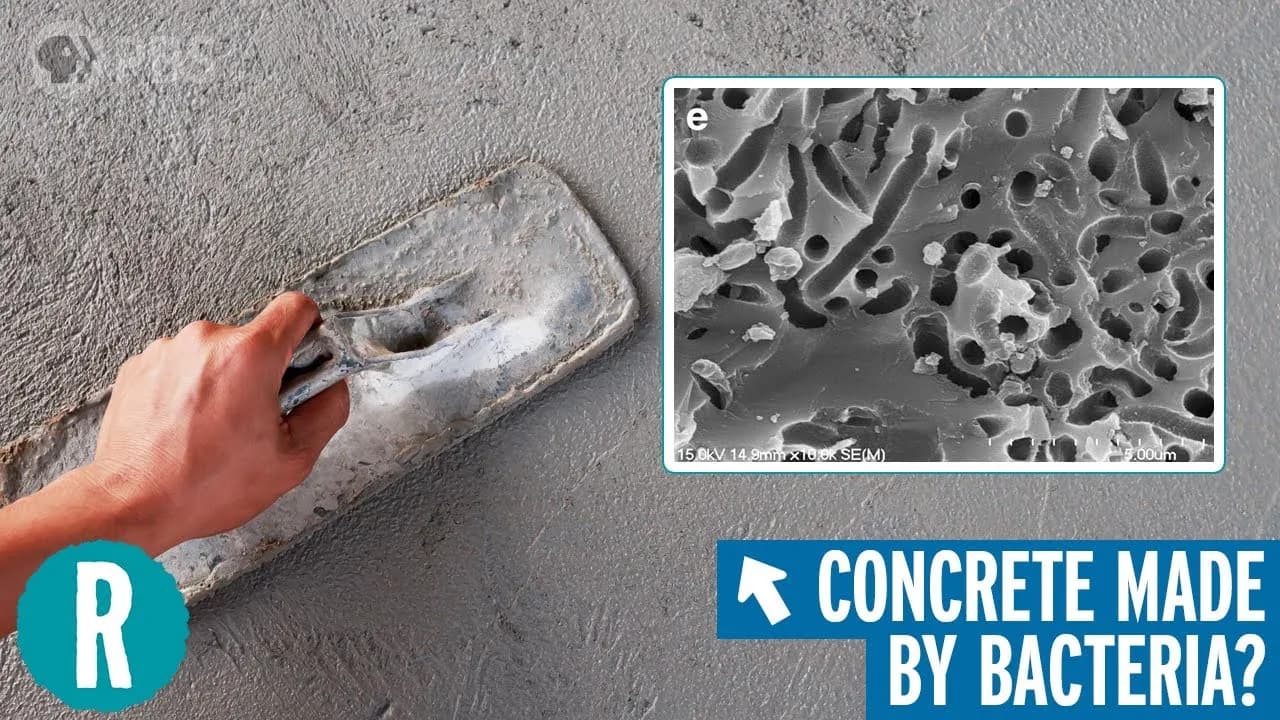
Chinese scientists have developed a new kind of “living cement” that could, in theory, be used to build structures on far-away planets like Mars. According to reports, it works using just a few ingredients, including “domestic” soil/regolith, gelatin, and genetically engineered yeast.
If able to scale, this technique could be used to build shelters and other structures for future long-term human missions to the planet. What’s more, the process is relatively cheap and could be combined with on-site 3D printers.
The researchers managed to engineer a special strain of Saccharomyces cerevisiaeyeast that produces extremely adhesive proteins. One of these proteins is similar to those produced by mussels that enable them to stick to surfaces like rocks.
The idea is that these proteins could be used as a kind of cement to bind soil or regolith, effectively making a kind of biological cement. The yeast cells therefore behave a bit like millions of microscopic sticky particles inside the binder.
Building Martian structures using yeast
The gelatin component forms a hydrogel around everything, while the soil/regolith provides the bulk of the material. Initially gloopy in texture, this paste can be extruded through 3D-printer nozzles to form complex structures.
As for “curing” the mixture, the researchers believe it is best to work with the conditions on Mars rather than fight them. Mars has a very thin atmosphere (about 0.6 percent of that on Earth) and is much colder on average than Earth (about -63.4°F/−53°C).
Under these conditions, liquid water will freeze and sublimate, meaning it never really stays in liquid form for very long. That is essentially freeze-drying. What’s left behind is a lightweight porous network in which the gelatin, yeast-derived adhesive proteins, and mineral grains are locked together.
You can liken that to something akin to a mixture of freeze-dried sponge and concrete. What’s more, this new material is actually pretty strong, with 12 MPa compressive strength and 6 MPa flexural strength.
That’s about on par with low-strength and lightweight concrete here on Earth. Promising indeed, and if it can save shipping thousands of tons of material for construction, that would clearly be enormously beneficial.
Instead, in theory, you’d just need to send the biological starter material, some processing equipment, and a big robot printer. Interestingly, the material is also recyclable, meaning its constituent parts can be broken down and reused.
All well and good, but before this could be seriously considered for applications outside the lab, some important things need to be refined.
More work to do
The first is that the tested material used sand as a substitute for Martian regolith. Actual Martian regolith has different particle characteristics and contains things such as perchlorates. How the gelatin-yeast mix reacts to this is yet to be tested.
Another issue is that the gelatin is porcine, meaning that it would need to be “shipped in” to a building site. The team also tested a gelatin-free formulation, although its performance was lower, and the researchers say stronger fully biological binders will be needed.
Yet another major issue is enabling the material to build pressurized structures to protect people from Mars’s harsh environment. The team proposes a ready-made pressure-retaining membrane enveloped by a shell and shielding built using this new living concrete.
Overall, it is a promising proof-of-concept showing that Martian regolith might one day be turned into printable construction material using engineered biology, while exploiting Mars’s cold and near-vacuum conditions as part of the manufacturing process rather than treating them purely as obstacles.
Source: https://interestingengineering.com/innovation/living-cement-builds-mars-shelters
Related articles

SpaceX smashes US record as astronauts reach ISS in just 7 hours and 55 minutes
SpaceX’s latest crewed Dragon mission to the ISS is the fastest on record yet. Its...

Scientists find ‘ghost’ of superconductivity that survives even after the state vanishes
Superconductivity is supposed to be an all-or-nothing quantum state. Cool a material below a critical...
Roads made with steel slag could last 15 years, cut pollution and prevent early deaths
Researchers at Southeast University in Nanjing and partners modeled what could happen if China replaced...

Magenta solar panels give broccoli 4.5-fold boost in sunlight efficiency, study finds
Broccoli grown under magenta solar panels used sunlight far more efficiently than plants grown in...

Scientists catch a type-I superconductor breaking time-reversal symmetry
The creation of a superconducting material is one of the most sought-after and complicated processes....

3D light field lets scientists unlock electron states that were once impossible to reach
Some quantum states of electrons have remained out of reach not because they do not...