
US backs $1.5B conditional loan for chips used in drones, radar, missile defense
The US Department of War has offered semiconductor manufacturer Wolfspeed up to $1.5 billion in...
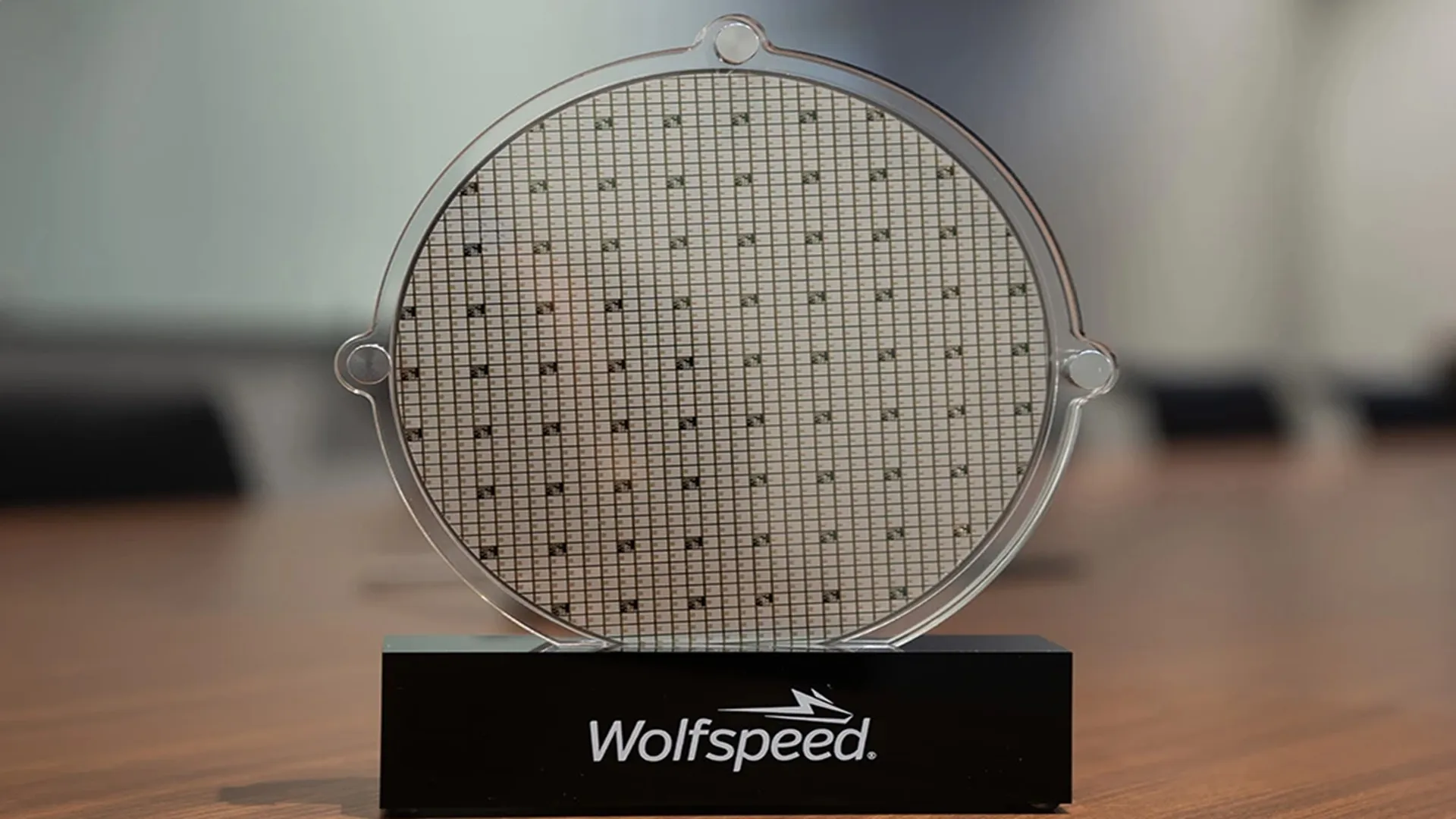
The US Department of War has offered semiconductor manufacturer Wolfspeed up to $1.5 billion in conditional financing to expand domestic production of advanced chips used in drones, radar, electronic warfare, and missile defense systems.
The proposed 30-year loan, announced through the department’s Office of Strategic Capital (OSC), would support the development and manufacturing of silicon carbide (SiC) and gallium nitride (GaN) semiconductor technologies. These materials are used in high-performance power systems and radio-frequency electronics.
The North Carolina-based company plans to use the financing to upgrade its GaN manufacturing capabilities for next-generation communications and electronic warfare systems. The company also aims to develop radiation-resistant versions of its existing SiC products and future GaN devices for demanding defense and aerospace applications.
Radiation hardening helps protect electronic components from damage or malfunction caused by radiation, making it particularly important for satellites, spacecraft and military systems operating in harsh environments.
Advanced chips strengthen defense
Unlike conventional silicon semiconductors, SiC and GaN are wide-bandgap materials that can operate under demanding electrical conditions. They are particularly useful in systems requiring high power, efficient energy conversion and high-frequency performance.
Silicon carbide can handle high voltages and temperatures while reducing energy losses, making it useful in power electronics. Gallium nitride, on the other hand, is suited to high-frequency applications, including communications equipment, radar and electronic warfare systems.
According to the Department of War, the proposed financing would strengthen domestic access to semiconductor materials used in propulsion systems, directed-energy weapons, drones, radar and missile defense.
The company also plans to advance GaN-on-SiC wafer technology, which combines gallium nitride‘s high-frequency performance with silicon carbide’s ability to dissipate heat. This makes the technology useful for powerful radar, communications and electronic warfare systems.
“SiC and GaN have critical national security applications,” said Robert Feurle, Wolfspeed’s CEO. “With this financing, the company would be well positioned to not only continue to serve the DoW but also expand its capabilities for the benefit of U.S. national security as a whole.”
Financing remains conditional
The proposed financing would support a multiyear manufacturing and technology development program across Wolfspeed’s domestic operations. The company has facilities in North Carolina, New York, and Arkansas.
The agreement also includes a potential equity component. Wolfspeed would issue warrants allowing the Department of War to purchase up to 7.5 percent of the company’s fully diluted equity, with the warrants issued proportionally as loan installments are funded.
The financing is structured as a senior secured loan facility, allowing Wolfspeed to draw funds in stages rather than receive the entire amount upfront.
The proposed investment aligns with the Trump administration’s efforts to expand domestic semiconductor manufacturing and reduce reliance on overseas supply chains for strategically important technologies.
However, Wolfspeed said the transaction remains subject to substantial due diligence, government authorizations, final agreements, and other closing conditions. The company cautioned that there is no guarantee the loan will be finalized or that any funding will ultimately be provided.
Related articles
World’s first fleet-capable drilling robot hits 10x speed with 99% accuracy
A drilling robot built for data center construction has already punched more than 385,000 holes...
US microreactor that reached criticality in 150 days set for full-power test in 2027
A US-developed nuclear battery that achieved its first controlled chain reaction in roughly 150 days...

Nous Research raises $90 million at $1.5 billion valuation to take its open-source Hermes agent to businesses
Nous Research, developer of the open-source Hermes Agent, has raised a $90 million Series B led by Robot Ventures and is launching Hermes for Businesses, letting companies deploy customized AI agents while keeping their data private.

Japanese wholesaler Nippan confirms book sales to Anthropic, deepening publisher concerns over AI training
Nippan Group Holdings has told the Japan Book Publishers Association that a subsidiary sold books to Anthropic from December 2024 to December 2025 but was not aware the purchases were for AI training, according to Jiji Press and Kyodo News.

AI mood sobers at Singapore forums as Temasek, Ray Dalio and officials flag market and existential risks
At the Milken Institute Asia Summit and the Forbes Global CEO Conference in Singapore on October 7, investors and policymakers broadened AI worries beyond valuations to loss of control, AI-designed bioweapons and whether huge spending will pay off.

Most US voters say Trump and Congress aren’t taking AI risks seriously, Reuters/Ipsos poll finds
A new Reuters/Ipsos poll found 57% of registered voters say the Trump administration has not taken AI risks seriously enough, 54% say the same of Congress, and 84% see the technology as a threat to American workers.