
Video: Inside Boston Dynamics’ factory where an Atlas humanoid robot gets made each day
Boston Dynamics released a video offering a closer look at the prototype operations team that...
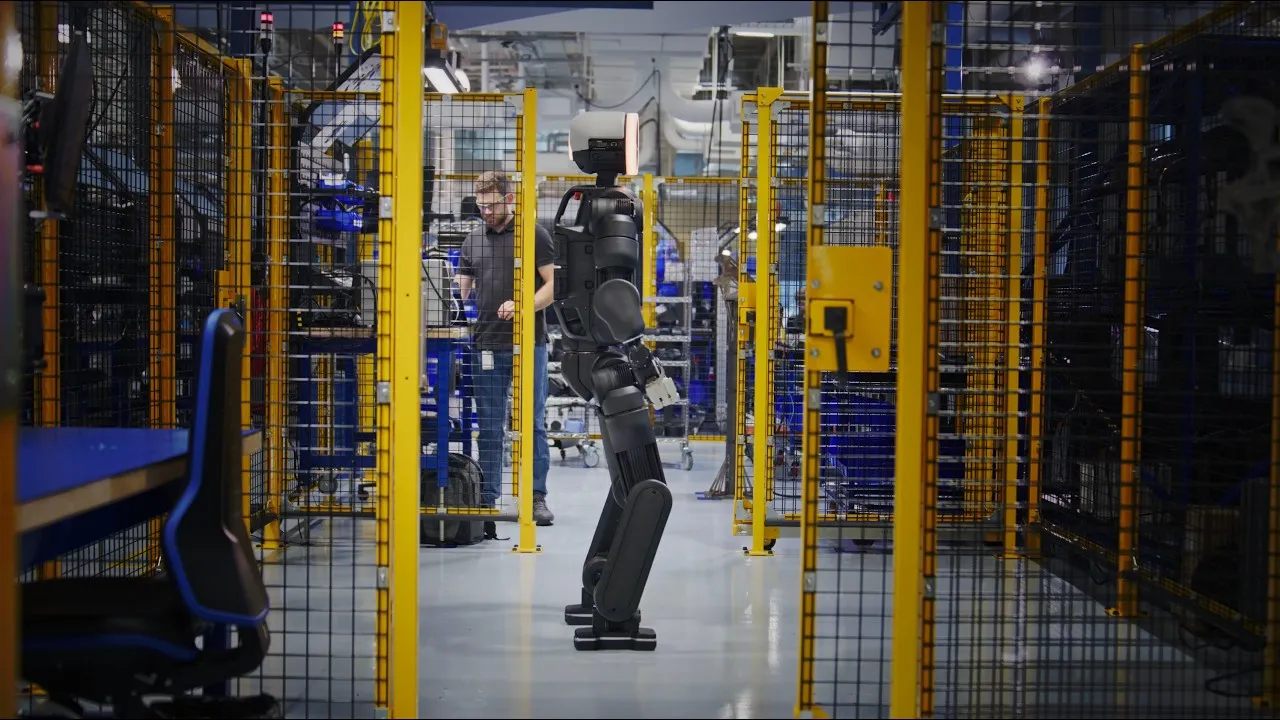
Boston Dynamics released a video offering a closer look at the prototype operations team that builds and maintains its Atlas humanoid robot.
The nearly six-minute film shows how the team combines precision machining, assembly, and repair to accelerate robot development. The company said its team can currently build a robot in about a day, with a target of reducing the process to roughly an hour next year.
The approach applies manufacturing practices to research and development, allowing engineers and machinists to modify components and processes quickly as designs evolve.
Atlas assembly overhaul
The company released a nearly six-minute video showing how its manufacturing processes support rapid hardware development, letting engineers move from design changes to physical components and assembled robots faster.
The company currently takes about a day to build a robot, with the goal of reducing the process to approximately one hour next year. Longer-term ambitions include bringing build times down to minutes. However, these targets refer to the robot-building process described in the video and do not establish a production-line output rate or a timeline for commercial deliveries.
Boston Dynamics‘ prototype operation brings engineers and machinists together to develop, manufacture, assemble, and maintain robotic hardware. Rather than relying entirely on external suppliers for specialized components, the facility performs precision machining in-house, allowing teams to modify parts and manufacturing processes as designs evolve.
The work includes producing components with tight dimensional tolerances and carrying out specialized operations such as gear cutting. These capabilities are important for humanoid robots, which require precisely manufactured mechanical parts to support coordinated movements, repeated operation, and reliable performance.
Keeping machining close to engineering also shortens the feedback loop between design and testing. Engineers can discuss component requirements directly with machinists, make adjustments, and evaluate revised parts without waiting for a lengthy external manufacturing process. Components can move from machining to assembly on the same day or the following day, enabling teams to test design changes on physical hardware sooner.
The facility also develops the manufacturing methods needed to produce new components efficiently. This includes selecting suitable cutting tools, refining machining procedures, and incorporating robotic arms into assembly tasks. The approach allows manufacturing techniques to evolve alongside the robot’s mechanical design.
Atlas build efficiency
The emphasis on manufacturing efficiency extends to the design of Atlas itself. Its components must balance dexterity, durability, cost, and ease of maintenance, particularly as the robot moves toward wider industrial use.
The company recently introduced four-finger hands for Atlas, underscoring the need to design robotic hardware around practical requirements. Hands must perform varied tasks while remaining sufficiently robust and serviceable for repeated use. Faster prototype development allows engineers to evaluate these trade-offs through physical testing and refine components before they enter broader production.
The integrated workflow also supports maintenance and repair, helping the team identify hardware issues and return robots to testing faster. This is particularly relevant during research and development, when repeated experiments and design revisions can place additional demands on prototype hardware.
The push to shorten Atlas build times comes as humanoid robotics companies increasingly focus on manufacturing scale. However, the time required to assemble an individual robot differs from the rate at which a production line can manufacture multiple units.
Other manufacturers have reported hourly production targets, weekly output figures, and cumulative production milestones. These measurements describe different stages of manufacturing and cannot be compared directly without additional information about assembly procedures, automation, testing, and the status of completed robots.
Boston Dynamics’ approach focuses on improving the connection between engineering and manufacturing, with faster component production and assembly intended to support more rapid development. The video also serves as a recruitment effort, highlighting the technical work involved in building and maintaining Atlas.
Related articles

Your secrets aren’t safe with this cute robot toy — they’re on Chinese servers ready to be hacked
There's a new digital pet in town - a cute little marshmallow of a robot that can change its cartoony expressions to match your mood.

Big Walk skipped Xbox to boycott Microsoft’s involvement with Israel
Big Walk's co-op multiplayer walking adventure has proved popular since launching in August, but Xbox players have been excluded from the fun - and now the game's creators have explained why.
US lab’s new tool targets rare-earths’ shortages, can help choose resilient motor technologies
A major laboratory in the United States has developed a new tool, which can guide...
Mayhem 10 drones get upgraded to connect satellite, cellular and radio simultaneously
AeroVironment is preparing to strengthen communications on its Mayhem 10 autonomous military drone system with...
US optical chip gyroscope gets 2,000-fold sensitivity boost, detects slow rotation
Researchers at the University of California, Santa Barbara, and Caltech have developed a chip-scale optical...

Google opens Deep Review, its agentic AI for verifying technical documents, to the public
Google Research has publicly launched Deep Review, an agentic system tested on more than 16,000 conference submissions, to check the logic, math and factual grounding of complex scientific, legal and financial documents.