
Mayhem 10 drones get upgraded to connect satellite, cellular and radio simultaneously
AeroVironment is preparing to strengthen communications on its Mayhem 10 autonomous military drone system with...
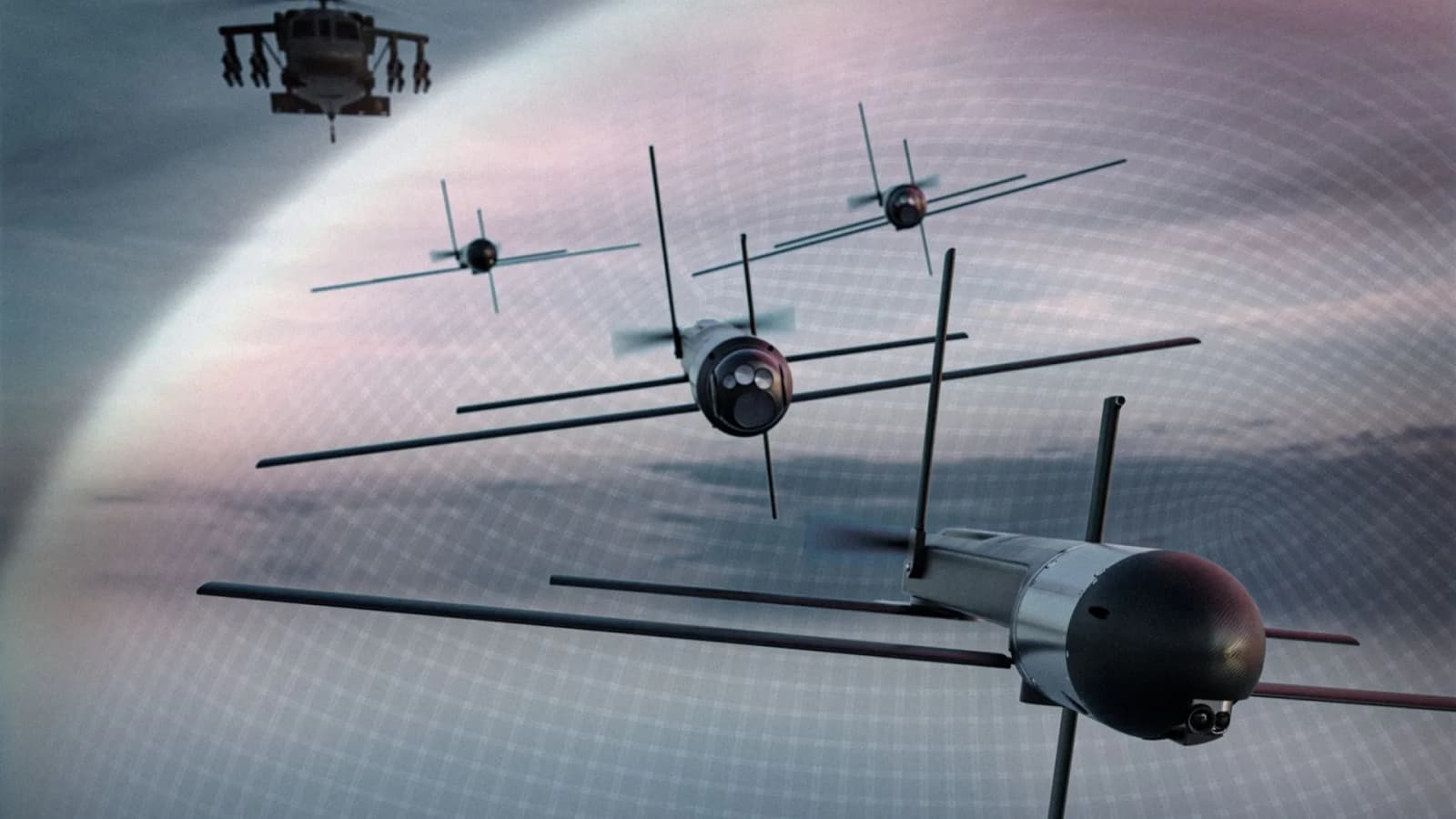
AeroVironment is preparing to strengthen communications on its Mayhem 10 autonomous military drone system with technology from Australian firm Elsight. The partnership aims to keep the platform connected when military operations disrupt or degrade individual network links.
The companies will integrate Elsight’s Halo technology into Mayhem 10. The system combines available communications links into one connection, helping operators maintain control as network conditions change.
Halo combines multiple connections
Halo can bond satellite connectivity with private or public cellular networks. It can also use point-to-point radio links to maintain a communications path when conditions change.
The technology automatically adjusts to network availability. If one connection weakens, Halo can use other available links to preserve connectivity. This reduces the need for operators to switch between networks manually. The integration could be particularly valuable for launched effects operating beyond reliable line-of-sight radio coverage, where maintaining a control link becomes more challenging.
The approach could prove useful in environments where military forces cannot rely on consistent communications coverage. Terrain may obstruct radio signals, while damaged infrastructure can limit cellular access. Electronic warfare can create additional challenges for systems that depend on wireless links.
However, network bonding does not guarantee uninterrupted communications. Its effectiveness depends on which links remain available and how well they perform under operational conditions. The companies have not disclosed test results or quantified Halo’s performance against deliberate electronic interference.
Modular design enables upgrades
Mayhem 10 features an open architecture that allows AeroVironment to incorporate third-party technologies without redesigning the entire platform. Its modular design supports different mission configurations.
The system can carry payloads for intelligence, surveillance, and reconnaissance. Other potential roles include electronic warfare and communications relay. Mayhem 10 also supports precision-strike missions across air, ground, and maritime operations.
Halo adds a communications capability to this existing framework. Reliable links could help operators direct the system and receive information when network conditions become unpredictable.
Austin Miller, AeroVironment’s vice president and general manager of loitering munition systems, said dependable connectivity remains essential during contested operations.
“Mayhem 10 was built to evolve with the mission,” Miller said, pointing to the platform’s open architecture as a way to incorporate new capabilities quickly.
The integration could give military users greater flexibility when mission requirements or communications conditions change. Neither company has disclosed specific changes to the platform’s hardware or software for the integration.
Integration work is underway
Elsight CEO Yoav Amitai said Halo was designed to maintain connectivity as network conditions fluctuate. He said the integration should also reduce the burden on operators managing communications links.
The partnership addresses a persistent challenge for remotely operated and autonomous military systems. Even a capable platform can lose effectiveness when its communications links fail.
Multiple connections can provide alternative routes for transmitting data. Their usefulness still depends on network availability, signal quality, and the ability to withstand interference.
AeroVironment and Elsight are advancing the integration, but neither has announced a completion date. The companies have also not confirmed when the combined capability could enter operational service.
Related articles
US optical chip gyroscope gets 2,000-fold sensitivity boost, detects slow rotation
Researchers at the University of California, Santa Barbara, and Caltech have developed a chip-scale optical...

Google opens Deep Review, its agentic AI for verifying technical documents, to the public
Google Research has publicly launched Deep Review, an agentic system tested on more than 16,000 conference submissions, to check the logic, math and factual grounding of complex scientific, legal and financial documents.

Anthropic says new defenses cut distillation of Claude’s reasoning by 90% to 99%
Anthropic says safeguards rolled out in recent months have reduced the data harvested by distillation attackers by around 90% to 99%, naming Chinese labs Zhipu and Moonshot as examples of industrial-scale efforts to copy Claude’s capabilities.
Microsoft unveils Maia 300 AI chip, plans multi-gigawatt in-house deployments from 2027
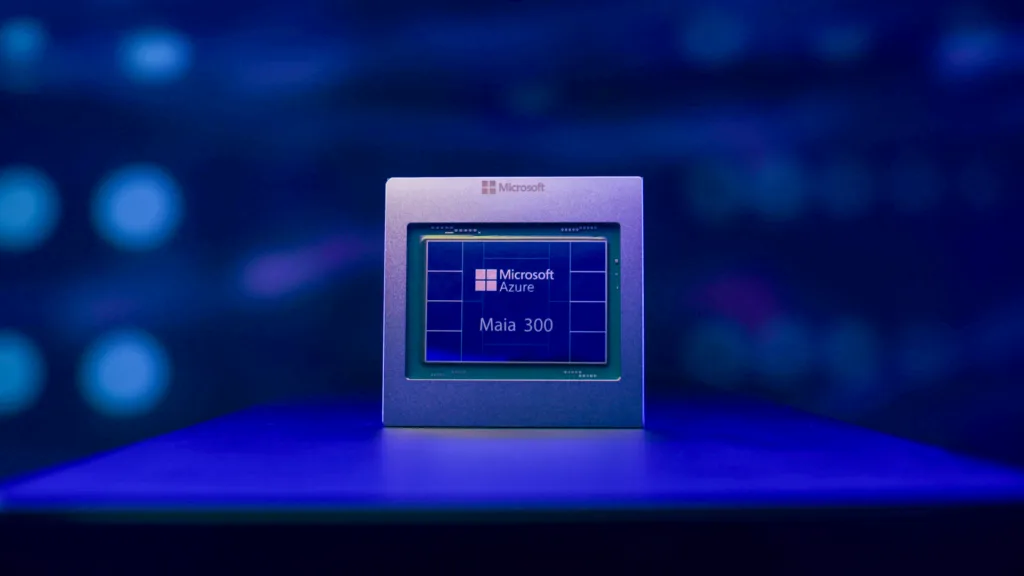
Microsoft announced Azure Maia 300, the third generation of its custom AI chip, and said it will scale the Maia family to multi-gigawatt deployments starting in 2027, making it the primary inference system for its products and services.

MI5 launches AI Threat Assessment Centre as spy chief flags AI-enabled bioweapons risk
MI5 Director General Sir Ken McCallum used his annual threat update to announce the AI Threat Assessment Centre (AITAC), bringing together UK expertise to assess AI national-security risks, and said he gives the greatest weight to AI's potential to change the stakes on bioweapons.

Anthropic’s third-quarter revenue jumps 45% to $16.8 billion ahead of planned IPO
Anthropic told prospective investors at a pre-IPO meeting that third-quarter revenue rose 45% from the prior quarter to $16.8 billion and that it was profitable on an adjusted basis, Reuters reported.