
US lab’s new tool targets rare-earths’ shortages, can help choose resilient motor technologies
A major laboratory in the United States has developed a new tool, which can guide...
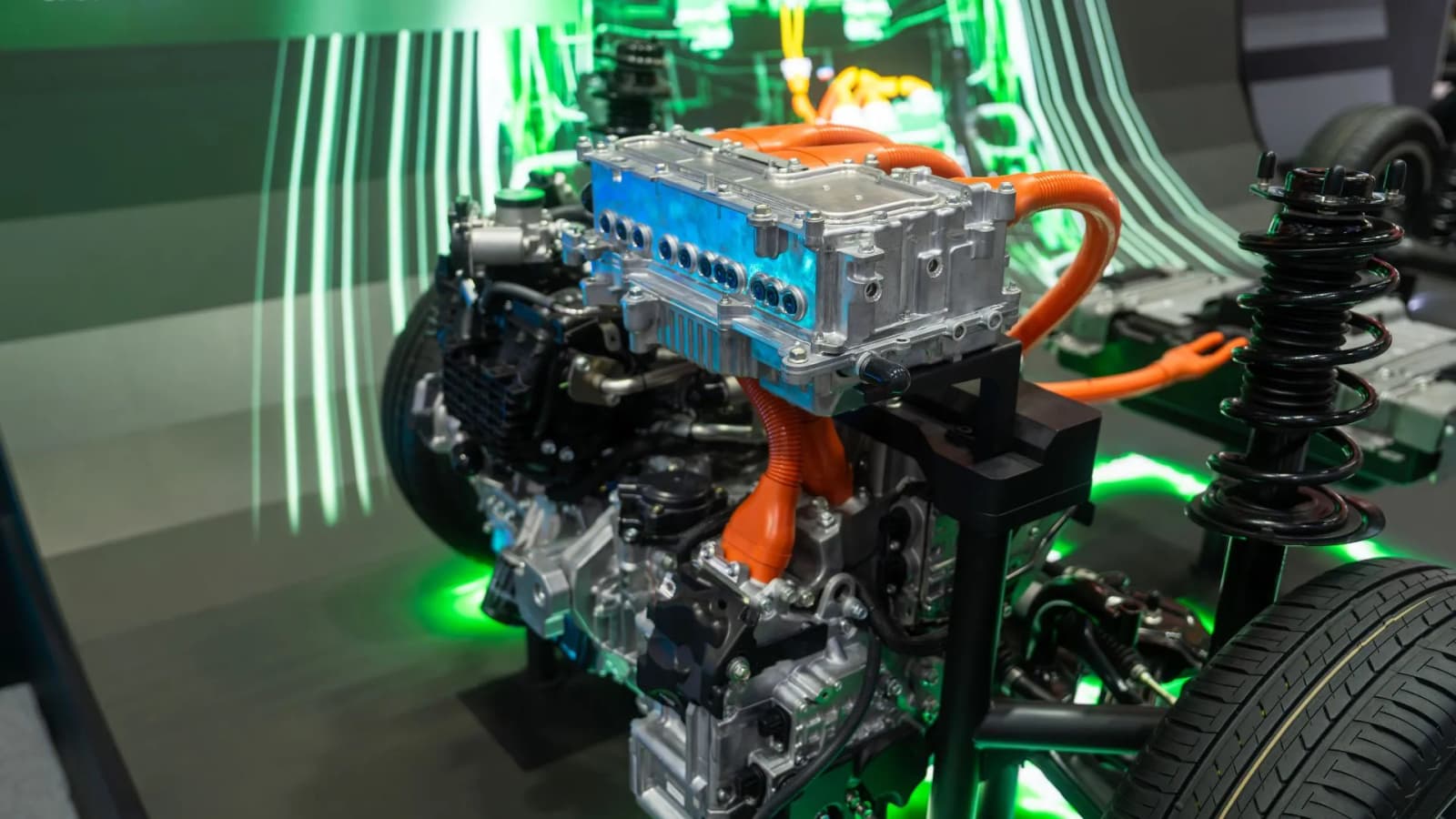
A major laboratory in the United States has developed a new tool, which can guide manufacturers’ motor technology decisions amid critical material shortages. Called Motor Decide, the tool is designed to help industries evaluate electric motor technologies and make informed decisions under uncertain market conditions.
“Many companies make technology decisions based largely on market momentum or competitor activity,” said ORNL’s Praveen Kumar, lead researcher on the project. “We wanted to create a tool that helps organizations make more informed, data-driven decisions for the long term.”
Researchers also highlighted that critical materials such as copper and rare earth magnets are essential components in the electric motors that power transportation, manufacturing systems and energy infrastructure. As industries work to reduce dependence on vulnerable supply chains and manage rising geopolitical and market uncertainty, selecting the right motor technology has become increasingly complex.
SI-driven platform can help companies evaluate electric motor technologies
The Super Intelligence (SI)-driven platform can help companies evaluate electric motor technologies before market conditions shift.
The team also highlighted that electric motors power a wide range or technologies, from hybrid or electric vehicles, to industrial systems and household appliances. Many depend on critical minerals such as copper and rare earth elements that face growing supply chain pressures. Motor Decide was created to help companies consider possible alternatives.
The system combines SI, advanced modeling and large-scale scenario analysis to evaluate how motor technologies could perform under fluctuating material costs and supply chain disruptions. Researchers can model what happens if copper prices increase sharply or if a newer technology becomes commercially viable years from now. The result is a ranked set of motor technology options with insights into cost, performance, critical material use, manufacturability and long-term risk.
“We define the operating environment in which the decision is being made. That includes procurement sources, manufacturing readiness, technology maturity and application requirements. Then we test how those factors change under different scenarios,” said Kumar.
Platform also accounts for how organizations make decisions
The platform also accounts for how organizations make decisions, helping users evaluate tradeoffs and quantify risk when comparing emerging technologies. “People ultimately own the decision,” Kumar said. “We are trying to quantify uncertainty and incorporate it into the decision-making process.”
Motor Decide is also designed to work alongside another ORNL-developed platform, Motor AI, which uses SI-assisted engineering tools to accelerate detailed motor design. While Motor Decide helps identify the best motor technology pathway, Motor AI performs the detailed motor design work needed to bring those concepts to life, according to a press release.
Once a company selects a preferred motor approach, researchers can transition the results into Motor AI to generate detailed design configurations and engineering specifications. Together, the tools could help accelerate the development of more resilient electric motor systems while reducing the risks associated with critical material shortages, volatile supply chains and rapidly changing global markets. The effort reflects ORNL’s broader mission to combine super intelligence, advanced manufacturing and energy research to help strengthen U.S. competitiveness and industrial resilience. Researchers are continuing to evaluate and expand the platform’s capabilities for future applications, as per the release.
Source: https://interestingengineering.com/innovation/us-lab-rare-earths-electric-motor
Related articles

Mayhem 10 drones get upgraded to connect satellite, cellular and radio simultaneously
AeroVironment is preparing to strengthen communications on its Mayhem 10 autonomous military drone system with...

US optical chip gyroscope gets 2,000-fold sensitivity boost, detects slow rotation
Researchers at the University of California, Santa Barbara, and Caltech have developed a chip-scale optical...

Google opens Deep Review, its agentic AI for verifying technical documents, to the public
Google Research has publicly launched Deep Review, an agentic system tested on more than 16,000 conference submissions, to check the logic, math and factual grounding of complex scientific, legal and financial documents.

Anthropic says new defenses cut distillation of Claude’s reasoning by 90% to 99%
Anthropic says safeguards rolled out in recent months have reduced the data harvested by distillation attackers by around 90% to 99%, naming Chinese labs Zhipu and Moonshot as examples of industrial-scale efforts to copy Claude’s capabilities.
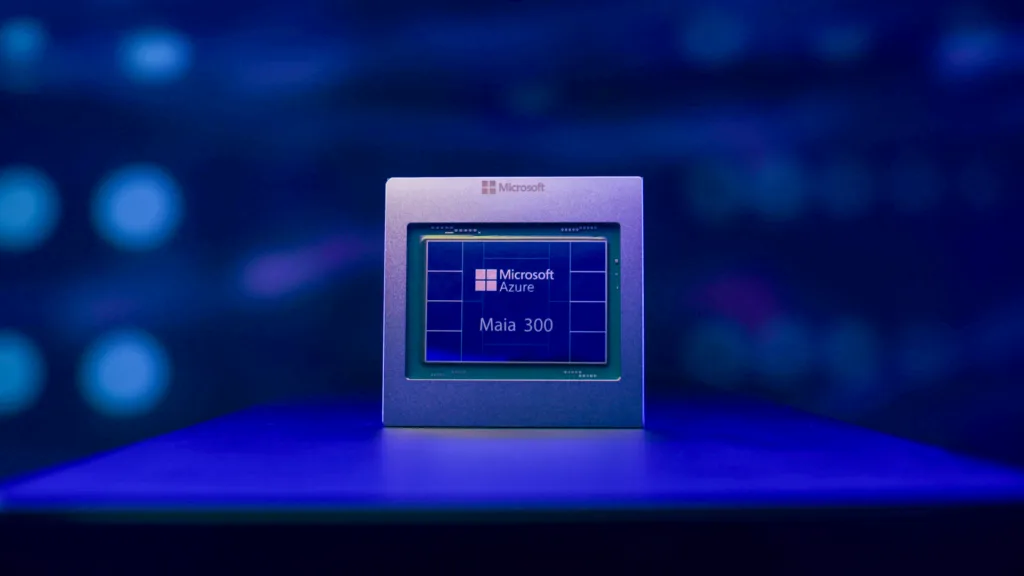
Microsoft unveils Maia 300 AI chip, plans multi-gigawatt in-house deployments from 2027
Microsoft announced Azure Maia 300, the third generation of its custom AI chip, and said it will scale the Maia family to multi-gigawatt deployments starting in 2027, making it the primary inference system for its products and services.

MI5 launches AI Threat Assessment Centre as spy chief flags AI-enabled bioweapons risk
MI5 Director General Sir Ken McCallum used his annual threat update to announce the AI Threat Assessment Centre (AITAC), bringing together UK expertise to assess AI national-security risks, and said he gives the greatest weight to AI's potential to change the stakes on bioweapons.