
After Navier-Stokes, OpenAI’s 377 math results leave experts demanding a voice
OpenAI has published more than 370 new mathematical results, stunning mathematicians and igniting a debate...
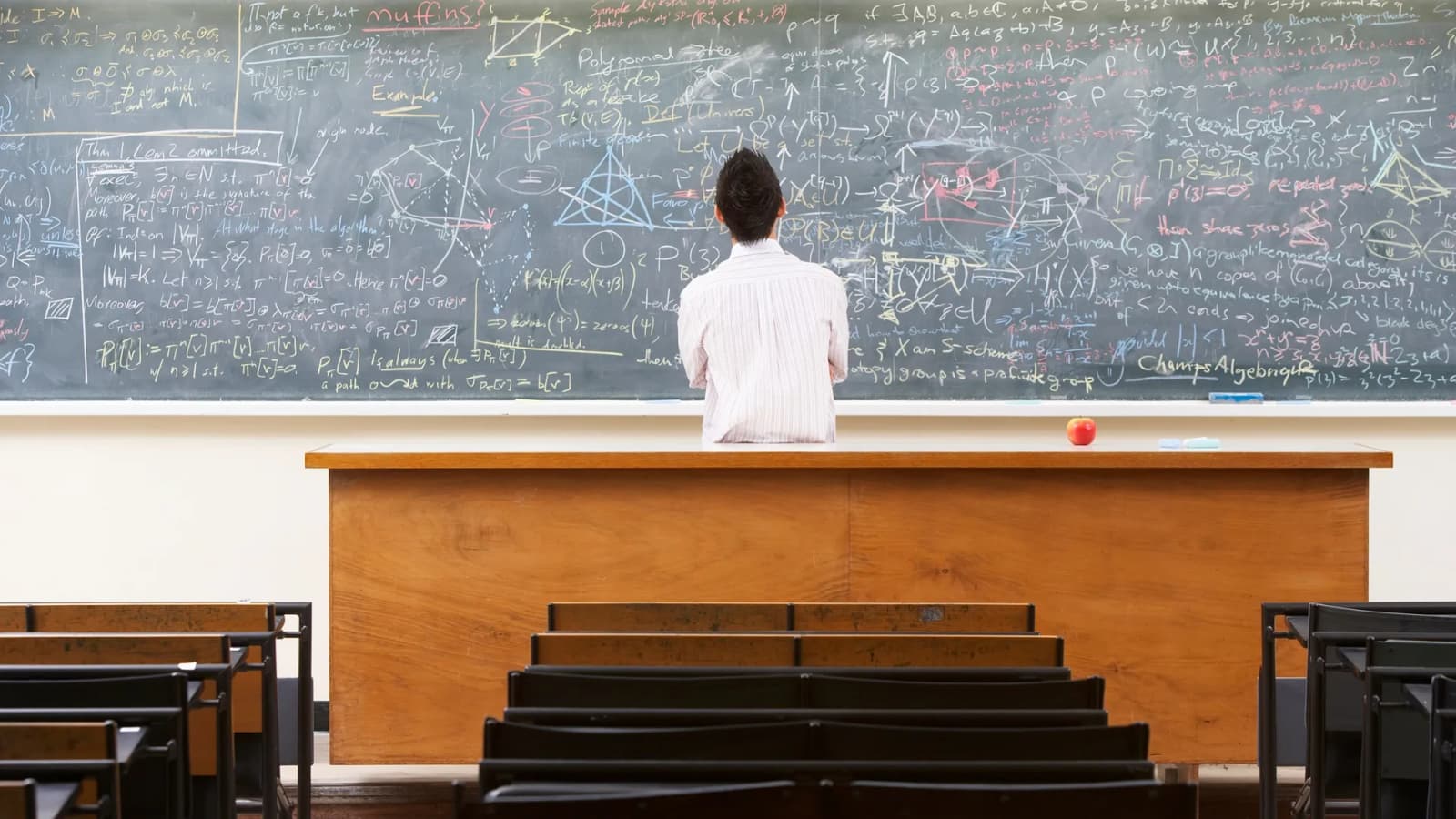
OpenAI has published more than 370 new mathematical results, stunning mathematicians and igniting a debate over how AI-generated work is vetted and who gets to scrutinize it.
The company released the findings on Tuesday, covering algebra, theoretical computer science and mathematical logic, The Guardian reported. The Age put the tally at 377, reporting that OpenAI says it has solved 377 math equations that have stumped experts for years. The release was designed to showcase what some of OpenAI’s most advanced AI models can do.
Navier-Stokes claim raises the stakes
The publication follows an earlier milestone. Last month, OpenAI solved the Navier-Stokes equation, one of the world’s toughest mathematical problems, which carries a $1 million reward for anyone who cracks it, according to The Guardian.
That achievement prompted concerns from leaders in the field. They say frontier labs should not be testing the most advanced mathematical problems on proprietary AI models that the wider community of mathematicians cannot access.
Institute for Advanced Study pushes back
The Institute for Advanced Study in Princeton, New Jersey, an independent group of mathematical experts, said it does not endorse the practice.
In a statement, the institute warned that AI can now produce mathematical arguments without the person who prompted it being able to understand, verify or take responsibility for them. It said human understanding of mathematics “remains of paramount importance.”
The organization also posed a broader question: how, in this new era, can researchers build a paradigm that treats human understanding of mathematics as part of responsible scholarly output?
OpenAI responds, but testing continues
To address the community’s concerns, OpenAI announced it would work with the institute to give “mathematicians a voice in how we move forward.”
The company did not indicate, however, that it would stop testing its AI models on such advanced problems. Experts in the field say they worry OpenAI is not doing the due diligence required to vet the results.
Who deserves the credit?
Tristan Buckmaster, a New York University mathematician who was working on the Navier-Stokes problem, raised another concern in an interview with The New York Times. Mathematicians who prompt AI models to solve equations, he said, could be supplying information that helps the model reach its answer.
“There’s likely to be a bunch of results where they take someone’s work and then take it to completion,” Buckmaster said, according to The Guardian.
A philosophical divide
The debate has also taken a more reflective turn. Kai Shaikh, a graduate student in mathematics at the University of Toronto, told The Age that humans have two competing natures: a tendency to compete and a capacity to appreciate beauty.
“To me this seems to be a case of the former attempting to strangle the latter,” Shaikh said.
Taken together, the reactions point to a field wrestling with a basic tension. OpenAI is releasing findings by the hundreds, while mathematicians are asking whether such results can be understood, verified and credited the way scholarly work traditionally demands. The Institute for Advanced Study has not endorsed the practice, and OpenAI has not said it will halt it.
Source: https://interestingengineering.com/ai-robotics/openai-377-math-results-mathematicians-concerns
Related articles
US backs $1.5B conditional loan for chips used in drones, radar, missile defense
The US Department of War has offered semiconductor manufacturer Wolfspeed up to $1.5 billion in...
World’s first fleet-capable drilling robot hits 10x speed with 99% accuracy
A drilling robot built for data center construction has already punched more than 385,000 holes...
US microreactor that reached criticality in 150 days set for full-power test in 2027
A US-developed nuclear battery that achieved its first controlled chain reaction in roughly 150 days...

Nous Research raises $90 million at $1.5 billion valuation to take its open-source Hermes agent to businesses
Nous Research, developer of the open-source Hermes Agent, has raised a $90 million Series B led by Robot Ventures and is launching Hermes for Businesses, letting companies deploy customized AI agents while keeping their data private.

Japanese wholesaler Nippan confirms book sales to Anthropic, deepening publisher concerns over AI training
Nippan Group Holdings has told the Japan Book Publishers Association that a subsidiary sold books to Anthropic from December 2024 to December 2025 but was not aware the purchases were for AI training, according to Jiji Press and Kyodo News.
AI mood sobers at Singapore forums as Temasek, Ray Dalio and officials flag market and existential risks
At the Milken Institute Asia Summit and the Forbes Global CEO Conference in Singapore on October 7, investors and policymakers broadened AI worries beyond valuations to loss of control, AI-designed bioweapons and whether huge spending will pay off.