Atomic-6 Space Armor tiles reach orbit for first time, can stop 16,000 mph projectiles
Atomic-6 announced that its Space Armor composite tiles have reached orbit for the first time....
This story was prepared automatically by software.
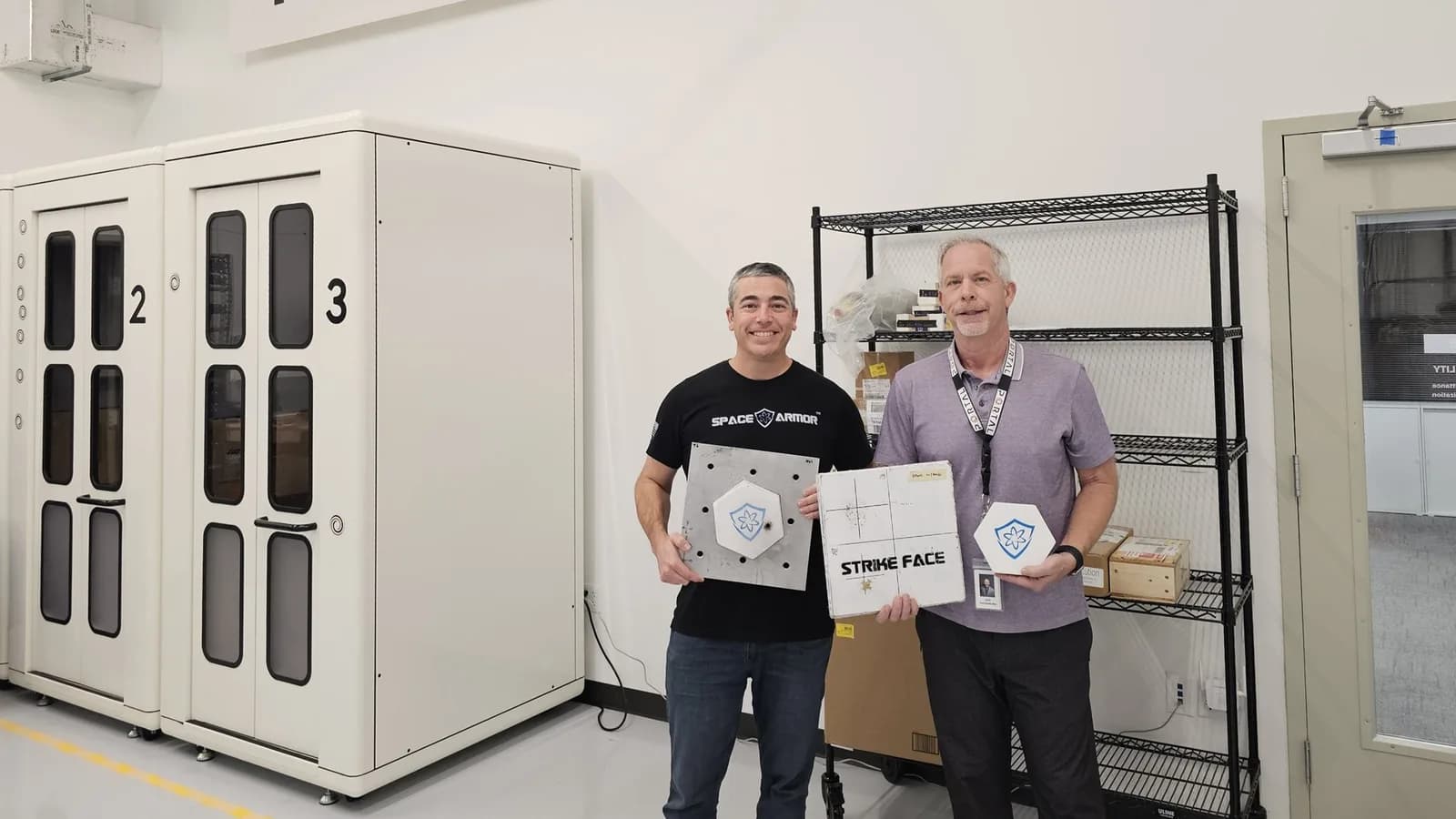
Atomic-6 announced that its Space Armor composite tiles have reached orbit for the first time. They rode aboard Portal Space Systems’ Starburst-1 spacecraft on a SpaceX Falcon 9 rocket from Cape Canaveral, Florida.
The tiles launched on the Bandwagon-5 dedicated rideshare mission. It is the technology’s first flight demonstration, moving it from ground-based hypervelocity testing to its first operational deployment in space, the company said.
Why orbital debris is a problem
The tiles are meant to protect critical spacecraft systems from micrometeoroids and orbital debris, known as MMOD. Atomic-6 framed the work around the “Kessler Syndrome,” a cascade of debris collisions that could make parts of Earth’s orbit unusable for satellites and space missions.
How the tiles differ
Atomic-6 says Space Armor tiles are lighter and thinner than traditional metallic Whipple shields and are designed to resist fragmentation on impact, which reduces the risk of creating more hazardous debris. They are made with a proprietary fiber-to-resin manufacturing method. The company says they also make possible the first composite radome, a structural enclosure that protects communications equipment while letting radio signals pass and withstanding impacts.
In ground-based hypervelocity tests, the tiles stopped projectiles traveling faster than 7 kilometers per second, or about 16,000 mph, without producing harmful secondary debris, according to Atomic-6. Conventional aluminum shielding in comparative tests generated many fragments, some larger than the original projectile.
“We’ve proven Space Armor tiles can withstand debris traveling at extraordinary speeds without generating harmful secondary fragments,” said Trevor Smith, Atomic-6’s CEO.
A maneuvering spacecraft as the testbed
Starburst-1 is Portal’s first free-flying spacecraft mission carrying live payloads. It is designed for rapid maneuvering across orbital regimes, and during a planned one-year primary mission it will demonstrate rendezvous and proximity operations, rapid retasking and significant orbital changes.
Jeff Thornburg, Portal’s co-founder and CEO, said Space Armor has the potential to add protection without hindering the performance the company’s missions demand. He called seeing the first tile reach orbit “a milestone deserving of celebration.”
What comes next
Portal and Atomic-6 will use experience from integrating the tiles onto Starburst-1 to validate installation procedures and develop best practices for including them in future spacecraft. Atomic-6 says the combination of impact resistance, lower mass and radio-frequency permeability offers builders a new way to protect satellites, communications systems and future crewed platforms.
Atomic-6 makes advanced composites for aerospace, hypersonics and defense, including the Light Wing composite solar array. Portal, based in Bothell, Washington, builds reconfigurable Starburst and Supernova spacecraft, with Supernova powered by its FLARE solar thermal propulsion system. Portal says it has raised $75 million since emerging from stealth in 2024.
Related articles