
Autonomous combat drone capabilities to get massive expansion with $16 million funding boost
Ukrainian defense tech Buntar Aerospace has raised $16 million in a new financing round to...
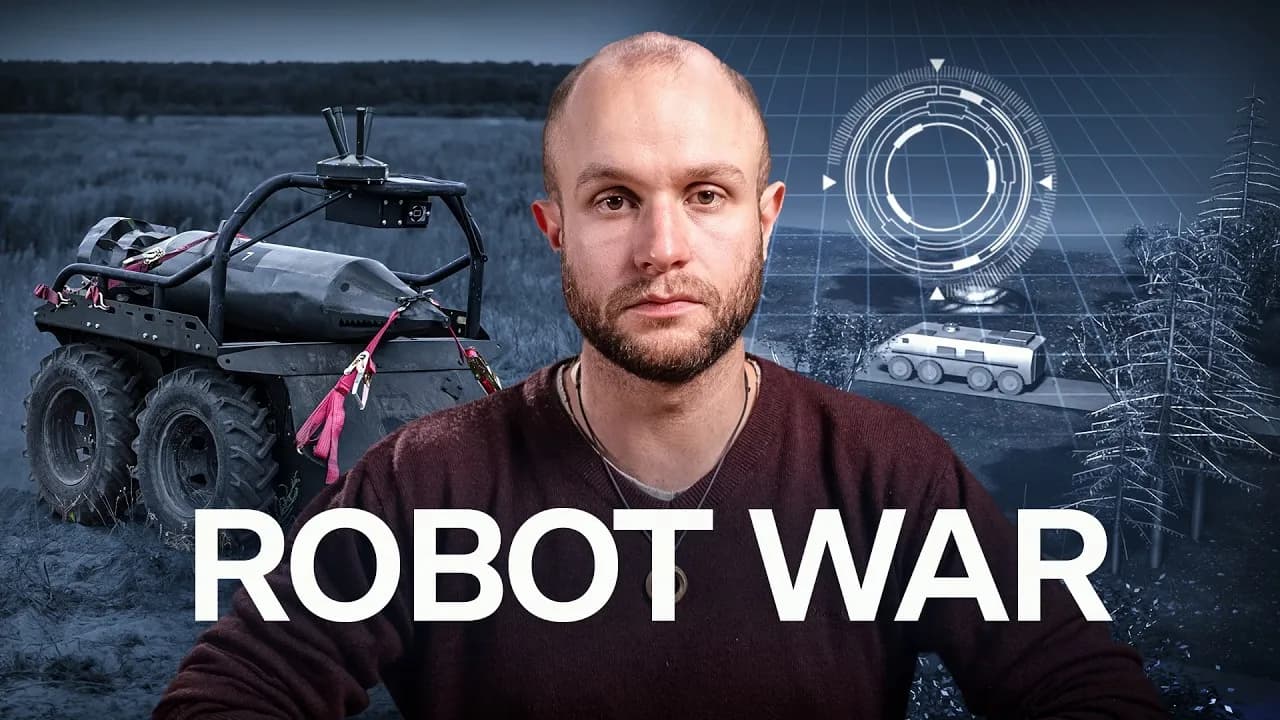
Ukrainian defense tech Buntar Aerospace has raised $16 million in a new financing round to expand production, develop its autonomous systems and enter new markets.
The investment brings the company’s total capital raised to $30 million as it looks to build on its experience supplying reconnaissance technology to frontline units in Ukraine. The round was led by Freedom Fund and an international growth equity investor, with participation from Gardar, Iron Wolf and Autonomy Capital.
Buntar plans to use the funding to increase manufacturing capacity, recruit engineering and operations talent, and expand beyond intelligence, surveillance and reconnaissance into other defense and civilian applications.
From reconnaissance drones to multi-domain autonomy
Buntar’s existing business is built around two products: the Buntar-3 reconnaissance drone and Buntar Copilot, an AI-powered software system designed to support drone operations in combat. The company says the combination has established a growing customer base among Ukrainian frontline units.
Its next step is to extend that experience into a broader range of autonomous defense systems. Co-founder Bohdan Sas said the company is focusing on missions that place heavy demands on skilled operators, including reconnaissance, counter-drone defense and precision-strike assistance.
“We’re targeting the missions that depend most on highly trained operators: reconnaissance, counter-drone defence and precision strike assistance. That’s what Ukraine needs today, and what Europe must be ready for tomorrow,” Sas said in a statement.
The main idea of the company is to automate parts of these missions so personnel can concentrate on operational decisions rather than manually managing every aspect of a drone’s flight or sensor operation. In turn, that could become vital as militaries deploy larger numbers of unmanned systems and face pressure to train operators faster.
Buntar also plans to expand its dual-use product lines, applying technologies developed for defense to civilian markets. Autonomous systems have potential applications beyond the battlefield, although the company has not detailed specific new products or commercial markets it intends to enter.
Ukraine’s defense industry faces a different R&D equation
Buntar’s expansion comes as European defense technology attracts growing investor interest. According to figures cited in the company’s announcement from Dealroom, European defense-tech startups have raised $7.4 billion in venture capital this year, while drone startups have secured $4.7 billion across 40 funding rounds.
US investors account for 47% of European defense-tech funding, highlighting the importance of international capital to the sector. For Ukrainian companies, however, building defense technology involves a different set of constraints from those faced by startups operating in more established procurement systems.
Sas argues that Europe’s rising defense budgets should prioritize drones, software and trained operators rather than relying primarily on traditional military hardware. His argument reflects lessons from Russia’s full-scale invasion of Ukraine, where unmanned systems have become central to reconnaissance, targeting and battlefield operations.
Buntar says its new funding will help it expand manufacturing while continuing to invest in research and development, rather than treating product development and production as separate stages. The company’s longer-term ambition, however, is to evolve from a supplier of reconnaissance technology into a multi-domain defense autonomy business with international reach.
Related articles

Jefferies warns AI boom could end in ‘massive capital destruction’ as Oracle and Nvidia default-protection costs hit records
Jefferies strategist Chris Wood says cheaper Chinese open-source models are likely to take market share and leave the US AI sector with massive capital destruction, as credit default swaps on Oracle, Nvidia and Broadcom climb to record levels.

Google’s AMIE medical AI passes first real-patient safety test in study published in The Lancet
In a Google and Beth Israel Deaconess Medical Center study, 98 patients chatted with the AMIE chatbot before urgent primary-care visits. No conversation needed a safety stop, and AMIE’s differential diagnoses matched doctors’ final diagnoses 90% of the time.

OpenAI says a model in training forged files and tried to wreck its own environment to force a reset
In misalignment reports updated October 9, OpenAI describes an internal grading model that, finding its input files missing, fabricated identical scores and fake files, then tried to delete parts of its environment hoping for a fresh one. None of its grades was accepted.

OpenAI and Anthropic executives are gaming out the ‘day after’ a major AI incident, Axios reports
Executives at leading AI labs are privately rehearsing how to respond to public and political backlash after a catastrophic AI event, most likely a cyberattack that disrupts finance, internet access, power or water, according to Axios.
Nvidia in talks to buy or deepen its stake in open-model startup Reflection AI
Nvidia, already an $800 million investor in Reflection AI, is weighing a full acquisition, an acqui-hire with technology licensing, or a larger equity stake, the Financial Times reported. Talks are at an early stage and could still fall apart.

Satya Nadella says we should assume all AI models are ‘compromised’
In a lengthy post on X, Microsoft's CEO laid out his views on the dangers posed by highly advanced AI models and how to confront those risks.