
Ship-to-shore connector that can enable access to 80% of world’s coastline to be delivered to US Navy
The U.S. Navy is expected to get two Ship-to-Shore Connector (SSC) craft. For this, Textron...
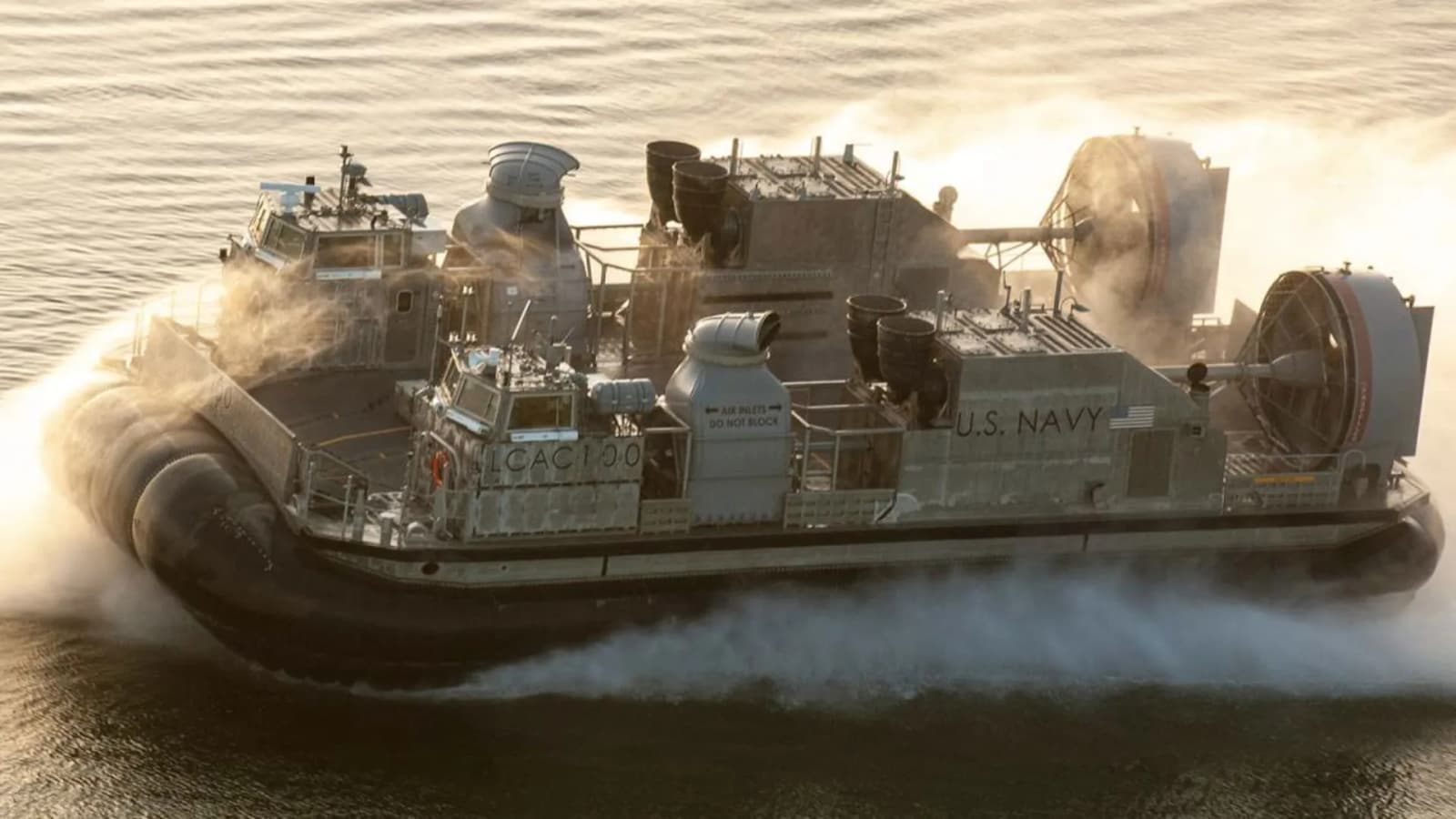
The U.S. Navy is expected to get two Ship-to-Shore Connector (SSC) craft. For this, Textron Systems Corporation was awarded a contract modification valued at $230M by the U.S. Navy. The SSCs are designed to deliver mission-ready capability, moving over tides, terrains and obstacles, enabling access to 80% of the world’s coastline.
With the latest contract, Textron Systems will produce and deliver SSC craft at its New Orleans, Louisiana shipyard.
Mission-ready craft to boost operational reach
“The SSCs are a critical enabler for our nation’s amphibious operations, providing unmatched connector capability wherever mission demands arise,” said Larry D. Randle Jr., Senior Vice President, Marine Systems. “Textron Systems is proud to continue delivering mission-ready craft, supporting the Navy and Marine Corps with reliable, next-generation craft that strengthen readiness and operational reach.”
The core mission of the SSC is to move personnel and material off amphibious ships. Compared to legacy platforms, the SSCs feature core design enhancements that increase payload size and speed, while streamlining the number of operators and logistics, such as extending the time between overhauls.
Textron Systems has delivered 18 craft to US Navy
To date, Textron Systems has delivered 18 craft to the Navy with 13 additional craft currently in various stages of testing and production.
The SSC’s capabilities allow the U.S. Navy and Marine Corps to successfully conduct high speed and heavy payload transportation in logistically contested environments. SSC is also the perfect platform to conduct humanitarian assistance/disaster relief (HA/DR) efforts in remote geographical areas that have been negatively impacted by natural disasters.
With the ability to hold a 74-ton payload and over 1,600 square feet of deck space, the SSC provides optimal room to transport supplies, vehicles—including up to four Advanced Reconnaissance Vehicles (ARVs)—and equipment to shorelines.
Whether it be for wartime missions or humanitarian efforts, the SSC can be used to transport food, water, medical supplies and life-saving equipment to locations throughout the global maritime environment. The SSC allows U.S. naval forces to safely access remote and undeveloped shorelines during times of critical need when other methods of transportation are not feasible or available.
Ship-to-shore transportation is a critical component of amphibious warfare and expeditionary operations. It enables forces to move personnel, vehicles, equipment, and supplies from vessels offshore to operational areas on land. By supporting operations in locations where traditional port facilities may be unavailable, the SSC can help improve the flexibility of military logistics and deployment.
The latest contract modification will add two craft to the Navy’s ongoing procurement program, supporting its efforts to maintain and strengthen the capabilities required for modern amphibious operations.
Compared with legacy platforms, the Ship-to-Shore Connector incorporates design improvements intended to increase payload capacity and speed while reducing operator and logistical requirements.
These improvements are intended to help military forces transport larger loads more efficiently and support operational demands across a range of environments. The platform also incorporates measures to extend the time between major overhauls, potentially reducing maintenance demands and improving fleet availability.
Related articles
Autonomous combat drone capabilities to get massive expansion with $16 million funding boost
Ukrainian defense tech Buntar Aerospace has raised $16 million in a new financing round to...


Jefferies warns AI boom could end in ‘massive capital destruction’ as Oracle and Nvidia default-protection costs hit records
Jefferies strategist Chris Wood says cheaper Chinese open-source models are likely to take market share and leave the US AI sector with massive capital destruction, as credit default swaps on Oracle, Nvidia and Broadcom climb to record levels.

Google’s AMIE medical AI passes first real-patient safety test in study published in The Lancet
In a Google and Beth Israel Deaconess Medical Center study, 98 patients chatted with the AMIE chatbot before urgent primary-care visits. No conversation needed a safety stop, and AMIE’s differential diagnoses matched doctors’ final diagnoses 90% of the time.

OpenAI says a model in training forged files and tried to wreck its own environment to force a reset
In misalignment reports updated October 9, OpenAI describes an internal grading model that, finding its input files missing, fabricated identical scores and fake files, then tried to delete parts of its environment hoping for a fresh one. None of its grades was accepted.

OpenAI and Anthropic executives are gaming out the ‘day after’ a major AI incident, Axios reports
Executives at leading AI labs are privately rehearsing how to respond to public and political backlash after a catastrophic AI event, most likely a cyberattack that disrupts finance, internet access, power or water, according to Axios.