
China’s ‘artificial sun’ advances as BEST nuclear fusion reactor passes halfway mark
A major engineering site dedicated to nuclear fusion has opened in eastern China. The project...
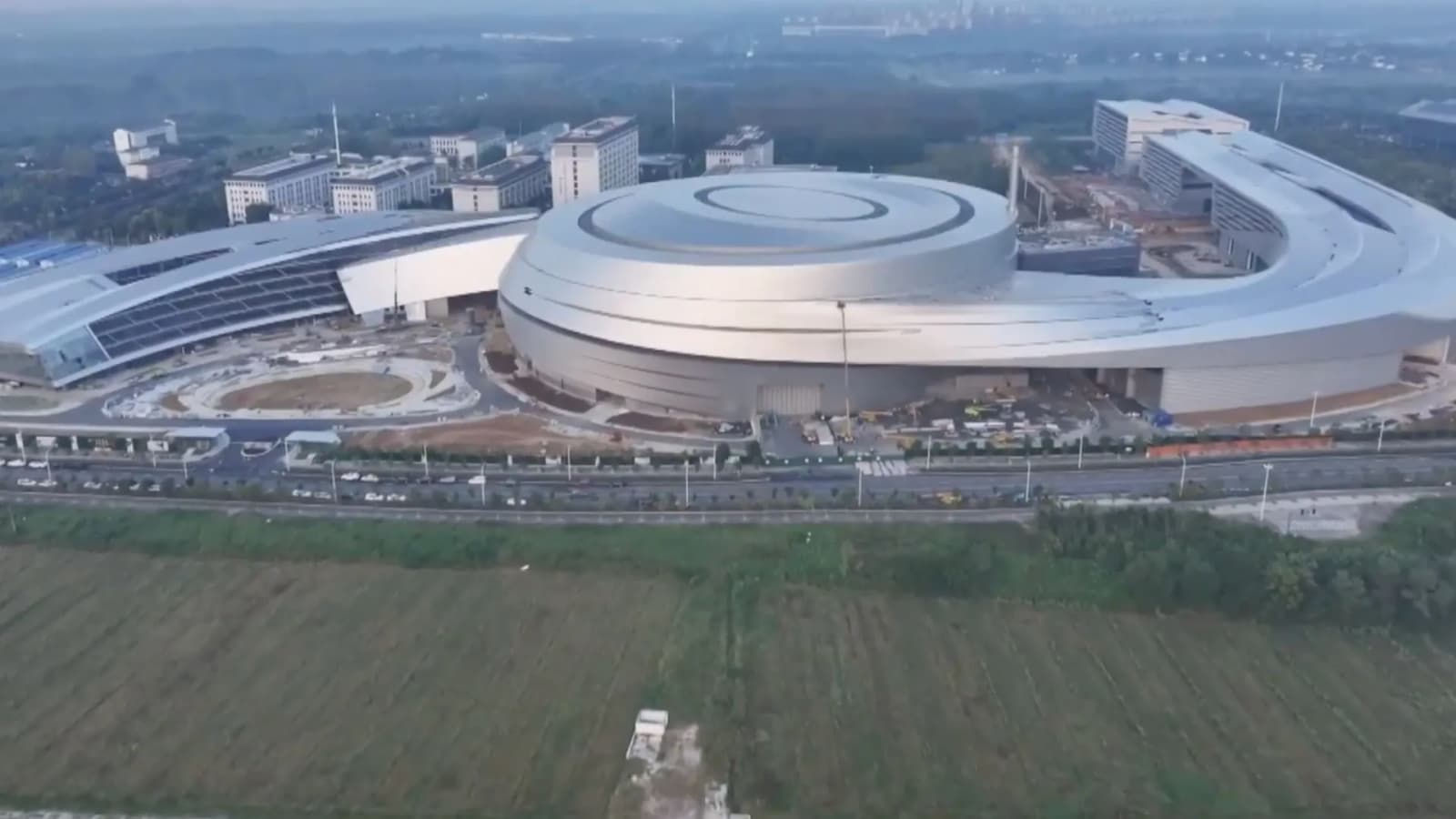
A major engineering site dedicated to nuclear fusion has opened in eastern China. The project marks a clear move to bridge the gap between small laboratory experiments and industrial-scale power demonstration.
Technicians have taken delivery of the dedicated campus in Hefei, in Anhui Province. The location will house the Burning Plasma Experimental Superconducting Tokamak, known as BEST. State broadcaster CCTV reported that the machine is designed to show that fusion can generate usable electricity for the first time. Engineers plan to run power demonstrations around 2030.
Nuclear fusion attempts to copy the physical reactions that power the sun. The process forces light atomic nuclei together at extremely high temperatures and under intense pressure. This reaction releases massive amounts of energy. Unlike existing nuclear fission stations, fusion creates no long-lived transuranic waste or spent fuel rods, and carries no risk of a runaway meltdown.
Assembly teams in Hefei have already finished more than half of the main reactor. Project leaders expect to complete overall construction by the end of 2027. Technicians have now started work on the most complex phase of the reactor core.
Building on previous operational data
The machine relies on giant superconducting magnets to create powerful magnetic fields. These fields hold a superheated plasma cloud suspended in place, so it never touches the interior surfaces. The central reaction occurs inside a fortified vacuum chamber. A thermal shield wraps around the chamber to block heat loss. Engineers are currently fitting precision instruments and sensors inside the vessel.
“The vacuum vessel is the ‘furnace chamber’ where nuclear fusion reactions occur, and the thermal shield acts as a super insulation layer to block heat,” a report by China’s state-owned Global Times highlighted.
The project builds on operational data gathered from an earlier Chinese test reactor, known as EAST. That machine set a global benchmark in January 2025 by holding plasma heated to 100 million degrees Celsius (180 million degrees Fahrenheit) for 1,066 seconds. Researchers in Hefei also completed full tests on two large superconducting magnets this summer, proving that key electrical systems can perform under load.
Public-private joint effort
State institutions are not working alone. Private clean energy firm ENN Group announced its own milestone this week using a spherical device called the EXL-50U. The company said the machine generated more than 100 million fusion reactions a second. It is the first time a private company has achieved that reaction rate using proprietary hardware.
The company is testing an alternative fuel mix made of hydrogen and boron-11. Mainstream projects use two heavy hydrogen isotopes called deuterium and tritium. That standard reaction produces high-energy neutrons, which wear down reactor walls over time. The hydrogen-boron reaction avoids that problem. The process produces non-radioactive helium particles instead, which cause far less damage to structural materials.
The work in Hefei and the parallel trials by private firms highlight China’s dual strategy. The country is backing state engineering and private enterprise at the same time. Both tracks aim to secure an early lead in the global race for commercial fusion power.
Related articles

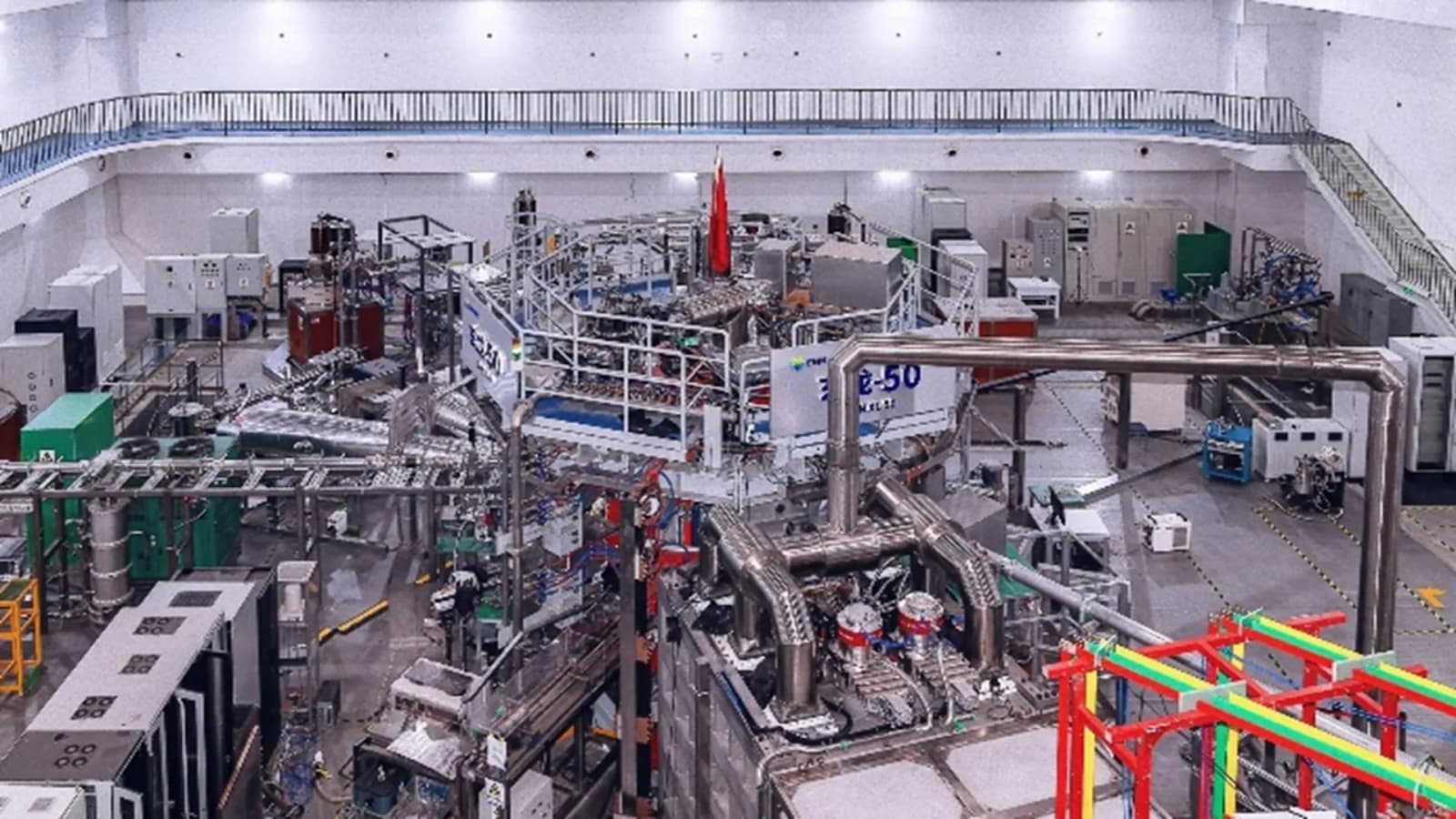
Chinese tokamak achieves hydrogen-boron fusion with 100 million reactions a second
A clean energy firm in China has just achieved hydrogen-boron fusion reactions in the EXL-50U...
Natural hydrogen reservoirs could be used for underground storage, study suggests
Transitioning the world to zero-carbon energy requires storing vast amounts of hydrogen. A new study...

From 420 to 936 ppm: Why rising CO2 makes indoor plant biofilters a necessity
A new study from Yale University and collaborating institutions has shown that building-integrated plant and...
Deep drilling project targets hot rock for water-free geothermal power in New Mexico
U.S. geothermal energy developer XGS Energy will drill a deep vertical well in New Mexico...