
Georgia Tech’s Nexus AI supercomputer can now be accessed by all US scientists
The computing prowess of Nexus, the newest AI supercomputer installed at the Coda Data Center...
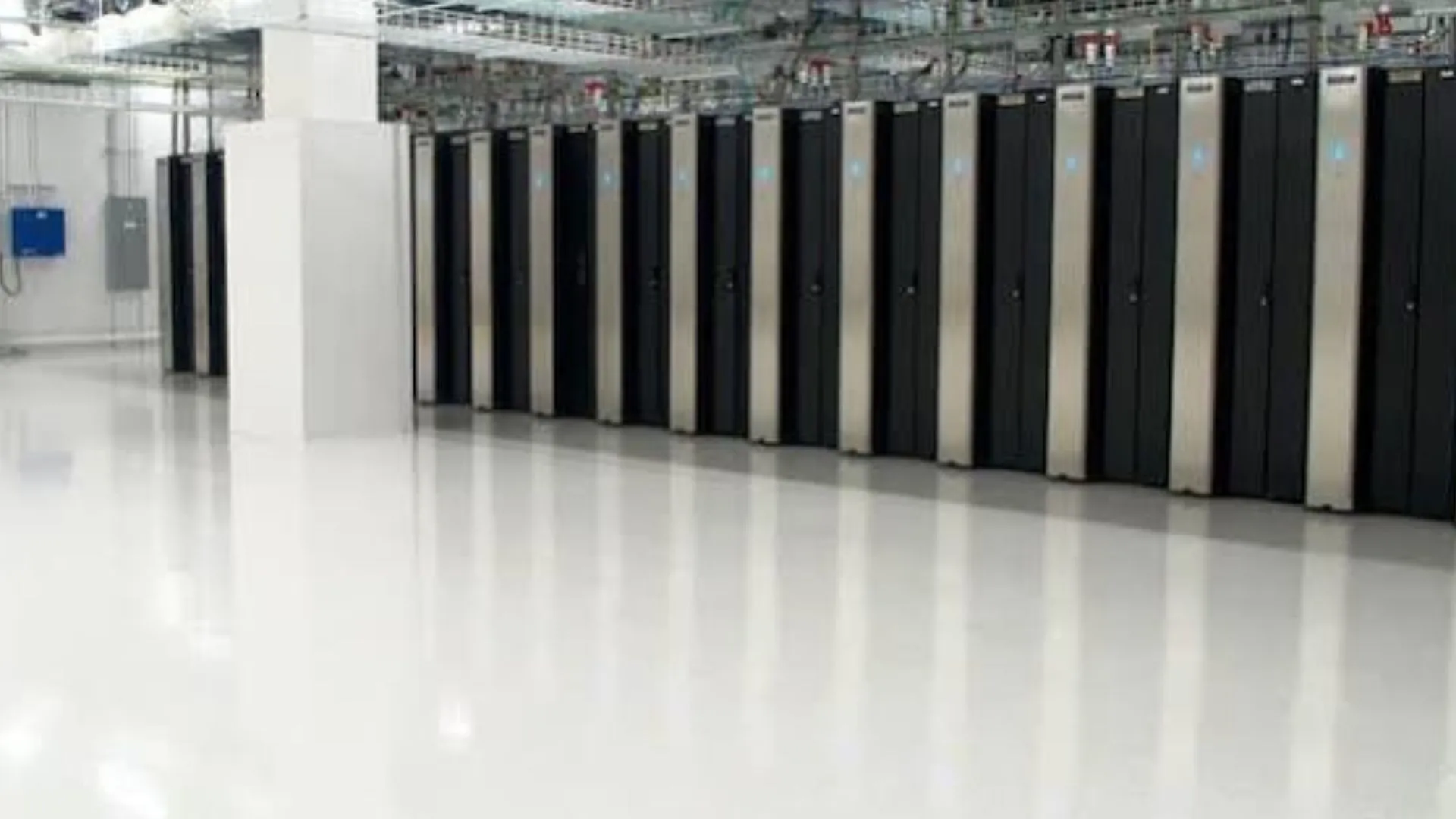
The computing prowess of Nexus, the newest AI supercomputer installed at the Coda Data Center in Atlanta, is now available to researchers across the US after Georgia Tech has opened nationwide access to this resource. The cloud-based services at Nexus will allow researchers to access immense computing power from anywhere in the country.
Computers can help scientists carry out a large number of calculations. However, when the problems are too big to solve, a computer can take a very long time to complete the computations. A supercomputer, on the other hand, has a large number of computing resources at its disposal and can split a problem into several parts and allocate them to different resources to work on them simultaneously and arrive at solutions faster.
This proves to be extremely useful when solving a problem such as hurricane modeling. Instead of arriving at a complete model using a single processor, a supercomputer can divide the problem into small three-dimensional boxes and assign activity within them to each processor. Each processor simulates only for information within the box assigned to them and then shares this information with its neighboring processors to create a larger picture of the hurricane.
How Nexus was built?
Nexus was built with a $20 million investment from the National Science Foundation (NSF) and in a partnership with The University of Illinois Urbana-Champaign. While much of the hype in computing is around Artificial Intelligence (AI) and data centers, Nexus’ availability opens up a new approach where researchers can blend AI and supercomputing together.
Instead of developing AI models and carrying out large computations separately, Nexus integrates the two and allows research teams to carry out simulations, work with large datasets and build AI models on the same platform.
“This new resource will help researchers across the country accelerate discovery and strengthen collaboration in fields where access to advanced computing can make a meaningful difference,” said Ángel Cabrera, president of Georgia Tech, in a press release.
“Expanding the nation’s computing capacity for scientific discovery reflects Georgia Tech’s commitment to advancing research that drives progress and improves lives.”
Research Nexus will support
Opening up the system’s capabilities to scientists from across the US will help advance research in fields like drug discovery, energy, neuroscience, robotics, and much more. As a national resource, 90 percent of the computing capacity will be available through an open, peer-reviewed allocation process that will be coordinated by the NSF.
“By bringing together advanced computing capabilities and expertise from across the research community, Nexus will help broaden the range of scientific questions researchers can tackle and strengthen the nation’s capacity for AI-enabled discovery,” added Irina Dolinskaya, NSF Directorate Head for Computer and Information Science and Engineering.
“Nexus is part of a broader effort at NSF to strengthen America’s research infrastructure and give researchers across the country access to the advanced computing capabilities they need to accelerate scientific discovery.”
“Georgia Tech and Illinois bring complementary expertise to Nexus, and we are excited to contribute to the National Center for Supercomputing Application’s decades of experience operating national-scale computing resources and supporting the researchers who use them,” said Charles Isbell, chancellor of the University of Illinois Urbana-Champaign, in the press release.
“Together, we are building the partnerships and infrastructure that enable discovery and ultimately improve the lives of those we serve.”
Related articles

The AI race is back on
Last week, Anthropic and OpenAI looked like they had the AI race to themselves, pulling ahead with increasingly powerful models that left their rivals in the dust.
New 360-degree air defense radar with detection range exceeding 205 miles can transform warfare
Leonardo DRS has launched its new cxMHR radar and begun initial production of the system,...

Save up to 20 percent on gift cards for REI, Barnes & Noble, and more
While we cover a lot of deals on specific products, it’s rare that we find worthwhile savings on gift cards that let you save on essentially anything the store sells.

YouTube sticks new labels on AI-generated songs
YouTube is adding a "Made with AI" label to tracks that were "altered or fully generated" using AI, with a similar approach to its existing process for applying AI labels to videos.

As a TV enthusiast, I was hoping for more from the Apple TV 4K
It's been four long years since the last Apple TV 4K was released, and in that time there have been lots of hopes and dreams for features in whatever comes next.

Now that Character.AI is going bankrupt, what happens to all of its users’ data?
New York Attorney General Letitia James revealed a years-long multi-state investigation against Character.