
Humanoid robot learns to duck, step over objects, and avoid obstacles with new system
Galbot introduced PASSAGE, a research framework that helps humanoid robots navigate cluttered environments by adapting...
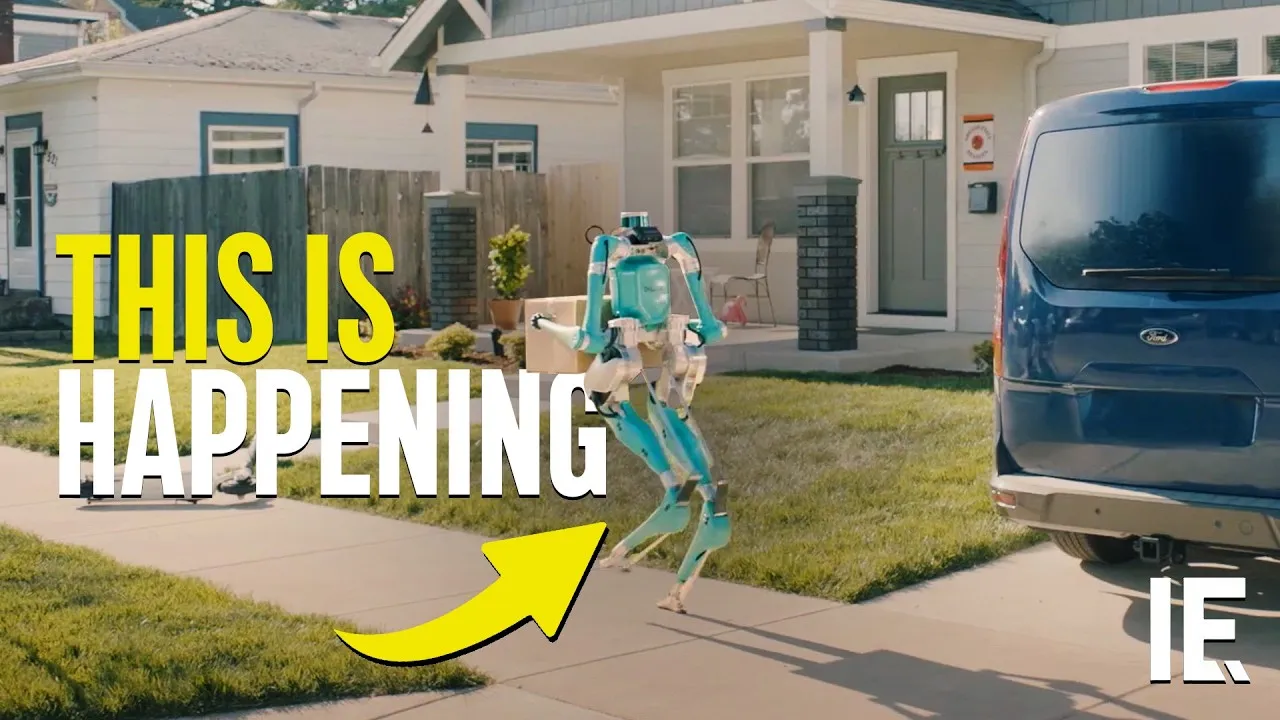
Galbot introduced PASSAGE, a research framework that helps humanoid robots navigate cluttered environments by adapting their movements to obstacles.
The system enables robots to choose different ways of passing through tight spaces, including stepping over objects, ducking under barriers, and turning sideways to fit through narrow gaps.
The framework combines environmental perception, motion planning, and whole-body control to help humanoid robots navigate complex surroundings while maintaining balance and reaching their destinations.
Recently, Galbot’s humanoid robot completed over 100 rallies in a live autonomous tennis match, tracking balls, adjusting positions, and returning varied shots.
Humanoids navigate obstacles
The new research framework lets humanoid robots navigate cluttered environments by adapting their whole-body movements to obstacles. The system lets robots choose suitable movements, such as stepping over objects, ducking under overhead barriers, or turning sideways to pass through narrow gaps.
The framework addresses a key challenge in robotics: coordinating a robot’s movements with its understanding of the space around it. Humanoid robots must account for more than whether their feet can pass through an opening. Their heads, shoulders, arms, and torsos must also clear surrounding objects. A robot may have an unobstructed path for its legs but still collide with a low ceiling or a narrow doorway.
Perceiving the environment, understanding spatial constraints, and coordinating whole-body motion are essential for humanoid robots to integrate into human society—and remain major challenges in robotics.
To address this, the Galbot team introduces PASSAGE, a framework that… pic.twitter.com/oYXC7GLvgo
— Galbot (@GalbotRobotics) October 13, 2026
PASSAGE combines environmental perception, motion planning, and whole-body control to address this problem. According to the project page, its system uses a planner to generate short movement sequences and a controller to execute them while responding to surrounding geometry.
The framework integrates movement selection and execution into a single planner-controller approach. Rather than relying on separate policies for different obstacle types, it can combine movements to negotiate varied spatial constraints.
The research team collected 100 hours of human motion data across 1,500 virtual scenes. Operators demonstrated obstacle traversal using virtual reality and inertial motion capture, providing examples of how people adjust their bodies to move through restricted spaces.
The system uses this data to connect human movements with the environmental conditions in which they occur. During robot operation, LiDAR supplies information about the surrounding environment, helping the framework account for obstacles and available clearance.
According to the project documentation, PASSAGE runs on an Nvidia Jetson AGX Orin computer and does not require prebuilt maps or offboard computation. This setup allows the system to process environmental information and coordinate movements on the robot itself.
Trials reveal challenges
The research paper reports a 98.67 percent success rate across 750 simulated trials in 150 previously unseen scenes. This figure measures whether the robot reached its destination, rather than whether it avoided every obstacle.
When success required completing the task without touching obstacles, the reported rate fell to 70.3 percent. The difference highlights the challenge of coordinating a humanoid’s entire body through confined spaces.
The team also tested PASSAGE on a Unitree G1 humanoid robot across 50 previously unseen physical layouts. The researchers reported that the robot completed all 50 trials without falling or requiring safety intervention. It traversed 45 of the layouts without contacting obstacles. These results come from a limited research evaluation and do not establish reliability across all real-world environments.
PASSAGE focuses on a capability humanoid robots may need to work in furnished rooms, factories, and other spaces designed for people. Adapting posture to available clearance could help robots navigate environments where fixed walking patterns are insufficient.
However, the published results also show that reaching a destination and moving through it without contact remain different challenges. The project page lists the framework’s code as coming soon, leaving its broader adoption and performance in additional settings to be evaluated.
Related articles

Fairphone’s latest repairable earbuds are smaller, lighter, and longer-lasting
Repairable, ethical phone brand Fairphone has released its second pair of earbuds.
US Army and Navy labs push TRICON Arctic shelters from minus 15 to minus 65 degrees
U.S. Army and Navy engineers have pushed a deployable shelter system built around Triple Container,...

Battery-free smart glasses use blinks and jaw movement to sense pulse and chewing
Everyday eyeglasses could one day track heart activity, jaw clenching and eating habits without a...

Tiny chip stores memories in flowing water without conventional electronics
Yale researchers have found a way to make flowing fluids remember what happened before, using...
Oxygen-based chipmaking method controls 2D crystal growth with over 99% success
Researchers in South Korea have developed a semiconductor manufacturing technique that controls where individual crystals...