
Sixth-gen bomber’s production: US firm breaks ground on B-21 Raider production facility
The United States is soon to get a new facility, which will support the B-21...
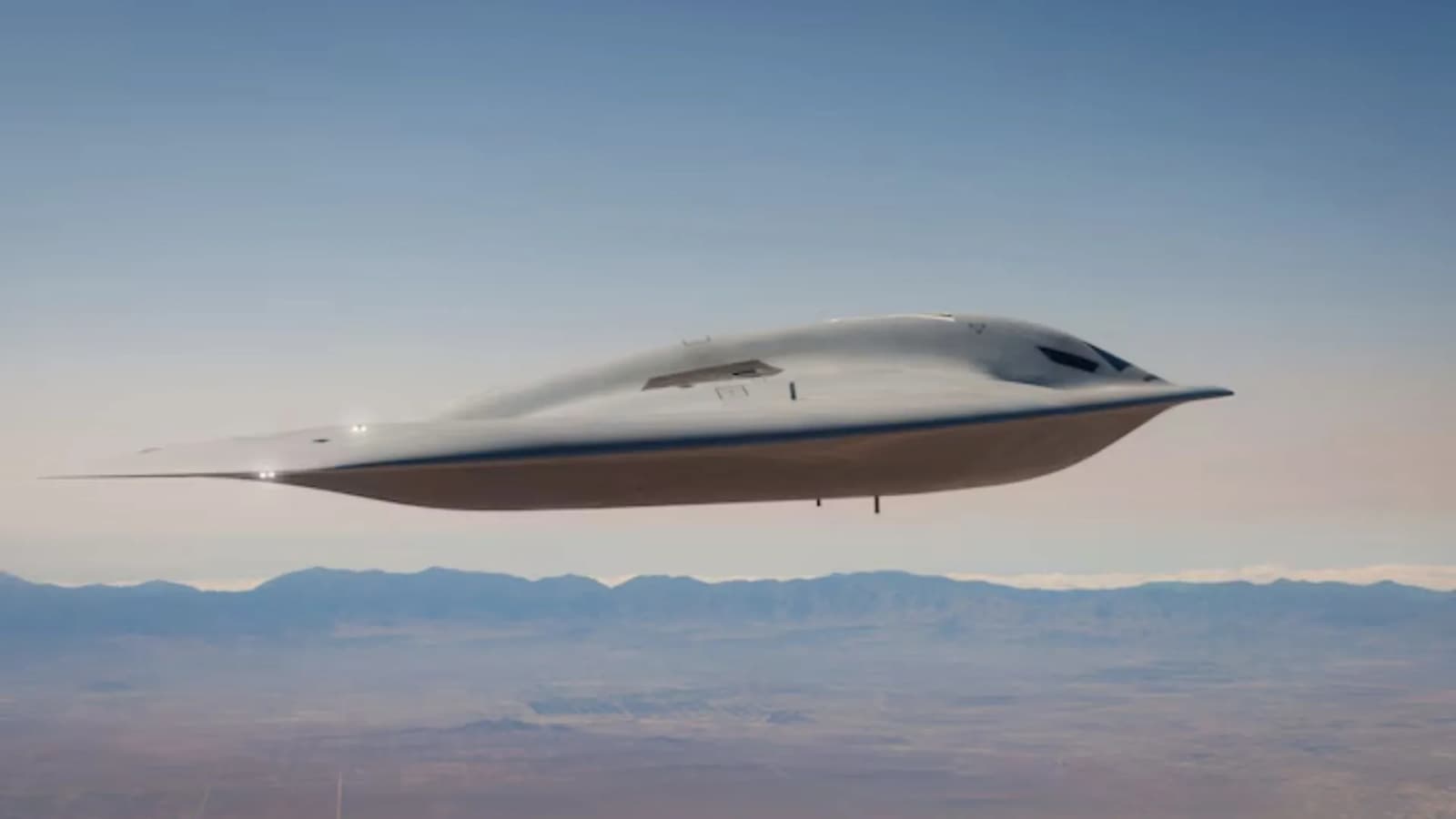
The United States is soon to get a new facility, which will support the B-21 Raider production-capacity. Recently, the Department of the Air Force alongside Northrop Grumman broke ground on the new final assembly line at Air Force Plant 42.
The development is a significant step toward expanding production capacity for the B-21 Raider and delivering combat capability to the Joint Force faster.
Annual B-21 production capacity to be increased by 25%
The groundbreaking kicks off over one million new square feet of facilities that will support the B-21 Raider production-capacity expansion announced earlier this year. The effort is part of the agreement between the DAF and Northrop Grumman that increases annual B-21 production capacity by 25% while maintaining focus on cost, schedule and performance.
“This groundbreaking represents more than construction; it represents a sustained commitment to delivering the capability our nation needs at the speed the security environment demands,” said Gen. Dale White, director, Critical Major Weapon Systems and Direct Reporting Portfolio Manager to the Deputy Secretary of War.
“The B-21 Raider is foundational to the Air Force’s future long-range strike capability, and this investment strengthens the industrial capacity required to field that capability faster.”
Next-generation stealth bomber fleet
The DAF is applying $4.5 billion in funding previously authorized and appropriated under fiscal year 2025 reconciliation legislation to accelerate production of the approved B-21 acquisition profile of 100 aircraft, building on the program’s demonstrated performance to compress delivery timelines for the next-generation stealth bomber fleet, according to a press release.
“The B-21 team has established the foundation to accelerate production responsibly,” said Col. Nicholas Jordan, B-21 Systems program director, Rapid Capabilities Office. “This investment in Palmdale will provide the infrastructure, workforce and manufacturing capacity needed to deliver the Raider to the Air Force at an increased rate.”
The B-21 Raider is a long-range, penetrating strike aircraft designed to operate in highly contested environments. It integrates advanced stealth, resilient networking and modern, data-driven command-and-control architecture to support the Joint Force’s ability to deter and, if necessary, defeat emerging threats, as per the release.
The project highlights the growing importance of the defence industrial base in determining how quickly military modernization programmes can deliver results.
Advanced combat aircraft require highly specialised components, manufacturing processes and technical expertise. Expanding final assembly facilities must therefore be matched by reliable deliveries from suppliers and sufficient skilled labour across the wider production network.
More broadly, the expansion illustrates how advanced technology, industrial investment and acquisition reform are increasingly interconnected in modern defence planning. As the B-21 progresses through testing and production, the ability to deliver the aircraft at scale will be just as important as its technological sophistication.
If the expansion meets its objectives, it could help the United States strengthen its long-range strike capabilities, reinforce strategic deterrence and prepare its bomber fleet for the demands of an increasingly contested global security environment.
Related articles

Soft sensor recreates 3D shapes through bending and twisting despite fiber damage
MIT researchers have developed a soft sensor that recreates its own three-dimensional shape as it...

Green hydrogen process reaches 98% efficiency while producing valuable chemicals
A new electrochemical process developed by researchers at the Technion, Israel Institute of Technology, could...

Biohub, DOE, NIH and Meta/DeepMind back $1.8B virtual-biology data push for predictive AI models of disease
On October 7, Biohub said it, the U.S. Department of Energy, the NIH and new partners are committing $1.8 billion in funding, data, compute and measurement technology to build open, AI-ready biological datasets for predictive models of cells and disease.
AWS launches open-source Physical AI Toolchain with NVIDIA stack for robotics development
Amazon Web Services on October 8 released an open-source Physical AI Toolchain that ties together synthetic data, training, simulation, validation and edge deployment with NVIDIA’s Isaac and Cosmos software for industrial automation, mobility and humanoid robotics.

OpenAI rolls out GPT-6 and Intelligent UI in ChatGPT, adding interactive charts, forms and in-chat tools
OpenAI began rolling out GPT-6 with Intelligent UI on October 7 to Plus, Pro, Business and Enterprise users, expanding to Free and Go on October 8, so ChatGPT can answer with interactive graphics, buttons, forms and tools inside the conversation.

Google Cloud launches a unified Gemini agent for enterprise work that plans tasks and connects to business systems
At Gemini at Work 2026 on October 8, Google unveiled a universal Gemini agent that can take objectives, plan work, connect to enterprise systems and return finished results from a single prompt—initially in private preview for businesses.