
US Army’s 1,700-mile Dark Eagle hypersonic missile faces delays as China, Russia move ahead
The US Army has not yet fully fielded its first hypersonic missile system, known as...
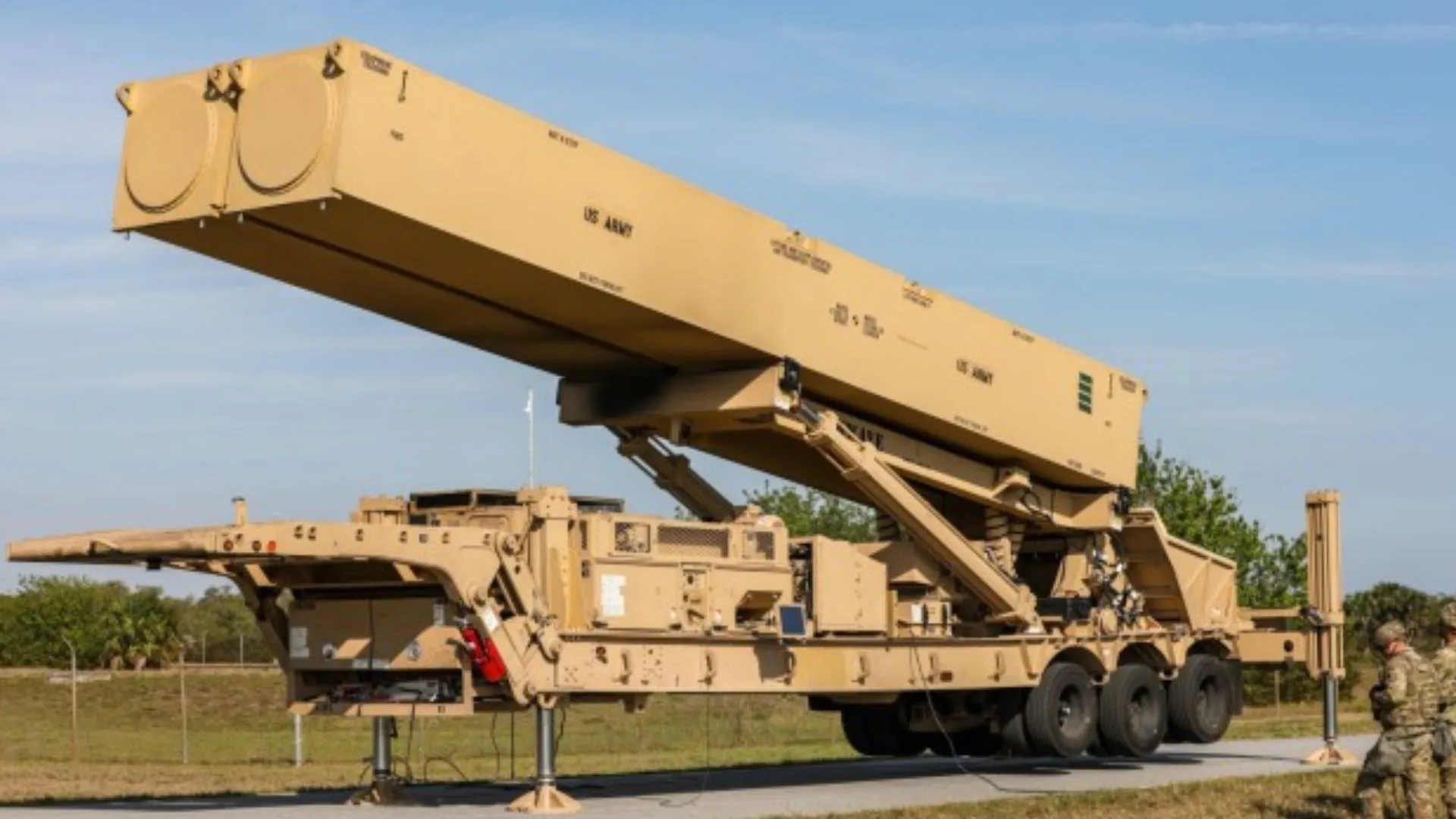
The US Army has not yet fully fielded its first hypersonic missile system, known as Dark Eagle, more than three years after its original deployment target, and it still needs additional training and operational-readiness work before it can be declared fully fielded.
In a statement reported by Bloomberg News on October 14, the Army said it continues fielding activities for the Long-Range Hypersonic Weapon (LRHW). The service must complete additional training, sustainment, and readiness activities before it can declare the system fully fielded. The program has missed previous deadlines, including targets in 2023 and 2025.
The delay comes as the Pentagon seeks to catch up with China and Russia in deploying operational hypersonic weapons. The Army has made progress on Dark Eagle, including missile deliveries, unit activation, and successful flight tests, but the latest update highlights the gap between developing a weapon and delivering a complete, operationally ready capability.
What is the Dark Eagle hypersonic missile?
Dark Eagle is the Army’s ground-launched Long-Range Hypersonic Weapon, designed to strike high-value and time-sensitive targets at long distances, including in heavily defended environments.
According to a Congressional Research Service report reproduced by USNI News, the system has a reported range of approximately 1,725 miles (2,776 kilometers). It uses a rocket booster to accelerate a Common Hypersonic Glide Body to high speeds before the glide vehicle separates and continues toward its target.
Hypersonic weapons travel at speeds of at least Mach 5, or five times the speed of sound. Unlike a conventional ballistic missile’s warhead, a hypersonic glide vehicle is built to maneuver during flight, potentially complicating an opponent’s efforts to track and intercept it.
Dark Eagle is also part of a joint Army-Navy effort. Both services use a common hypersonic glide body and booster, although the Army’s system is configured for ground launch while the Navy’s Conventional Prompt Strike program is intended for naval platforms.
Years of delays and production challenges
The Army’s original fielding schedule called for the weapon to become available in 2023. That deadline slipped after flight-test setbacks, including a canceled test expected to demonstrate progress toward operational use.
The Army delivered prototype hardware to its first unit in 2021, but the equipment initially arrived without the live missiles needed to provide the complete capability. The service subsequently moved its target to 2025, then into 2026.
The Government Accountability Office’s 2026 assessment identified production and schedule challenges across several Pentagon hypersonic programs. In July, DefenseScoop reported that early flight-test complications contributed to a production bottleneck, while contractors worked to address manufacturing issues.
In the same month, Bloomberg reported separately that Army officials identified quality defects affecting missile deliveries. Resolving those issues is important because the weapon must not merely demonstrate its performance during testing but also be manufactured consistently and supplied in sufficient numbers.
Testing has progressed, but full fielding remains ahead
The program has not been standing still. The Army activated a dedicated Dark Eagle battery in December 2025, and the Army and Navy conducted a successful launch of their common hypersonic missile from Cape Canaveral, Florida, on March 26, 2026.
Soldiers also trained with the system during Exercise Valiant Shield in June, according to National Defense magazine. However, these milestones do not necessarily mean the entire weapon system is ready for operational employment. Fielding requires more than a successful launch: units need missiles, launchers, command-and-control equipment, trained personnel, maintenance support, and the procedures needed to operate the system reliably.
The Army’s latest statement makes that distinction explicit. It has continued fielding activities, but further readiness and sustainment work must be completed before the system receives its full-fielding declaration. The latest update does not provide a definitive completion date.
A wider US effort to catch up in hypersonic weapons
Dark Eagle constitutes part of a broader US effort to develop weapons that can strike targets at high speed and possibly evade existing defenses. The Navy is pursuing its sea-launched Conventional Prompt Strike system, while the Air Force is developing separate hypersonic programs.
The schedule problems are not limited to the Army. GAO has warned that immature technology, limited testing opportunities, and production constraints could affect multiple Pentagon hypersonic programs. The challenge is to move advanced designs into reliable, repeatable production without compromising testing and operational safety.
Dark Eagle remains a major step toward a long-range conventional strike capability for the US Army. But after years of missed deadlines, the immediate measure of progress is no longer simply whether the missile can fly. It is whether the service can complete the remaining work and deliver a fully supported, operationally ready system to soldiers.
Related articles

The best reason to care about Nvidia’s RTX Spark: ‘everything’ will run on Arm
Fourteen years ago this month, Microsoft released an Nvidia-powered Windows PC that would become one of the greatest tech flops in modern history.

E Ink upgraded the screen found in most color e-readers
E Ink announced the next generation of its Kaleido color e-paper screen technology today, delivering several welcome improvements.

Friends don’t let friends feed their data to AI agents
There's a growing trend in the consumer tech world: gadgets designed to spy on everything and everyone around you, regardless of whether or not anyone else actually consented to it.
Laser-marking tech helps track nuclear fuel pebbles, can unlock scalable advanced reactors
Kairos Power has commissioned an automated inspection and laser-marking system for its nuclear fuel pebbles,...

Microsoft’s new Photos app combines your PC, OneDrive, and iCloud galleries
Microsoft has redesigned its Photos app for Windows 11, overhauling the editor and image viewer, and combining photos and videos from your PC, OneDrive, and iCloud into a single space.

Shelly’s new presence sensor simultaneously detects up to 10 people without a camera
Following the launch of its $50 subscription-free security camera last month, Shelly announced another new accessory for smart home automation today that can keep track of multiple people as they…