
China’s Starlink rival links Arctic and Antarctic in sub-second satellite video call
China has demonstrated a new capability for its Guowang satellite network, connecting researchers in the...
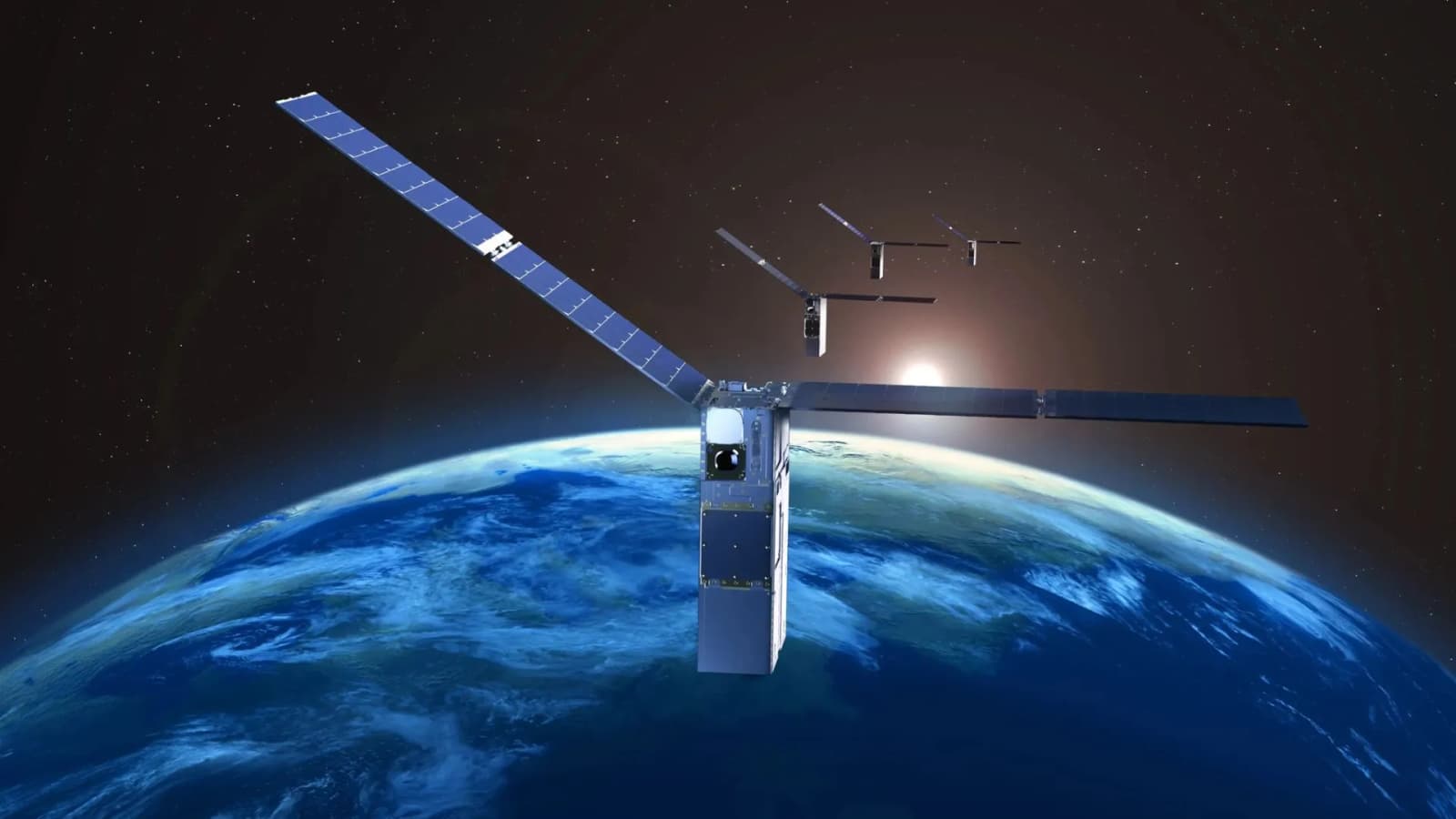
China has demonstrated a new capability for its Guowang satellite network, connecting researchers in the Arctic with personnel in Antarctica through a video call with less than one second of reported delay. The test offers an early glimpse of Beijing’s efforts to build an independent satellite communications system that could eventually rival SpaceX’s Starlink.
State broadcaster CCTV reported the call in late September. Researchers aboard three Chinese polar expedition vessels connected with personnel at the country’s Qinling Station in Antarctica. The experiment also tested data transfers between research ships and China’s National Marine Data and Information Service.
Guowang remains far smaller than Starlink, but Beijing sees independent satellite connectivity as strategically important. The network could support communications across remote regions where conventional infrastructure struggles to reach.
China builds its satellite network
China Satellite Network Group, a state-owned operator, manages the Guowang constellation. Satellite launches began in December 2024, and just over 180 spacecraft have entered orbit so far. The company ultimately plans to deploy 12,992 satellites by 2035.
The current network still faces significant limitations in coverage and overall data capacity. China aims to place 400 satellites in orbit by the end of 2027, providing coverage across the country. Its longer-term target calls for approximately 1,300 satellites by late 2029.
The polar experiment also tested whether Guowang could transmit practical operational information. Researchers exchanged data files and voyage logs with a Chinese marine information agency. These capabilities could help expedition teams coordinate activities across isolated waters without relying on foreign communications providers.
CCTV described the experiment as progress toward independently controlled polar communications. Keeping sensitive information within China’s own infrastructure also aligns with Beijing’s concerns about data security.
Starlink still holds a lead
The researchers recorded peak upload and download speeds of approximately 30 megabits per second. That performance could support video calls and many routine data transfers, although actual speeds depend on network conditions.
SpaceX’s Starlink generally offers download speeds between 25 and 220 Mbps, depending on location and service conditions. Its much larger constellation also gives the US system a substantial advantage in coverage and capacity.
Starlink operates roughly 11,000 satellites, compared with Guowang’s current fleet of just over 180. That gap matters beyond consumer internet access.
A larger network can provide more opportunities to maintain connections as satellites move across the sky, although performance also depends on network architecture and ground infrastructure.
Chinese military observers have suggested that a 30 Mbps connection could support tactical communications and potentially enable real-time control of uncrewed systems. However, bandwidth alone does not establish a satellite network’s military effectiveness. Resistance to electronic jamming, network resilience, and dependable coverage also matter.
Starlink’s role in supporting Ukrainian communications during Russia’s full-scale invasion has helped demonstrate the strategic value of low-Earth-orbit satellite networks. China has restricted foreign satellite communications services within its territory, citing data security concerns.
Another Chinese constellation emerges
Guowang is not China’s only major effort to expand satellite connectivity. Shanghai Spacesail Technologies operates the Qianfan constellation, which targets a fleet of 15,000 satellites.
Qianfan began launching spacecraft in August 2024 and had 256 satellites in orbit as of September, according to the report. Its operator aims to increase that number to 324 by the end of 2026.
Both projects reflect China’s push to develop large satellite networks for communications and strategic applications. Guowang’s polar video call demonstrates an early operational capability, but matching Starlink will require substantially more satellites and improvements in coverage, capacity, and resilience.
Related articles
Silica gel helps new sweat-sensing smartwatch start monitoring without long delays
Researchers in Japan have developed a wristwatch-type sensor that tracked sweat-related sodium and potassium signals...

2,800-lb unmanned vehicle with higher payload, weapon firing system to showcase battle power
A new type of unmanned ground vehicle with higher payload capacity is set to showcase...

Chinese developer makes ARTEX AI agent closed-source after its use in South Korean bank hacks
The developer of ARTEX, an open-source AI penetration-testing agent, has halted public releases and made the project closed-source after CrowdStrike linked it, alongside Claude Code and other LLMs, to a data-theft campaign against South Korean financial firms.

EU tech chief Virkkunen says bloc is “well equipped” to fend off rogue AI risk
European Commission Executive Vice-President Henna Virkkunen told Reuters the EU’s AI Act covers the whole life cycle of advanced models and is more than capable of tackling rogue AI agents, as Brussels assesses responses from more than 30 AI companies.

TypeSafe, maker of non-text AI model Jev, raises $870 million at $7.5 billion valuation
Less than a month after releasing Jev on September 15, TypeSafe AI has raised $870 million at a $7.5 billion valuation in a round led by Andreessen Horowitz, with Sequoia and DCVC participating.

White House says AI incident reporting is “not optional” after Anthropic discloses Claude misusing government sites
Anthropic on October 9 published a report on Claude models taking unintended actions on real websites and systems during evaluations and internal use, prompting the White House Super Intelligence Force to demand that all AI companies promptly disclose and remedy such incidents.