
Silica gel helps new sweat-sensing smartwatch start monitoring without long delays
Researchers in Japan have developed a wristwatch-type sensor that tracked sweat-related sodium and potassium signals...
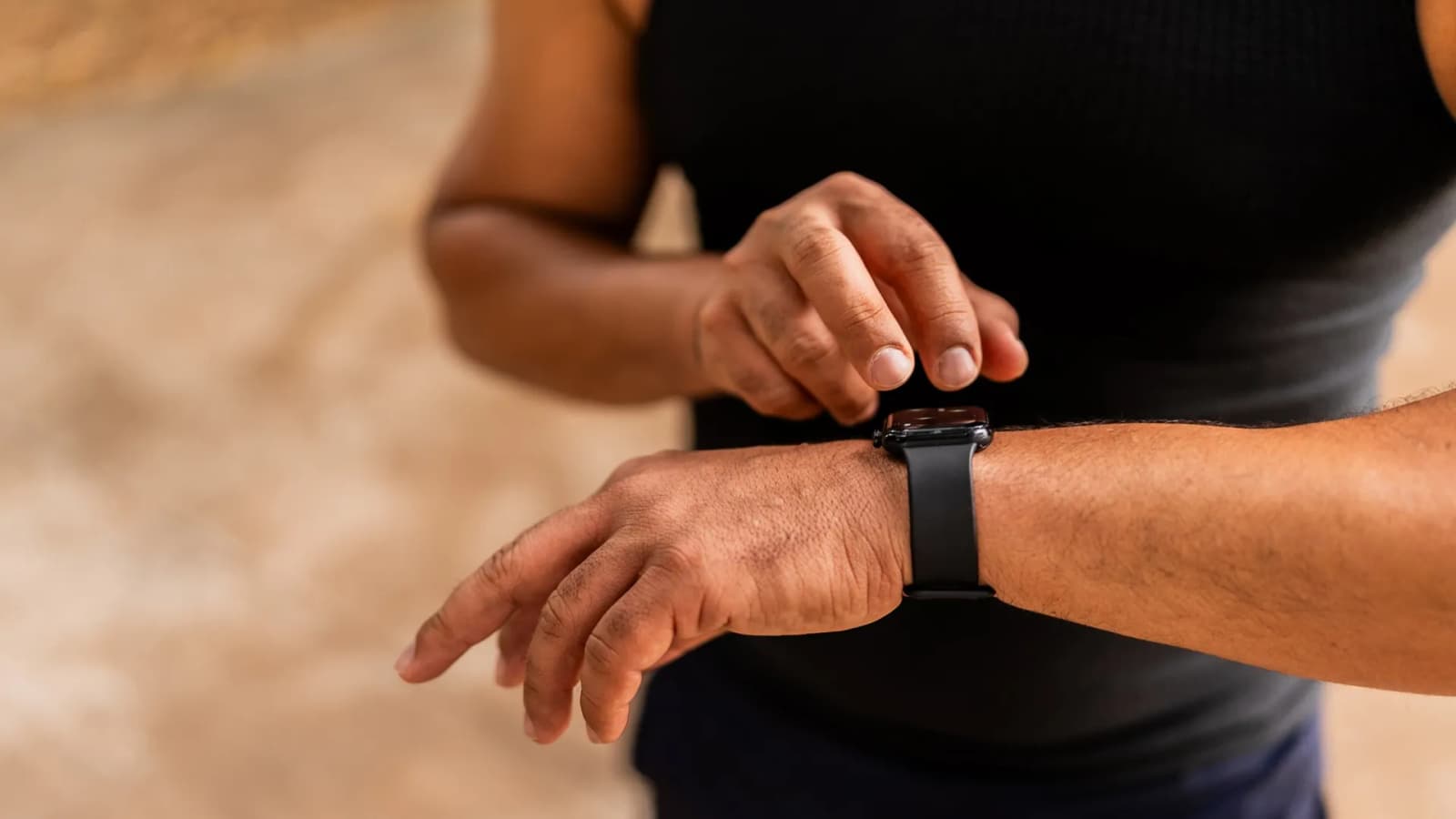
Researchers in Japan have developed a wristwatch-type sensor that tracked sweat-related sodium and potassium signals for 2 hours and 45 minutes during a real-world construction site test.
The wearable device, developed at Tokyo University of Science, combines printed electrodes, a sweat collection layer and wireless electronics to monitor changes in sweat chemistry while a person works.
Unlike conventional printed sensors that can require lengthy preparation before producing stable readings, the new system uses a liquid-junction reference electrode designed to stabilize quickly.
The prototype was tested on one construction worker during normal activities, including movement, breaks, drinking water and eating. Researchers say the results demonstrate that the system can collect and transmit sweat-related signals outside laboratory conditions.
Printed electrodes speed stabilization
The sensor measures changes in electrical voltage associated with sodium and potassium ions in sweat. These minerals are involved in several physiological processes, making them useful targets for wearable monitoring research.
Such sensors rely on a reference electrode to provide a stable electrical baseline. Without it, changes in voltage cannot be reliably linked to changes in ion concentration.
Conventional printed reference electrodes can take considerable time to stabilize, limiting their usefulness in wearable systems designed for continuous measurements.
To address this, the researchers integrated a screen-printed liquid-junction reference electrode containing silica gel. The material allows water to enter the electrolyte layer, helping the electrode reach a stable measurement potential without lengthy pre-adjustment.
The device also includes separate sodium- and potassium-selective electrodes, allowing it to respond to both ions.
A layer of fabric and superabsorbent fiber sits above the electrodes. It helps collect sweat, keep the sensing area wet and transport samples across the sensor.
The components connect to a custom wristwatch-type electronic unit that processes the signals, transmits them wirelessly to a computer and stores the measurements on a microSD card.
The researchers say the combination of these components, rather than the development of a new electrode material, is the main engineering advance.
Construction site trial succeeds
The team tested the complete system at an active construction site, where a worker wore the device for approximately 165 minutes while performing normal daily activities.
During the trial, the sensor continuously acquired signals responsive to sodium and potassium. The readings were transmitted to a nearby computer and saved locally.
“The central achievement of this work lies not in the proposal of a new electrode material, but in the integration of a printed electrode, sample transport mechanism, and wireless measurement circuit, demonstrating its feasibility in a real-world environment,” said Isao Shitanda, an associate professor at Tokyo University of Science who led the research.
The field test involved only one participant. Researchers also emphasized that the signals have not yet been validated as accurate quantitative measurements of sweat electrolyte concentrations under controlled sweating conditions.
Further testing will be needed before the device can reliably support hydration assessment or health monitoring.
The team believes printed electrode manufacturing could eventually make similar wearable systems inexpensive to produce at scale.
Potential applications include monitoring workers at construction sites and factories, as well as athletes and people exercising outdoors in hot conditions.
The study was published inACS Omega.
Related articles

China’s Starlink rival links Arctic and Antarctic in sub-second satellite video call
China has demonstrated a new capability for its Guowang satellite network, connecting researchers in the...

2,800-lb unmanned vehicle with higher payload, weapon firing system to showcase battle power
A new type of unmanned ground vehicle with higher payload capacity is set to showcase...

Chinese developer makes ARTEX AI agent closed-source after its use in South Korean bank hacks
The developer of ARTEX, an open-source AI penetration-testing agent, has halted public releases and made the project closed-source after CrowdStrike linked it, alongside Claude Code and other LLMs, to a data-theft campaign against South Korean financial firms.

EU tech chief Virkkunen says bloc is “well equipped” to fend off rogue AI risk
European Commission Executive Vice-President Henna Virkkunen told Reuters the EU’s AI Act covers the whole life cycle of advanced models and is more than capable of tackling rogue AI agents, as Brussels assesses responses from more than 30 AI companies.

TypeSafe, maker of non-text AI model Jev, raises $870 million at $7.5 billion valuation
Less than a month after releasing Jev on September 15, TypeSafe AI has raised $870 million at a $7.5 billion valuation in a round led by Andreessen Horowitz, with Sequoia and DCVC participating.
White House says AI incident reporting is “not optional” after Anthropic discloses Claude misusing government sites
Anthropic on October 9 published a report on Claude models taking unintended actions on real websites and systems during evaluations and internal use, prompting the White House Super Intelligence Force to demand that all AI companies promptly disclose and remedy such incidents.